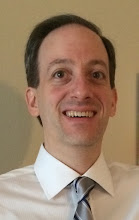
On July 17, 2025, my daughter Rachel and I played in the Cincinnati
Chess Club's G/24 Swiss. This event only affected our USCF Quick
ratings. I scored 3/4, tied for second-third, and gained 12 points to lift my USCF Quick rating to 1929. Rachel lost all
four of her games, but she had a great time, and she played unrated casual games before and after the tournament.
The July 26, 2025 Cincinnati "Emotional Chess" Tornado had a record 88 players in three sections. I scored 3/4 to finish fourth-ninth in the Open section, gaining 14 points to push my rating to 1950, and splitting the U2001 prize with one other player. Rachel scored 1/4, including a bye for the first round; she played an extra rated game during the first round, and drew with a player rated 1400. Robert Chenault does a superb job organizing and directing these monthly
events, and the way that he organized this particular event reminded me very much of the way that Martha Adams used to organize the Roosevelt Open.
Adams made a point of honoring players for a variety of reasons,
including youngest player, oldest player, player who traveled the
farthest, and more; similarly, Chenault provided
certificates, gift certificates, and other prizes to various
players. I was honored to receive a Chess Earth Player Appreciation Award certificate plus $30 in
Chess Earth merchandise gift certificates.
Rachel and me before the first round of the Cincinnati "Emotional Chess" Tornado
My Chess Earth Player Appreciation Award
Unfortunately, in my next tournament I gave away all 29 rating points that I gained in my previous two tournaments. I scored just 2/5 in the U2200 section of the Joe Yun Memorial, and my rating plummeted back down to 1921. Last year in the Joe Yun Memorial, I played the two day schedule of the U2000 section with a first round bye, and I finished with 4/5 to tie for first-third while gaining 23 points to lift my rating to 2004. This year, I began poorly with a draw from a winning position in the second round (after taking a first round bye), and after I won my third round game versus a much lower rated player I lost both of my Sunday games. On Saturday night, I scored 3/7 in the Joe Yun Memorial Open Blitz; there were 14 players in the Open section and 10 players in the U1600 section.
On August 23-24, 2025, I scored 4.5/5 to claim clear first in the U2100 section of the Indianapolis Open. I gained 38 rating points to push my rating up to 1959. I won my first four games before a fighting draw in round five clinched first (though I had to wait for a favorable board two result to make sure that I had clear first and not a tie for first-second). Each of my wins lasted 40 moves or less, but my fourth round game was unusual because the tournament director stopped play after I made my 16th move; after a delay lasting more than 20 minutes, the tournament director forfeited my opponent, who apparently had been caught using his laptop during the game. My fourth round opponent was not ejected from the tournament, and he received a prize after winning his fifth round game. I believe that any player caught using an electronic device during a tournament should not only forfeit the game in progress but should be ejected from the tournament and ruled ineligible for a prize; that is the best way to not only ensure a fair outcome for the other participants but also to make it clear that there is no tolerance for cheating.
Here is the position after my second round opponent played 27.Kg1:
I played 27...Bxf3 and my opponent resigned because of an unstoppable mate in three, but I had an even faster mate using just the minor pieces: 27...Nd3+ 28.Kf1 Bh3#. I don't recall ever seeing that mating pattern before, which is probably why I went for the more familiar mating pattern starting with my Q infiltrating the back rank after I eliminated the Bf3.
On Saturday night, I scored 4/8 in the Indianapolis Open Blitz; two of my losses in the four round, double round format (i.e., you play one game with white and one game versus black versus each opponent) were to Justin Lee, a young Expert who scored 8/8 to finish clear first.
I scored 2.5/5 in the Open Section of the August 30-August 31, 2025 Ohio Chess Congress, gaining 26 rating points to lift my rating to 1985. In the second round, I lost to FM Dalton Perrine, who tied for first-third with GM Alex Shabalov and IM Erick Zhao with 4.5/5. Perrine is the 2025 Ohio Chess Champion because Shabalov and Zhao are not from Ohio. In the third round, I beat 2024 Ohio Chess Champion Arjun Soni; here is the position after I played 45.Nec2:
Black's Q is imprisoned far away from the exposed Black K. My opponent had less than 30 seconds remaining (G/90 time control with 30 second increment) when he played 45...b5, a desperate attempt to create complications/distractions away from his K. The game concluded with 46.Qe3 f5 A draw offer accompanied this move, but my opponent was down to 15 seconds in a totally lost position, so I just kept playing. 47.exf5 bxc4?? A blunder in a lost position. 48.Qxe5+ Facing mate on the next move, my opponent resigned. After round three on Saturday August 30, I scored 3/7 in the Ohio Chess Congress Blitz.
In my fourth round game versus Trey Modlin (rated 2182, but an NM because he has had a 2200 rating before), I achieved a winning position by move 22 before fumbling what should have been a simple conversion. Here is the position after my opponent played 23.Re1, a seemingly logical move that is a mistake:
I should have played 23...Ncxe4 (the other N capture also wins) 24.Nxe4 Nxe4 25.Bxe4 Bxd5 26.Bxd5 Rxd5. Black is up a clean pawn, all of the minor pieces have been traded, and White has no meaningful counterplay. Instead, I played 23...Bxd5?, which gives away some but not all of my advantage. After 24.exd5, I should have played 24...Re8 25.Bg2 f6 26.gxf6 gxf6 27.Kh1 Kh8 with a clear edge but no forced win. Instead, I played 24...e4?, giving away most of my lead while weakening my Rd4 and my e pawn. After 25.Bg2, Stockfish 17 recommends the odd-looking 25...Na4 to break up White's powerful N tandem; objectively, Black is slightly better but from a practical standpoint Black has turned a decisive advantage into a mess where all three results are possible. Unfortunately, I did something much worse: after 25...Re8??, my opponent played 26.Qe3 and stood clearly better. My best chance now was to play 26...Nd3, giving up a piece but maintaining my advanced passed pawn, but instead I collapsed with 26...Nd7?? 27.Ne2, when White is winning easily in all lines.
I bounced back to win my last round game, but a fourth round win followed by a draw or win versus a higher rated player in the fifth round would likely have pushed my rating back over 2000. The self-inflicted wounds I suffer while playing chess are the most painful and difficult to accept. After FM Perrine outplayed me, I looked at the game and learned some things that I can apply in the future; all I can learn from the fourth round collapse is "Stop collapsing," which is a lesson that I should have already learned. It is the nature of this sport that sometimes such things happen, but such things happen more often to me than they should, and have prevented me from obtaining the long sought NM title that I am still chasing 30 years after I first achieved an Expert rating.
I have played in the Ohio Chess Congress 31 times in five different decades (1980s, 1990s, 2000s, 2010s, 2020s). The Columbus Trophy, which lists Ohio Chess Champions dating back to 1945, has been updated to include the names of the champions since 1995. John Lodger Hughes and I were co-Ohio Chess Champions in 2010, so my name is now on the trophy:
I scored 4.5/5 in the September 20-21, 2025 Ohio Senior Open, securing clear first by a full point over the rest of the field. This victory qualifies me to play in the 2026 Irwin National Tournament of Senior Champions. I gained 15 points to push my rating above 2000 (2001) for the first time since April 2025. In Journey to the National Master Title, Part 7,
I recapped the 2023 Ohio Senior Open and described why this is a very meaningful tournament for me. I won a prize in each Ohio Senior Open from 2021-2023, and was poised to win a prize last year before squandering a winning advantage in my last round game, so winning this event for the first time was fitting redemption after my disappointing 2024 finish. Here I am posing with the 2025 Ohio Senior Open first place trophy:
Here is a picture of me with Grant Neilley, who has organized and directed the Ohio Senior Open since 2015:
The 2025 Ohio Senior Open continued the event's tradition of having a contest for the most interesting or unusual chess set, with the winners
determined by anonymous polling of the tournament's participants. The "Middle East" and "Oriental" sets tied for first place.
This set features pieces made in the Middle East
This set features an Oriental design
I scored 3/4 in the September 27, 2025 Cincinnati Tornado. I tied for third-sixth, and I won the U2001 prize. I gained one rating point to improve my rating to 2002, and I maintained a rating above 2000 for two tournaments in a row for the first time since April 2025. My second round loss to Siddarth Kunapuli (2062) snapped my 10 game streak of no losses, which started after my fourth round disaster versus Trey Modlin in the Ohio Chess Congress, but I bounced back to win my last two games.
Losing 52 rating points in the May 2025 Chicago Open was a major setback, but--as I have done each time in my chess career after my rating dropped below 2000--I have regained all of the lost rating points and more, pushing my rating back into Expert territory. The next steps in this journey are (1) maintain my 2000-plus rating with no more setbacks and (2) lift my rating over 2100 for the first time since 2016.
1) Gain 50 rating points per quarter. I lost 18 rating points in the first quarter of 2025, decreasing my
rating from 2013 to 1995; I lost 59 rating points in the second quarter of 2025, decreasing my rating from 1995 to 1936; I gained 66 rating points in the third quarter of 2025, improving my rating from 1936 to 2002.
2) Do not lose more than six games to players rated below 1800. I
lost five games to players rated below 1800 in the first quarter of
2025; I lost four games to players rated below 1800 in the second quarter of 2025; I lost zero games to players rated below 1800 in the third quarter of 2025.
3) Accumulate more draws than losses. I
had nine draws and 14 losses in the first quarter of 2025; I had nine draws and 15 losses in the second quarter of 2025; I had five draws and six losses in the third quarter of 2025.
4) Maintain a winning percentage of at least .750, to break my personal record of .740 set in 2014. My winning percentage through the first three quarters of 2025 is .663.
In 2025, I have scored 80 wins, 23 draws, and 35 losses in regular rated tournament games with six first place finishes
in 34 events. I have lost nine games to players rated below 1800. My net rating
gain for 2025 is -11, so I need to gain 198 points to reach my goal.
On July 18, 2024, my daughter Rachel and I played in the Cincinnati Chess Club's G/24 Swiss. This event only affected our USCF Quick ratings, and was a good warm up for the 4th Annual Joe Yun Memorial Tournament. I scored 2/4 and finished out of the money. Rachel lost all four of her games, but she enjoys playing chess regardless of the result, and she played casual games between rounds (in addition to checking on me and providing moral support during my games).
Rachel and I played in the 4th Annual Joe Yun Memorial Tournament, held from July 19-21, 2024. One of the weekend's highlights was introducing Rachel to International Master Calvin Blocker, who has won a record 15 Ohio Chess Championships.
I first met Blocker at the 1989 Ohio Chess Congress. Blocker won the
Ohio Chess Championship that year, and he was featured on the cover of the
November-December 1989 Ohio Chess Bulletin:
Cover photo of November-December 1989 Ohio Chess Bulletin
The magazine's photo caption is not hyperbole. I and the other spectators were in awe of Blocker's chess prowess. Rachel and I spoke to Blocker
briefly right after we arrived at the tournament site, and we spent some quality time together prior to the second round:
Calvin Blocker and Rachel after the second round of the 2024 Joe Yun Memorial
Rachel and I played the two day schedule with a first round bye, so we each played two games on July 20, which was International Chess Day. My first game (second round) was a back and forth struggle versus Aaryn Rudrapati, the talented young player who beat me in the first round of the May 4, 2024 Columbus Plus Score tournament. After he blundered with 47...Kh7, I played 48.Re8:
Most tournament chess players know the value of placing a Rook on the seventh rank, but it should be noted that placing a Rook on the eighth rank can be powerful as well. Here, my opponent could have played 47...Kf8 to keep my Rook out, but once my Rook entered I had a winning attack.
I won both of my International Chess Day games, while Rachel lost both of her games. I drew my third game (fourth round), and Rachel lost her third game. Rachel received a final round bye, while I needed a win in the final round to clinch a prize. Rachel enjoyed playing chess in the skittles room while I contested one of the last games to finish. When the dust cleared, I won, and I tied for first-third in the U2000 section. I gained 23 rating points to push my rating back up to 2004.
Unfortunately, I squandered the hard-earned gains from the Joe Yun Memorial Tournament by scoring just 2.5/4 in the August 3, 2024 Columbus Plus Score tournament. I lost 29 rating points to plummet to 1975; that is the most points I lost in one tournament since I lost 32 points in the January 2024 Cardinal Open. This is the sixth time I have played in a Columbus Plus Score event, and the third time that I have finished with 2.5 (I had 3 twice, and 2 once, which was the only time that I did not achieve a plus score). In round one, I lost to a player rated 1521, and in round three I drew with a different player rated 1521.
My rating slid down another 17 points to 1958 after I scored 3/5 in the U2100 section of the August 24-25, 2024 Indianapolis Open. This was a very frustrating tournament, because after winning my first game I obtained an equal position with Black on move four in the second round before playing sloppily and succumbing to a strong attack; then, in round three I obtained a decisive advantage by move eight only to let my opponent back in the game and then overlook a game-changing tactic. I recovered from those self-inflicted setbacks to win the last two games, but that only partially mitigated the damage to my rating. One bright spot is that after round three on Saturday August 24, I scored 6/8 in the Indianapolis Open Blitz to finish tied for first-seventh.
I scored 2.5/5 in the Open Section of the August 31-September 1, 2024 Ohio Chess Congress, losing five rating points to slip to 1953. I scored a draw and two losses versus higher rated players, and I won both games versus lower rated players. After round three on Saturday August 31, I scored 4/7 in the Ohio Chess Congress Blitz to finish tied for third-sixth.
On September 7, 2024, I scored 2.5/3 in the top section of the Columbus G/60 Swiss, tying for first-second, and gaining 25 rating points to lift my rating back to 1978. I scored 3/3 in the September 14, 2024 Columbus G/75 Swiss, earning clear first place, and gaining 23 rating points to push my to 2001, the third time this year that I broke the 2000 barrier after falling below that level. The next task is to not only maintain a 2000-plus rating--which I did in each USCF rating supplement issued from December 2009-May 2017--but to advance past the 2100 level and then eclipse 2200 for the first time. I am proud that I have had a 2000 rating at some point in every calendar year from 1995-2024, an accomplishment that I suspect is uncommon for a player who does not have a 2000 rating floor and has never been rated over 2200. While I tend to be very goal-oriented and forward-thinking, it is important to also acknowledge what I have already achieved in chess.
In Journey to the National Master Title, Part 7, I recapped the 2023 Ohio Senior Open and described why this is such a special event for me. The 2024 Ohio Senior Open again featured a contest for the most interesting or unusual chess set, with the winners determined by anonymous polling of the tournament's participants.
Joe Bello's 1923 Margate replica set won in the Staunton set category
Joe Bello's Sherlock Holmes set won in the Figurine set category
Richard Hayes' Chaturanga set won in the Other set category
After gaining 48 points with two first place finishes in my two previous tournaments to increase my rating to 2001, I looked forward to posting a strong Ohio Senior Open performance--but I lost in the first round to 1700 rated Dave Rutherford, the same kind of setback that I suffered in my very first game after my excellent result in the Joe Yun Memorial Tournament lifted my rating above 2000. In my previous five rated games versus Rutherford I scored four wins and one draw; this loss is also the first time this year that I lost to a player rated below 1800 who is not a kid. During most of this game the position was equal, but I could play for practical winning chances without risk. Unfortunately, I spent a lot of time trying to find a win that was not there, and by the critical point in the game I barely had two minutes remaining while my opponent had nearly 20 minutes remaining (G/75 time control with 10 second delay). My winning attempt failed, and I ended up with a pawn down position that is drawn with best play:
Unfortunately, I erred by playing 69. Kxa4?? instead of 69. Bc2, which holds the balance. Here is one possible line: Bxg6 70. Bxa4 Ke5 71. Kb4 Kd4 72. Bd1 Be4 73. Bg4 g5 74. Bh3 Kd3 75. Bg4 Bd5 76. Bf5+ Ke3 77. Kc3 Be4 78. Be6 Kf4 79. Kd2 Bf5 80. Bc4 g4 81.Ke1 Kg3 82. Be2=
However, my opponent gave me one more opportunity to hold the draw by not pushing his pawn quickly enough, and a few moves later we reached this position when I barely had one minute remaining:
Trading Bs obviously leads to a lost K+P ending, but I had to decide quickly where to put my B. I played Bf1?? to cover one of the squares in the P's path, but the correct method is to place my B behind the P on a longer diagonal: 76. Bb5 Ke3 77. Be8 Be6 78. Bh5 Kf4 79. Kd2 Bg4 80. Bf7 Kf3 81. Ke1 Bh3 82. Be8. The P cannot advance without giving me an opportunity to seize the long diagonal and sacrifice my B. Instead, after the game continuation my opponent played 76...Ke3. With my K shut out, it only took him a few more moves to use his K and B to force me to give up control of the key diagonal. I have thought a lot about this loss, and I believe that two factors proved to be critical. The first factor is that I did not know the two diagram positions "by hand." I had studied similar positions and I know enough to figure them out step by step given sufficient time, but I am not familiar enough with them to play them fluidly in contrast to, for example, a position of K+Q versus K, from which I could produce a checkmate very quickly. The second factor is that by getting into such severe time pressure I left myself vulnerable to not having enough time left to accurately calculate variations in positions that I don't know "by hand." More practice could increase the number of positions that I know "by hand," but it is also important to give myself a sufficient margin for error by not getting so low on time, particularly in a game that did not feature many critical decisions (until the end, of course!).
I bounced back to win my next three games, and then I obtained a winning
position by move 14 in the fifth round versus 2029 rated Mike Sheaf before squandering my advantage
and then blundering into a loss. Jordan Henderson secured first place with 4.5/5 after Mike Joelson--who started out 4/4--walked into a helpmate in their last round game. I was the fifth seeded player out of 20 participants, and I finished tied for fifth-seventh place (fifth on tiebreaks). Sheaf, a co-champion last year, finished tied with Joelson for second-third, with Joelson receiving second place honors on tiebreaks. This is the first time that I lost two
games in one Ohio Senior Open, and the first time in three appearances
that I did not win a trophy (I tied for the best score in the age 50-59
category, but this year the tiebreak procedure resulted in that trophy
going to the oldest of the tied players--even though the player who
received the trophy played in a separate U1800 side event against lower
rated opposition than I faced in the Open section). My 3/5 score added up to 23 lost rating
points, pushing my rating back down to 1978.
This result is very disappointing for me, but while ruminating about that disappointment I recalled an article that I wrote 11 years ago. In Only Thoughts and Actions Can be Controlled, Not Outcomes, I discussed how I processed the aftermath of a chess game during which I blundered but still won because my opponent blundered:
In a recent chess tournament, I won a game because my opponent responded
to my blunder ...Nxe5 with the blunder Nxf7 instead of playing Nb5,
which would have given him a winning position. Winning chess games used
to make me feel very happy, while losing chess games used to make me
feel very upset but those reactions are too extreme. A better, more
balanced path is to prepare properly before the event, concentrate fully
during the event, enjoy the entire process and not overreact to the
result. All that a person can control is his own actions; outcomes and
results are influenced by factors that a person cannot control: the
results of other games affect who I get paired against--which means that
I could face someone whose style is a good matchup or someone whose
style is a difficult matchup--and my opponent's training, discipline and
outlook affect the quality of his moves, so unless I play perfect moves
100% of the time I cannot control the outcome of the game. Of course,
the better that I play the more influence I can exert over that outcome
and that is one of the most seductive qualities of chess: the illusion
that with only a little more knowledge and discipline a person can
completely control his destiny (echoes of that illusion can be heard in
the famous concluding words of F. Scott Fitzgerald's The Great Gatsby).
The difference between winning a game and losing a game and the
difference between winning a tournament and finishing in the middle of
the pack is sometimes just one move, one flickering of a neuron in
someone's mind.
If I had been more well-rested and/or if I had studied more before the
tournament then perhaps I would have played a different move but I have
many interests and I enjoy the time/energy that I devote to those
interests; I am not making excuses about that blunder or any other chess
blunder, just stating the truth. At that moment under those conditions,
...Nxe5 was the best move I could find; I did not play impatiently and I
thought that I had considered all of the relevant tactics. A minute or
two after I played ...Nxe5, I saw the Nb5 idea; while I waited to see
which move my opponent would play, I pondered the folly of basing one's
emotional state on what happened next: I knew that the outcome of the
game would likely be determined by his move and that if I was not
careful then I could permit that outcome to affect my mood for the next
several days. I vowed that, whatever happened, I would not overreact. I
tried my best and ...Nxe5 is the move that I played, so there is
nothing to be elated about and nothing to be upset about; winning the
game after my opponent blundered did not "prove" anything about me (or
about my opponent).
My opponent also did not rush and I assume that he did the best that he
could under his individual circumstances. I have deliberately not given
the complete move list or provided a diagram of the game position,
because this particular game and these particular moves are just
vibrations of a much larger cosmic string. If my opponent or I had
vibrated the string a bit differently then we would have played a
different melody but--regardless of the melody we created--there is
nothing to cry about here. I should celebrate that I have been playing
tournament chess for more than 25 years and that I am capable of playing
chess at a higher level than 97% of all rated players; my young
opponent should celebrate that he is already a strong player and that if
he stays on his current path then he likely will become a chess master.
No, it is even simpler than that: regardless of years spent or rating
points obtained, the enjoyment of playing the game in the moment is the
height of ecstasy; the game result is logically determined by the
combined mental and psychological states of both players and there is no
reason to become emotional about that logically determined outcome: if
you have a succession of outcomes that you deem to be unsatisfactory
then it is necessary to adjust your life pattern (sleep habits, study
habits, etc.) to maximize the chance that you will enjoy better outcomes
in the future.
Easy to say, hard to do but very necessary. My opponent looked
distraught when he realized that he had blundered and I understand that
feeling all too well. Chess is a very violent game;
it may not be possible to completely eradicate the suffering one feels
after a loss but I think that determined, focused concentration can
result in a modified perspective.
More than a decade later, it is still difficult but necessary to embrace that modified perspective. As I noted when I began this series of articles, there are no guarantees on the Journey to the National Master Title, but I will not give up trying to achieve my goal and I will not give up chronicling my journey. I have a full slate of tournaments for the fourth quarter of 2024, so check back in January 2025 when I review my progress in the next installment in this series (Spoiler alert: I did not do well in my first two October 2024 tournaments, but I will persevere and expect to have good news to report at the end of the fourth quarter of 2024).
In Journey to the National Master Title, Part 8,
I listed four chess goals for 2024. Here are those goals, with notes
about my progress toward each one through the first nine months of the year:
1) Gain 60 rating points per quarter. I
gained three rating points in the first quarter of 2024, improving my
rating from 1968 to 1971; I gained 10 rating points in the second
quarter of 2024, improving my rating from 1971 to 1981; I lost three rating points in the third quarter of 2024, dropping my rating from 1981 to 1978.
2) Do not lose any games to players rated below 1800. I
lost two games to players rated below 1800 in the first quarter of
2024, I lost two games to players rated below 1800 in the second
quarter of 2024, and I lost three games to players rated below 1800 in the third quarter of 2024.
3) Accumulate more draws than losses. I had 15 draws and eight losses in the first quarter of 2024; I had seven draws and nine losses in the second quarter of 2024; I had four draws and seven losses in the third quarter of 2024.
4) Maintain a winning percentage of at least .750, to break my personal record of .740 set in 2014. My winning percentage through the first three quarters of 2024 is .694.
In
2024, I have scored 71 wins, 26 draws, and 24 losses in regular
rated tournament games with 10 first place finishes in 30 events. I
have lost seven games to players rated below 1800. My net rating gain for
2024 is seven so I need to gain 222 points to reach my goal.
In the August 19, 2023 Dublin (Columbus, Ohio) Summer Open, I scored 3/4, but finished out of the money as three players tied for first place with 3.5/4. I drew with two of the first place finishers: National Master Charles Diebert (the top seeded player, with a pre-tournament rating of 2217), and Evan Fan, one of the top rated players in the country under the age of 10 (1794). I gained five rating points to push my rating up to 1991.
I scored 3.5/5 (three wins, one draw, and one loss) in the
U2100 section of the August 26-27, 2023 Indianapolis Open, finishing tied for fourth through eighth but losing three rating points. The difference between gaining points and losing points in this tournament--and the difference between potentially winning the U2100 section versus settling for a lesser prize--was how I handled being up an Exchange by move 12 as Black in the second round. Here is the position after my opponent played 13. Kxf1 (taking my Bishop after I had just captured his Rook) and then I replied ...Nd5, strongly centralizing my Knight:
Here is the position just 11 moves later:
What happened to my extra Exchange, and what happened to my Queen? The moves between the two diagrams were 14. Rb1 Nb4 Objectively this is fine, but there is no reason to seek complications when you are up an Exchange: 14...Nxc3 15. dxc3 d5 is a simple and direct way to play. 15. Qd1 Qa5 16. Ne5 d6 17. Nc4 Qa6 18. Kg1 d5 19. Nxa3 Bxc3 20. dxc3 Nxa2 21. Bb2 Qxa3?? I thought that I was simplifying to a position in which my two Rooks would be better than my opponent's Queen but--needless to say--I miscalculated. I should have played 21...Qa5 22. Qe1 Nb4 This is the idea that I missed during the game: if my opponent takes my Knight with his Pawn then his Knight is trapped after I take back with my Pawn.
The game continued: 22. Bxa3 Nxc3 23. Qe1 Nxb1 24. Bxc5. I underestimated my opponent's 24th move; I would be winning if he had taken my Knight and I had then taken his Bishop, but this intermezzo puts him on top. He soon gave me one chance to equalize, but I missed the opportunity to fully activate my Rooks and then it was downhill from there, as his Queen and Bishop proved to be too powerful.
After the first three rounds of the Indianapolis Open, I played in the
Indianapolis Open Saturday Night Blitz, scoring 5/8. I finished tied for seventh through tenth out of 32 players. I lost my mini match with National Master Joseph Cheng-Yue Wan 2-0, and he went on to tie for first place with FIDE Master Arvind Jayaraman at 7/8 each. My USCF blitz rating remained unchanged (1816).
I scored 2/5 in the Open section of the September 2-3, 2023 Ohio Chess Congress, finishing out of the money but gaining 21 rating points to push my rating back over 2000 (2009). I drew with two National Masters: Justin Storn--who is the new Ohio Chess Champion (he finished tied for second overall behind Grandmaster Alex Fishbein, who is not an Ohio resident)--and two-time Ohio Chess Champion (2005, 2013) William Wright. I have drawn with and defeated many Ohio Chess Champions in rated tournament games, but I have not won the Ohio Chess Championship, though I contend that John Lodger Hughes and I should be recognized as co-Ohio Chess Champions for 2010; we were the highest scoring Ohio residents in that year's Ohio Chess Congress, but the Ohio Chess Champion title was inexplicably granted to the overall first place finisher despite there being no information proving that he was an Ohio resident (that player, IM Siddharth Ravichandran, is a resident of Chennai, India and the 2010 Ohio Chess Congress is the only tournament he ever played in Ohio).
After the first three rounds of the Ohio Chess Congress, I played in the Ohio Chess Congress Saturday Night Blitz, scoring 5/8. I started out 5/6, and so I played National Master Jesse Ren on board one in the last round. Ren beat me 2-0 in our mini match, just like he beat me 2-0 in our mini match in the June 10, 2023 Cleveland Open Saturday Night Blitz. I gained 14 rating points, pushing my USCF blitz rating to 1830.
I scored 2/3 in the top section of the September 9, 2023 Dublin (Columbus, Ohio) G/60 tournament, tying for second through fourth place. I gained four rating points to improve to 2013. Two weeks later, I scored 3.5/4 in the September 23, 2023 Columbus G/45 tournament, gaining 22 rating points to lift my rating to 2035. In round three, I defeated the number one seeded player, National Master Charles Diebert, who has been one of Ohio's top players for well over 30 years. Despite my great result, I did not win a prize, as two players in the 55 player field finished with 4/4.
The Ohio Senior Open tournament is one my favorite annual events, as it provides a great opportunity to catch up with--and compete against--players who I have known for more than three decades. Organizer/chief tournament director Grant Neilley does a wonderful job, and I would encourage anyone who is eligible to participate in next year's event, which is scheduled for the weekend of September 28, 2024. One of the highlights this year was a contest for the most interesting or unusual chess set. Charles Diebert won in the non-Staunton set category with this beautiful set that his mother gave to him over 40 years ago; a friend of hers handcrafted it from ceramic materials:
Peter Galupo won in the Staunton set category:
I scored 3.5/5 in the September 30-October 1, 2023 Ohio Senior Open,
losing four rating points to drop to 2031. I tied for fourth-fifth overall, and received
the trophy for first place in the 50-59 age group. John Bath won the
tournament on tiebreaks over Alan Casden
(who defeated me in round three) and Mike Sheaf. Those three players
each scored 4/5. This is the third consecutive year that I have
participated in this event, which is open to anyone who is at least 50
years old (or who turns 50 before December 31 in the year that the
tournament is held); each time, I have scored 3.5/5, and each time my
only loss has been to a player who finished first or tied for first. In
both 2021 and 2022 I won the third place trophy on tiebreaks. I was the
fifth seeded player out of 22 Open section participants this year, I was
the fourth seeded player out of 24 Open section participants in 2022,
and I was the ninth seeded player out of 31 Open section participants in
2021. In other words, I have finished higher than my seeding each year;
I like to think of this being equivalent to a race car driver who
consistently finishes higher than his qualifying position, because I
have "passed" players en route to winning a prize in each of these three
tournaments.
In the past 12 months, I have scored 50% against National Masters in regular rated tournament games (one win, four draws, one loss). I drew my game in the Ohio Chess Congress versus the eventual champion, National Master Justin Storn (and I also drew a quick rated game versus Storn in the July 20, 2023 Cincinnati Chess Club G/24 Swiss as he and I shared first place with 3.5/4). I have often demonstrated that I can play National Master level chess. Why have I yet to break the 2200 rating barrier, and why is my current rating below 2100? My journey to National Master has been slowed down by two issues:
1) My unfortunate proclivity to squander winning positions, most recently demonstrated in the above example from the second round of the Indianapolis Open. This year alone I have cost myself at least 100 rating points by losing objectively winning games to lower rated opponents.
2) Many young players are significantly underrated, in part because during the early days of COVID over the board play paused while online play increased, which created a large group of young players whose over the board ratings lag far behind their actual playing strength. FIDE, the governing body of international chess, plans to address this issue by providing a one-time rating increase to the 85% of chess players whose FIDE ratings are below 2000; this increase is scheduled to take place in January 2024, subject to final approval by the FIDE Council in October 2023.
What can I do to address these two issues? Regarding the first issue, I must be more aware of my opponent's threats, particularly in positions that seem to be easy wins (there are no easy wins!). I remember what Senior Master Boris Men once told me about how to win from a winning position--"You must play against your opponent's play"--but I must apply that wisdom in practice as opposed to just understanding it in theory. There is not much that I can do about the second issue, though perhaps it is worth considering playing in tournaments in which I am less likely to play against underrated young players.
In 2023, I have scored 68 wins, 17 draws, and 22 losses in regular
rated tournament games with eight first place finishes in 27
events--but five losses to players rated below 1750 were costly, and as a
result my net rating gain for 2023 is 19 points, so I need to gain 169 points to reach my goal.
Grandmaster Ben Finegold recently posted a video in which he
discusses International Master Calvin Blocker's chess career, notes that Blocker clearly played at
Grandmaster strength at his peak, and analyzes three of Blocker's wins,
including a brilliant victory as Black against three-time U.S. Chess
Champion (1987, 1995, 1998) Nick DeFirmian.
Finegold points out
that Blocker's aggressive style of play often leads to decisive results,
and that Blocker is a fearless player who turns down draws even against
higher rated players. Blocker is a chess artist and chess perfectionist
who will spend 45 minutes on a single move in a search for the truth in
a chess position. Before I met Blocker, I remember hearing stories
about how hard he would fight for the tiniest advantage, one example
being his epic Ohio Chess Congress game versus Errol Leibowitz that
lasted several hours and over 100 moves.
I was delighted to
watch Finegold's video, and I hope that it brings back great memories
for the 40 and over crowd while providing an education to the younger
chess aficionados:
Finegold weaves biographical details into the video and in the game analysis, but it is worth taking a deeper look at Blocker's career, particularly for those younger than 40 who may not fully appreciate Blocker's accomplishments.
International Master Calvin Blocker has won a record 15 Ohio Chess Championships (1981-82, 1984-89, 1995, 1997, 1999-2000, 2005, 2008, 2013). State chess championship records are lamentably incomplete, but Blocker must rank very highly on the list of most state chess championships won in one state; John Curdo, who has won at least 17 Massachusetts championships, is the only player I can think of who would be ahead of Blocker for sure. Blocker is not only an Ohio chess legend as a player, but he is a well-regarded coach whose students included Marc Esserman, who became an International Master and published chess author.
Blocker's first love was music, and he was a concert pianist as a teenager before shifting his focus to chess (if you ask Blocker, he will insist that he never gave up piano, but it can at least be said that he stopped receiving formal piano training and doing formal piano performances). Despite being a late starter by chess standards, Blocker became a FIDE Master at age 26 and an International Master at age 27. In the current era during which teenagers become Grandmasters, those numbers may not seem impressive, but Blocker lived in Ohio in the pre-computer chess/pre-internet era and in the context of those conditions his rise was remarkable.
Achieving a high standard in either music or chess is quite an accomplishment, but to do so in both fields is most impressive.
Blocker never attained the Grandmaster title because of a lack of opportunities to play in Grandmaster norm tournaments. The U.S. Chess Federation (USCF) only has online rating records dating back to 1991, but I did some archival research in old Chess Life magazines, and I confirmed that in April 1990 Blocker ranked 13th in the United States with a 2650 USCF rating:
That means that Blocker was higher rated than many players who participated in the U.S. Closed Championship during that era. It is also worth noting that many of the top players were closely bunched together; Blocker was just 21 points lower rated than Michael Wilder (sixth on the list) and 31 points lower rated than Maxim Dlugy (fifth on the list). Points are harder to gain and easier to lose at the very top of the rating list--so 20 or 30 points at that level means more than 20 or 30 points at the amateur level--but any way you look at it Blocker was one of the very best chess players in the country at that time.
Blocker did not maintain that lofty perch by protecting his rating, either; he was 47th on the list of most active players, having played 190 rated games in the previous calendar year:
When Blocker was at his peak, the International Master title and the Grandmaster title were much less commonly achieved than they are now. In 1989, the U.S. barely had three dozen Grandmasters and fewer than 65 International Masters:
Currently, the U.S. has over 100 Grandmasters. Are players that much stronger today than they were over 30 years ago? There certainly has been a proliferation of available basic knowledge via computer chess programs and via the internet, but knowledge is not the same as understanding; old school titled players not only knew where the pieces belong but they knew why the pieces belonged there. There is a difference between saying "I traded off his bishop to weaken his dark squares" and "I traded off his bishop because the engine says that gives me a .8 advantage."
Also, ratings have no intrinsic meaning outside of the context of the rating pool. In other words, being rated 2650 in 1989 when that places you 13th in the country is more impressive than being rated 2700 now when that does not even get you in the top 15. The ELO rating system is based on percentage expectancy and the difference between two ratings; that is why Bobby Fischer's 2785 rating is more impressive than Magnus Carlsen's 2800+ rating: Fischer was more than 100 points ahead of the rest of the world, while Carlsen's nearest competitors are much closer to him than that. We don't know who would win a hypothetical match between prime Fischer and prime Carlsen, but we do know that prime Fischer was much further ahead of his rivals than prime Carlsen is ahead of his rivals. Similarly, we don't know how prime Blocker would do against today's young guns, but we do know that prime Blocker learned chess at a relatively late age in a non-computer/non-internet era without being based in a national chess hotbed and he nearly cracked the top 10 in the entire country.
During my archival research, I found this gem from the March 1989 issue of Chess Life:
Julie Anne Desch used to write profiles of chess Masters. In the above article, Blocker talked about his varied interests, including piano, chess, running, and fencing. Blocker said, "Fencing is physical chess...chess is a physical game played on a mental plane and it's won at the mental level...fencing is a mental game played on a physical plane, and it's won on a physical level--on a level of competitiveness, stress, and stress management...but the training techniques in any physical sport are highly relative to chess."
Some commentators dismiss the connections and similarities between chess and physical sports but Blocker correctly notes that those connections are real and they are significant. This is not about making a trite statement such as "Chess is life and life is chess"; this is about the strong parallels between the mental and physical training regimens of chess champions compared to the mental and physical training regimens of other elite athletes.
Blocker is an extrovert and a showman; as entertaining as his games are, it can be even more entertaining to watch him talk about his games in a post-mortem session. In 1989, an issue of the Ohio Chess Bulletin showed a picture of Blocker analyzing an Ohio Chess Congress game while surrounded by a group of spectators (including me), and the caption said something to the effect of, "Blocker analyzes while spectators look on in awe." That was not hyperbole; I was in awe of him, and I was far from the only one. I first met Blocker at the 1989 Ohio Chess Congress, and he was the strongest chess player I had met up to that time.
I have known Blocker for over 30 years, and crossed swords with him over a dozen times in rated play, scoring just one draw (of which I am very proud). Any chess player over 40 years old in Ohio or the Midwest surely knows about Blocker, but when I was at a recent Ohio tournament it took my breath away for a moment when a much younger friend of mine saw Blocker--who attended the tournament but did not play--and asked me who he is. I explained simply, "He is an International Master who won 15 Ohio Chess Championships and was once ranked in the top 20 in the country with a 2650 USCF rating."
The passage of time is sobering, and those of us who know (or lived in!) the distant past have a responsibility to preserve the great names and events that deserve to be remembered. I appreciate Finegold's video, and I embrace the opportunity to supplement that video with what I know and what I have observed about IM Calvin Blocker.
Ross Sprague, a dominant force in Midwest chess from the 1950s through the mid-2000s, recently passed away. Sprague achieved the National Master title during an era when there were only a few dozen Masters in the entire country and he later earned Senior Master status with a rating well over 2400. He did not have the opportunity to play FIDE rated chess during his prime or he certainly would have attained FIDE Master status and he quite possibly could have become an International Master. National Master David Presser, the 1964 Ohio co-champion, told me years
ago that he believes that Sprague is the most naturally talented native
Ohio chess player of all-time. Sprague was a powerful attacker who knew a lot of opening theory and was blessed with a tremendous memory. If you survived the opening and middlegame against Sprague you then discovered that he seemed like a walking endgame tablebase. He had an incredible sense of how to optimally place his pieces and pawns during the latter stages of the game.
Sprague's chess career began in Cleveland, Ohio in the 1950s. He often told stories about playing ping pong and speed chess against Bobby Fischer during one of the U.S. Junior Opens in the late 1950s. Sprague also formed a friendship with Grandmaster Pal Benko, who called him "Poopsie" and taught him a lot about endgame play. Sprague served as an airplane mechanic during the Vietnam War and later became a practicing attorney.
Sprague won or shared first place in the Ohio Chess Congress
four times (1958, 1975-76, 2005). He holds the record for longest time
span between OCC titles (47 years), breaking the record of 35 years set
by James Schroeder.
Based on my recollection of conversations with Sprague, I believe that
he said that he won several other state championships, including (I think)
Illinois, but I cannot find official confirmation of this. Sprague also
won the Dayton Chess Club Championship twice (2005-06).
After Sprague first moved to Dayton in the mid-2000s, I received many endgame lessons at
his hands as I drew seemingly winning positions and lost seemingly drawn
positions. He was past his prime (his U.S. Chess Federation rating had dropped from 2400-plus to the mid-2200s) but he could punch above his weight, as former World Chess Championship Challenger Gata Kamsky found out when Sprague held him to a draw at the Kings Island Open. I will never forget Sprague's concise recap: he said that Kamsky grumbled after the game that he had five different ways to win, to which Sprague replied in typical Sprague fashion "But you chose number six, which draws."
Clearly, I am far from the strongest player who crossed swords with Sprague but since 1991 (when the USCF first began keeping such records) I faced him 52 times in regular rated games, making him my most frequent opponent during that time frame. I am also listed as Sprague's most frequent opponent, one game ahead of International Master Calvin Blocker, but of course those records omit nearly 40 years of Sprague's chess career. Sprague scored 25 wins, 11 draws and 16 losses in our regular rated games.
I am Sprague's most frequent Quick chess opponent by a larger margin of 132-73 over Daytonian Mark Kellie. Sprague scored 56 wins, 28 draws and 48 losses against me in Quick chess.
He kept playing tournament chess until he completely lost his sight. He was too proud or stubborn to use the special equipment that is available to assist blind players to participate in tournament chess.
I believe that competing against and analyzing with Sprague
is one of the major factors that helped elevate my rating from
fluctuating in the low 2000s to consistently being above 2100 for
several years (and peaking at 2190 before various life events put
tournament chess on the back-burner for me for a while).
We first faced each other in a John Carroll University Action Tournament held on June 5, 1992; the 2427 rated Sprague beat me (I was then rated 1980) en route to finishing tied for second behind International Master Calvin Blocker. Our last regular rated game took place 19 years later to the day as I beat him in the final round of the 2011 Gem City Open. Sprague's rating was floored at 2200, while I was rated 2087; Sprague had been battling severe vision loss and other health problems for quite some time, so I have no illusions about my peak playing strength compared to his.
Sprague was well-read and our conversations were always interesting. If you caught him in the wrong state of mind, he could be a bit blunt and abrasive but he always treated me with respect and I think he knew how much I respected his chess abilities. We were from different generations and had different life experiences but we connected because of our mutual love of chess.
Here is my loss with Black against Sprague from the April 2005 Gem City Open. Sprague was rated 2205, while I was rated 2012. After an innocuous opening, we traded into an equal ending, whereupon Sprague methodically outplayed me:
I miss our nearly weekly friendly but fierce chess battles for Dayton Chess Club supremacy but I cherish the memories of competing against such a talented player who helped me to come closer to maximizing my potential. It is good to be challenged, to be pushed, to find out what you can do when you are tested. Thank you, Ross, and Rest in Peace.
Grandmaster Anatoly Lein--one of the top chess players in the world in the 1960s and 1970s and an accomplished chess coach/author--passed away yesterday. Lein's beloved wife Barbara passed away on February 16. Lein was born in the former Soviet Union in 1931 and achieved prominence there--earning the International Master title in 1964 and the Grandmaster title in 1968--before emigrating to the United States in 1976. Although Lein was perhaps past his prime by the time he arrived in this country, he nevertheless made an immediate and huge splash on the chess scene, sharing first place that year in both the World Open and the U.S. Open. Lein lived in New Jersey for many years, working as a chemical engineer, before relocating to Cleveland, Ohio in the 1990s. Cleveland remained his home for the rest of his life.
Lein won the U.S.S.R. Armed Forces Championship in 1962. He followed that up with a first place finish in the 1963 Russian championship and he was a member of the Soviet Union's team that won the 1965 European Championship. He also coached the Russian junior team to a gold medal and he won two gold medals as a member of the Russian adult team. Lein was a seven-time participant in the prestigious Soviet Championship Final, a field which was dotted with World Champions past, present and future. Lein scored wins in tournament games against World Champions Mikhail Tal and Vassily Smyslov. Some of Lein's many big tournament first place finishes include the 1971 Moscow Championship, Cienfuegos 1972, Novi Sad (1972 and 1973) and the 1973 Capablanca Memorial.
After emigrating to the United States, Lein participated in four U.S. Championships (1977, 1978, 1980, 1981). He also represented the United States in the 1978 Chess Olympiad, helping the team win a Bronze medal. Lein won the New Jersey State Championship in 1993 and 1995. In 1999, Lein added the Ohio Championship to his list of titles, scoring 5/6 in the Ohio Chess Congress to tie for first place with International Master Calvin Blocker.
FIDE (the International Chess Federation) has published chess ratings since the late 1960s (the ratings became "official" in 1971) and according to their calculations Lein peaked in 1969 as the 24th highest ranked player in the world. Lein was ranked in the official top 50 in the world as late as 1979 (when he was 48 years old, an advanced age for top level chess) and after dropping as low as 194th in the early 1980s he had a revival in late 1985/early 1986 during which he surged back to 53rd in the world. Lein was still among the top 300 players in the world when he was in his early 60s.
According to Jeff Sonas' historical chess ratings, Lein peaked in the late 1960s as the 26th highest rated player in the world and he maintained top 100 status until past the age of 50, ranking among the 60 highest rated players of all-time in the 50 and over age group.
In addition to his accomplishments as a player and as a coach, Lein wrote or co-wrote several chess books, including Sharpen Your Tactics, In the World of Tactics, The Latvian Gambit: A Grandmaster View and Kasparov v. Karpov 1990 (a book that he was particularly--and justifiably--proud to have co-written with Garry Kasparov, Efim Geller and Viktor Chepishny).
I first met Lein in the early 2000s, when he was still playing in large events such as the Chicago Open. I took some chess lessons from him in the mid-2000s and some of the concepts/methods/approaches that I learned from him played a role in helping me get within 10 points of attaining the U.S. National Master title. My understanding and appreciation for top level chess increased immensely as a result of the time that I spent with him and I will forever feel privileged that I had that opportunity.
Lein could be both proud and self-deprecating, often in the same sentence: he would say, "I used to be a Grandmaster, but now I am a Grandpatzer." He had keen insight about the current chess scene. For instance, Lein told me that Anish Giri was a player to watch prior to Giri receiving much media attention. "This boy has real talent," Lein commented, after looking at some of Giri's early games--and that statement meant something coming from Lein, who often thought that even some of the most famous chess players were overrated.
Lein was an avid reader who could converse intelligently on many subjects. I enjoyed not only learning chess from him but also hearing his stories about his various experiences in the world of elite Grandmasters, as well as his observations about life.
I know that Lein felt underrated as both a player and a teacher but I always told him how much I appreciated his accomplishments and the time that he spent with me. This article can only provide a mere glimpse into what made Lein special but I hope that it serves as a worthy tribute and as a source of information for those who do not fully know chess history and Lein's rightful, prominent place in that history.
This Labor Day Weekend, I will play in the Ohio Chess Congress for the 24th time; I have only missed the event five times since first participating in 1989. I am proud to have competed that often in the State Championship but it is also poignant to ponder the passage of time--and the passing of individual chess players who I have encountered over the years. Two-time Ohio Chess Champion (1950, 1985) James Schroeder passed away on July 8, 2017 and it has since come to my attention that two other Ohio Chess Champions recently passed away as well: John Stopa (July 7, 2017) and James Harkins (July 27, 2017). Stopa shared the Ohio title with Greg Serper and Boris Men in 1996, while Harkins won the championship three times (1964, 1968, 1973). Harkins tied for first in 1954 but lost the title on tiebreak points.
I played five USCF rated tournament games against John Stopa and two USCF rated tournament games against James Harkins. Ever since 2014--when I became a father and entered Law School--I have not been as involved with chess as I had been for the previous three decades. I feel out of the loop at times and I was stunned to hear of Stopa's passing, considering that he was just 64 years old and had seemed to be in good health the last time that I had seen him just a few months earlier. I did not have an immediate opportunity to write a proper tribute to him but I did post these remarks at his online memorial page:
"I had the privilege of playing five USCF rated games versus John. He was a strong player and a gentleman who always took time to analyze with me after our games. I recall him walking around tournaments recording the opening moves on the top boards. I got the sense that he was booking up on the competition, which is very smart. Rest in peace and my condolences to his family."
I wonder what happened to that pen and paper "database" that Stopa assembled over the years about Ohio's top players. Stopa literally wrote the book about Ohio's chess elite--or, at least he had the notes to write such a book--and it sure would be interesting to see the data that he collected over several decades.
Here is a hard fought draw that I earned against John Stopa five years ago. He and I each finished the tournament with 3.5/4 and shared first place with Charles Diebert.
North Market Swiss (Columbus, Ohio) January 5, 2012 (Round Three)
White:David Friedman (2083)
Black: John Stopa (2200)
1. e4 e5 2. Nf3 Nc6 3. Bc4 Bc5 4. c3 Nf6 5. d3 a6 6. b4 Ba7 7. 0-0 d6 8. Bg5 h6 9. Be3 O-O 10. a4 Ne7 11. Nbd2 Ng6 12. Bxa7 Rxa7 13. d4 exd4 14. cxd4 d5 15. exd5 Nxd5 16. Qb3 Be6!? (...Nb6=)
17. Ne4 (White is slightly better) b6 18. Ne5 Nxe5 19. dxe5 Nf4 20. Bxe6 Nxe6 21. Rad1 Qh4 22. Qe3 Raa8 23. f4 Rfd8 24. f5 Ng5 25. Nxg5 Qxg5 26. Qe4 Rac8 27.e6 Rxd1 28. Rxd1 Rd8?? (...Re8 offers much more resistance than the text) 29. Re1? (Rxd8+ followed by e7 and Qe5 leads to a decisive advantage) 30. Qc4 g6 31. fxg6 fxg6 32. Qg4!? (Qe4 is much stronger) Kh7 33. Rf1 Rf8 34. Rxf8 Qxf8 35. Qd4 Kg8 36. Qc4 Qe7 37. Qe4 Kh7 38. h4 h5 39. b5 axb5 40. axb5 Kg7 41. g3 Kf6 42. Qf4+ Kxe6 43. Qe4+ Kf6 44. Qf4+ Kg7 45. Qd4+ Kh7 46. Qd3 Qc5+ 47. Kg2 Qf5 48. Qc4 Qd7 49. Qe2 I offered a draw here and John immediately accepted. He had four seconds left on his clock plus the five second delay, while I had about six minutes remaining.
Like John Stopa, James Harkins was an attorney by profession. Harkins was a fixture on the Cleveland chess scene since at least the 1950s. I used to travel to Cleveland fairly often to visit family members and play in chess tournaments, so I saw him at many events. It was clear that he was a highly respected person and competitor within the Cleveland chess community. I was fortunate enough to beat him the first time we played, when I was a class A player and he outrated me by more than 200 points, but I think that I benefited from premature resignation on his part; I remember looking at the game later and realizing that he still had play in the position, though perhaps he was frustrated and did not want to continue the struggle.
He obtained his chess revenge against me nearly 20 years later in our next--and, as it turns out, final--encounter:
Friday Action Classic (Cleveland Ohio) November 26, 2010 (Round Four)
White: David Friedman (2068)
Black: James Harkins (2039)
1. e4 c5 2. Nf3 Nc6 3. d4 cxd4 4. Nxd4 Nf6 5. Nc3 e5 6. Ndb5 d6 7. Bg5 a6 8. Na3 b5 9. Nd5 Be7 10. Bxf6 Bxf6 11. c3 Bg5 12. Nc2 Rb8 13. Qf3 0-0 14. h4 Bh6 15. g4 Bf4 16.Nxf4 exf4 17. Qxf4 b4 18. Be2 bxc3 19. bxc3 Rb2 20.Qd2 Ne5 21. f3 Qf6 22. Rh3? (0-0-0) Bd7 23. Qc1 Rfb8 24. Nb4 This move wins an Exchange but subjects my K to a withering attack. Unfortunately, I did not have any better options, so I grabbed the material and hoped for the best. Rxe2+!? (...R8xb4 followed by Ng6 wins) 25. Kxe2 Bb5+? (...Nxf3) 26. Ke3? (Kf2) Bc4 27. g5?? (Rb1) Qe6-+ 28. Rg3 a5 29. Nc2 Nd3 30. Qg1 Qe5 31. Kd2 Qf4+ 32. Ne3?? (This loses quickly but Kd1 would only delay the inevitable after Rb2) Rb2+ 33. Kd1 Nf2+ 34. Kc1 Qxe3+ 35. Kxb2 Qd2+ 36. Ka3 Qxc3+
It will be great to reconnect with old friends--and perhaps make some new friends--at this year's Ohio Chess Congress but I will also feel some sadness and sense of loss because of the passing of several chess players who made rich contributions to Ohio's chess community.
I was saddened to learn that James Schroeder--chess master, prolific writer and long-time advocate for prison chess programs--passed away on July 8 at the age of 89. IM John Donaldson wrote an obituary of Schroeder at Chess Life Online and, as one would expect from such a knowledgeable and proficient writer/historian, this account is thorough and in depth while also speaking from the heart. I only met Schroeder once but he had a strong impact on my chess career, so I would like to share some personal reflections both about that one meeting and also about what I learned about Schroeder over the years.
My first USCF rated chess tournament was the 1987 Gem City Open, held in Dayton, Ohio (I had scored 2/4 in a local high school tournament earlier in the year that was supposed to be rated but never was). Before the first round, I encountered an older gentleman (he was 60 at the time but to teenage eyes that was elderly) who was selling chess books. At that point, my personal chess library was very small (and the internet did not exist), so I was thirsty for any chess knowledge. The man introduced himself as James Schroeder. I had no idea at the time that he was a chess master and a well known figure on the Ohio chess scene.
I selected Modern Chess Openings, 12th Edition (MCO 12, the most recent volume at the time) and Basic Chess Endings by Reuben Fine. I figured that if I knew how to start a game and how to finish a game then I would be in good stead. The MCO 12 was in excellent shape but the Basic Chess Endings was a little beat up, so I asked Schroeder if he would cut me a deal since I was buying more than one book. He was aghast. He told me in no uncertain terms that this book was a classic, that it contained essential knowledge and that his price was reasonable considering the book's value. I was taken aback by his vehemence but I took his words to heart and bought both books. I went 0-5 in that tournament but I developed a habit of consulting MCO and Basic Chess Endings after every serious game that I played (unless the game did not reach an endgame, of course) and I believe that this practice played a major role in my later chess accomplishments--including my first "big" chess prize ($100 for best score among Class C players in the 1989 Gem City Open), a 5-0 score in the U2000 section of the 2004 Gem City Open and a record 10 Dayton Chess Club Championships.
On April 9, 2017, I sent a letter to Schroeder (he did not have an email address) in which I thanked him for his positive influence on my chess career:
Dear Mr. Schroeder,
You sold me my first copy of MCO (12th Edition)
and my first copy of Reuben Fine’s Basic Chess Endings at the 1987 Gem City
Open in Dayton, Ohio. That was my first rated tournament and I went 0-5 to post
a provisional rating of 1186. You beat Sergey Berchenko in the last round with
Black to win the tournament and you later analyzed the game for the Dayton
Chess Club Review, declaring that anyone who complains about having Black is a
“fool” because unless you are playing a super GM you will always have at least
one chance.
Those books you sold me, the game that you won against
Berchenko and your sharp annotations made a deep impression on me. I went on to
break Richard Ling’s record by winning 10 Dayton Chess Club championships.
I remember trying to bargain with you about the price of
Basic Chess Endings because the book was well worn and you indignantly replied
that it was a classic. You were right and more than 30 years later I still have
that copy!
Anyway, I never had the chance to thank you and when I
recently found your website I decided to send you this letter.
If you are still sending out copies of your book
Confidential Chess Lessons and a list of books that you are selling I would
love to receive both. I will soon be teaching my young daughter to play chess
and I am sure that she could benefit from your book and from any books that you
may still have in stock.
Thank you again,
David Friedman
He wrote his reply on April 14. Considering that he sold me my first copy of MCO, it is ironic that one piece of advice that he offered was, "Never read an opening book." He also wrote, "Winning the Dayton Chess Club Championship 10 (times) is a great accomplishment" and he put in bold letters "NEVER STOP STUDYING THE ENDGAME." He added that he no longer writes Confidential Chess Lessons but he sent me some photocopied pages from the book; one passage, from an article titled "The Genius," begins "The object of the game is to cross the center of the board with your pieces and attack the opponent's position. I want to play this game to the best of my ability within the amount of time available. I am playing Amateurs, not Grandmasters; do not be afraid of anything. I must be confident and expect to win every game."
Schroeder is perhaps best known for his writing, his teaching and his
advocacy for prison chess programs but it should not be forgotten that
he was a strong player as well. IM Donaldson's obituary provides details
about Schroeder's playing career and cites some wonderful
games--including a draw against GM Lubomir Ftacnik and a flashy win
against NM Jim Harkins (a three-time Ohio Chess Champion).
Schroeder won the Ohio Chess Congress
in 1950 (scoring 5.5/6) and 1985 (scoring 5/6 to tie with IM Calvin
Blocker in the prime of Blocker's career; this was the fourth of
Blocker's record 15 Ohio titles). That set a record for most years
between a player's first and last OCC titles (35), since broken by Ross
Sprague (who won the OCC title in 1958, 1975, 1976 and 2005, with an
astonishing 47 year span between his first and last titles).
James Schroeder's career as a chess player/writer/teacher lasted more than 70 years and impacted countless lives, which is quite a legacy.
Since it is doubtful that the Ohio Chess Association (or any other Ohio chess individual or group) is interested and/or able to produce a list of Ohio's Chess Champions, I decided to gather this information from official sources and publish it for posterity (11/7/24 note: the OCA used my list as a reference to update the Columbus Trophy and add the names of the 1994-2024 Ohio Chess Champions).
The list format is simple: year, site, Ohio Champion, score. I do not have full information for each year but I will continue to edit this list as my research uncovers more details. Each Ohio Chess Champion is listed in bold type; usually, the Ohio Chess Champion also finished first overall in the Ohio Chess Congress' Open section but for some years I was not able to determine the Ohio Champion's final score and/or whether or not the champion was also the overall tournament winner; any non-Ohio resident who finished with an equal or better score than the state champion(s) is listed in italic type in parentheses for the years in which such information is known.
OHIO CHESS CHAMPIONS
In the November/December 1990 Ohio Chess Bulletin,
David Moeser described the formative years of the Ohio Chess
Championship: "Early in the 1900s, and again from the late 1920s to
1944, the Ohio Championship was decided by a match between the Northern
Ohio Champion (NOC), representing Cleveland, and the Southern Ohio
Champion (SOC), representing Cincinnati." The modern Ohio Chess Association was founded in 1945.
????: Bluffton--C. Herman Bahnning 11/12 According to the September 1969 Chess Life, Bahnning scored 10 wins and two draws and he was one of the U.S. Chess Federation's "early state champions." That Chess Life article does not state the year that Bahnning won the Ohio Championship. Bahnning's name does not appear on Moeser's list, which includes the years 1910-11, 1928-1938 and 1944.
1945: Milton Ellenby 6/7 1946: Columbus--John Hoy 6/7 1947: Columbus--Thomas Ellison 6/7 Lawrence Jackson also scored 6/7 but, according to some 1947 Chess Life issues found by Mike Steve, Ellison won the title on tiebreak points. The Championship section included 27 players. 1948: Columbus--Elliott Stearns 1949: Walter Mann 1950: Akron--James Schroeder 5.5/6 The Championship section included 34 players. 1951: Columbus--Harald Miller 5.5/6 1952: Columbus--Tony Archipoff 6/7 1953: Columbus--Tony Archipoff 6/7 1954: Frank Ferryman 6/7 James Harkins also scored 6/7 but, according to the January/February 1991 Ohio Chess Bulletin, Ferryman won the title because he had 32.5 Solkoff tiebreak points compared to Harkins' 30.5. 1955: Charles Heising 1956: Robert McCready 6/7 1957: Robert Steinmeyer 1958: Ross Sprague 6/7 Charles Heising also scored 6/7 but, according to the January/February 1991 Ohio Chess Bulletin, Sprague won the title because he had 33.5 Solkoff tiebreak points compared to Heising's 29.5. 1959: Richard Kause 7/7 1960: Jack Witeczek 7/7 1961: Jerrold Fink/Saul Wachs/Thomas Lajcik 5.5/7 1962: George Miller/Richard Ling 6/7 1963: Rea Hayes 6.5/7 1964: Richard Kause/George Kellner/Thomas Wozney/James Harkins, Jr./David Presser 5.5/7 (Dave Reynolds 5.5). Per Parley Long's "OCA Yesterday" piece in the July-August 1989 Ohio Chess Bulletin, Richard Noel won the Speed Championship, Ann Jepson was the Women's Champion, and Edgar Lawrence was the Junior Champion. The tournament had 55 players. 1965: Richard Noel 7/7 1966: Saul Wachs 7/7 1967: Thomas Wozney 6.5/7 1968: Akron--James Harkins, Jr. 6.5/7 The September/October 1968 Ohio Chess Bulletin notes that Harkins became just the fourth two-time Ohio Champion, joining Archipoff, Kause and Wachs. It is not clear why Wozney was not also listed as a two-time Ohio Champion. 1969: Columbus--Thomas Wozney 6/7 Wozney won by five median tiebreak points over Robert Burns and Richard Garber. A then-record 122 players participated, though the September/October 1969 Ohio Chess Bulletin notes that figures for the event's early years are incomplete. Saul Wachs won the Speed Championship, scoring 6/6 in the final section (there were three separate preliminary sections, with the section winners facing each other in a round robin final section). 1970:Joseph Shaffer 6/7 Per the November 2015 Ohio Chess Bulletin obituary for Shaffer, Shaffer won on tiebreaks over Richard Kause, Tom Wozney, and David Lane. The obituary notes that Shaffer played in the OCC in 1967 (scoring a draw against eventual champion Wozney), 1969-71, 1973-76, 1979-81, and 1984. Shaffer earned the USCF Life Master title, and he also won state championships in Illinois and Pennsylvania. 1971: Columbus--Robert Burns, Jr. 6/7 Burns (rated 2211 at the time) won on tiebreaks over Thomas Wozney (2211) and Ross Sprague (2229). Burns and Wozney remained tied after the first tiebreaker but then Burns prevailed based on Sonnenborn-Berger points. Burns drew his individual encounters with both Wozney and Sprague. Carl Evans won the Problem Solving Contest, while Joseph Shaffer took second place over Dave Wolford in a playoff. 1972:Thomas Wozney 4.5/6 Wozney (2243) was awarded the title on tiebreaks over former champions Ross Sprague (2256), Richard Kause (2176) and Jerry Fink (2228). The event had a record 201 players. Art Keske won the Speed Championship, while Robert Burns and Paul Szilagyi tied for second place. Calvin Blocker won the Problem Solving Contest; future International Master Blocker, then rated 1865, scored 2.5/6 in the main event. 1973: Columbus--James Harkins, Jr. 5.5/6 Harkins prevailed on tiebreaks over Joseph Shaffer, Ross Sprague and Rea Hayes. 1974:Robert Burns, Jr. 5/6 Burns (2204) won on tiebreaks over Jerry Fink (2188), James Voelker (2090), Thomas Wozney (2294) and Arthur Keske (2192). Calvin Blocker (2169) scored 4/6, losing to Wozney in the last round. 1975: Dayton--Ross Sprague 5.5/6 Sprague's victory marked the "...first time in many years that the title has not been decided on tie-breaks" (Quote from the cover of the September/October 1975 Ohio Chess Bulletin). The tournament's top-rated player Milan Vukcevich (2489), fresh off of a third place finish in the U.S. Championship, lost in the second round to Perry Sill (1872) but bounced back to tie for second. Vukcevich also claimed first place honors in the Ohio Speed Championship with a 7/7 score. Future IM (and chess author) John Donaldson, then rated 1881, finished second (5.5), while Calvin Blocker, Alan Casden, Greg Fulkerson, Ed Diener, and Dean Hart tied for third (5/7 each) out of 30 players. 1976: Toledo--Ross Sprague 5.5/6 1977: Cleveland--Danny Shapiro 5.5/6 Ross Sprague and Nachum Salman tied for second-third with 5/6. Richard Horvitz won the Ohio Speed Championship with a 6/6 score, followed by Calvin Blocker (5/6). 1978: Dayton--Robert Burns, Jr. 5/6 According to the September 1978 Dayton Chess Club Review, Calvin Blocker (2325) and Richard Noel (1865) also scored 5/6 but Burns (2232) won the championship on tiebreaks. Blocker defeated Errol Liebowitz (2159) in a 106 move, 10 hour, 10 minute game in the final round. Blocker won the Ohio Speed Championship with a 7/7 score, ahead of Richard Horvitz (6/7). 1979: Columbus--Errol Liebowitz 5.5/6 "He is the first champion since 1966 to come from the southern half of the state and first non-Cleveland resident to win since 1970. Three former state champions, Bob Burns, Joe Shaffer and Ross Sprague, along with Cincinnati expert Perry Sill, tied for second with 5-1" (Quote from December 1979 Chess Life & Review). A total of 170 players participated. Craig Roll and Ted Halstead each scored 5.5/6 to tie for first place in the 32 player Ohio Speed Chess Championship. The September-October 1979 Ohio Chess Bulletin notes that Roll and Halstead were declared co-champions after they drew a tiebreak game. 1980: Columbus--Alan Federl 1981: Columbus--Calvin Blocker 6/6 1982: Lima--Calvin Blocker 6/6 1983: Columbus--David Glueck5/6 (Ed Formanek 5.5, Vince McCambridge 5) 1984:Calvin Blocker 5.5/6 Charles Diebert, Jim Weitthoff, Bruce Steinfeld, Randy Andrews and Dennis Gogel tied for first in the Ohio Speed Championship (4/5). A total of 127 players participated in two sections. 1985: Columbus--Calvin Blocker/James Schroeder 5/6 (Anatoly Lein 5; Lein would later become an Ohio resident and win the state title in 1999). The November-December 1985 Ohio Chess Bulletin states that 209 players participated, but does not indicate if this is a record number. 1986: Columbus--Calvin Blocker 5/6 (Igor Ivanov 6, Michael Rohde/Boris Gulko/Vivek Rao 5). The November-December 1986 Ohio Chess Bulletin states that 207 players participated. 1987: Columbus--Calvin Blocker 5/6 (Boris Gulko/David Norwood 5.5). The November-December 1987 Ohio Chess Bulletin states that the number of players (224) broke the event record set in 1973 (209), and further notes that TD Larry Paxton directed the OCC in both record-setting years. 1988: Columbus--Calvin Blocker 5/6 (Anatoly Lein/Andrew Karklins/Mike Blankenau 5). Ohio Expert Steve Seward and Indiana Champion James Mills shared first place in the 51 player Ohio Active Championship with a score of 4-0. The November-December 1988 Ohio Chess Bulletin describes the Active event's time control as "sudden death in 30." 1989: Cleveland--Calvin Blocker 5.5/6. According to the September-October 1989 Ohio Chess Bulletin, Andrew Zebrowski and Connecticut's Eric Godin tied for first place in the 46 player Ohio Action Championship. Bruce Steinfeld earned first place in the 32 player Ohio Speed Championship with a 6/6 score. 1990: Columbus--Steve Wygle/Nachum Salman 4.5/6 (Vivek Rao/Ron Burnett 5.5, Sohan Ramakrishnepillai 5). Per the September/October 1990 Ohio Chess Bulletin, Ed Formanek won the "3rd Annual Ohio Active Chess Championship" with a score of 4.5/5. The time control is not listed, but was likely G/30 or faster; during that era, the designations "Rapid" or "Quick" were not used widely (if at all), and games contested at time controls slower than blitz but faster than classical were called "active" or "action" games. James Mills, Nachum Salman, Andrew Zebrowski, Bruce Steinfeld, Tom Britt, and Craig Stauffer tied for second with 4/5. Andrew Zebrowski won the Speed Chess Championship with a score of 5/5, while Ron Burnett, Pappu Murthy, Steve Seward, and Bruce Steinfeld finished tied for second with 4/5. 1991: Dayton--Boris Men 5/6 (Sergey Kudrin 5.5). Per the September/October 1991 Ohio Chess Bulletin, "Chuck Diebert convincingly thrashed a field of 19 participants in the WBCA-rated state speed chess championship" with 5.5/6, while James Mills finished second with 5/6. That issue also notes that Andrew Zebrowski won the Action Championship without providing any other details. 1992: Cleveland--Boris Men 5/6 (Gregory Kaidanov 5.5, Sergey Kudrin 5). Per the September/October 1992 Ohio Chess Bulletin (published in one volume labeled July-December 1992), Chuck Diebert, Joseph Belfer, David Allen and Carl R. Boor shared first place in the Ohio Action Championship with 3.5/4, finishing atop a 42 player field. William Wright's recap of the weekend's events notes, "A chess congress, by definition, is a number of different events all held at the same site. This year's event set what I claim to be a record number of side events." Wright states that five action quads were held, plus the blitz championship and the "first ever 15 minute championship." Andrew Zebrowski won the eight player 15 minute championship with 3.5/4. Zebrowski also won three of the five quads that he entered, while Vincent Charlette won the other two quads. Zebrowski won the 16 player blitz tournament with 12/14, two points ahead of Chuck Diebert. Joe Heithaus won the Reserve section of the blitz tournament with 11.5/14, while David Friedman finished second with 10/14. 1993: Columbus--Boris Men 5/6 (Alex Shabalov 5.5) 1994: Columbus--Boris Men 5.5/6 Ed Formanek and Steve Seward shared first place in the Ohio Action Championship, each scoring 4.5/5 in a 48 player field. The USCF crosstable is captioned "6th Ohio Action Championship," but event titles are chosen by the organizer and so the numbering may not be accurate. Novia Milojic scored 4/5 to finish first among Class "A" players (=3rd-7th overall), and David Friedman scored 3/5 to finish in a three way tie for second among Class "A" players (=10th-20th overall). 1995: Columbus--Alex Yermolinsky/Dmitry Berkovich/Calvin Blocker 5/6 Ram Dake and Carl R. Boor shared first place in what was reported to be the third Ohio Quick (G/15) Championship, each scoring 3.5/4 in a 22 player field (if it is correct that the first G/15 Championship was held in 1992 and the third in 1995, it is not clear if the second event was held in 1993 or 1994; based on the above notes, it appears that G/15 was being classified as "Quick" and distinguished from G/30 events that were designated as "Action"). 1996: Columbus--Greg Serper/Boris Men/John Stopa 5/6 1997: Columbus--Greg Serper/Calvin Blocker/Boris Men/George Umezinwa 4/5 (Ed Formanek 4) 1998: Columbus--Greg Serper 4.5/6 (Alex Goldin/Eric Torman 5) 1999: Columbus--Calvin Blocker/Anatoly Lein 5/6 2000: Columbus--Calvin Blocker 5/6 Blocker's 13th title, according to the July/August 2000 Ohio Chess Bulletin, but my research proves that this was Blocker's 12th OCC title. Tom Britt won the 26 player Ohio Quick Chess Championship with a score of 5/5. 2001: Columbus--Mark Geist/Russell Wilson 4.5/6 (Stanislav Kriventsov 5.5). Stanislav Kriventsov won the 14 player Ohio Quick Chess Championship with a score of 3.5/4. 2002: Dayton--Anna Zatonskih/Carl B. Boor 4.5/6 (Alex Goldin 5.5, Stanislav Kriventsov/Yevgeniy Gershov/Jim Dean 4.5). Ananth Pappu won the Ohio Quick Championship (G/10, unrated) with a score of 5/5. David Friedman and Will Surlow tied for second (4/5). 2003: Dayton--Ananth Pappu/Mike Joelson/Bob Basalla 4.5/6 (Ron Burnett 5) 2004: Cleveland--Oliver Koo/Andrew Zebrowski/Paul Nemeth/Kasun Waidyaratne 4.5/6 (Ed Formanek 4.5) 2005: Columbus--Calvin Blocker/William Wright/Allan Bennett/Ananth Pappu/Ross Sprague 4/6 (Jaan Ehlvest 5.0, Stanislav Kriventsov 4.5, Mark Heimann 4). Kyle Jones and Ananth Pappu shared first place in the 22 player Ohio Blitz Championship by scoring 6.5/8 each. 2006: Dayton--John Bidwell 5/6 (Mark Heimann 5) 2007: Dayton--Carl B. Boor 5/6 (Mark Heimann 5) 2008: Columbus--Calvin Blocker 5/6 (Mark Heimann 5.5). Garrett Smith won the 32 player Ohio Blitz Championship with a score of 7.5/8. Tom Britt, Kyle Jones, and Fred Allsbrook tied for second with 6/8. Britt and Jones were the top Ohio finishers. Luis Benitez, Adonis Turner, and Brandon Mason shared first place in the 10 player Ohio G/30 Championship with 4/5. Benitez and Mason were the top Ohio finishers. 2009: Dayton--Kris Meekins 5/6 (Matthew Marsh 5) Meekins also won the Ohio Quick Championship (G/25 w/5 sec. delay) by scoring 4/4 in a field of 14 players. Ross Sprague and David Friedman tied for second (3/4). Ananth Pappu won the Ohio Blitz Championship by scoring 10.5/12. Marsh took clear second (8.5/12). 2010: Dayton--John Lodger Hughes/David Friedman 4.5/6 (Alex Goldin 5.5/Siddharth Ravichandran 5) The father-son duo Carl R. Boor and Carl B. Boor shared the Ohio Quick (G/25) Championship title by scoring 3.5/4 each. 2011: Columbus--Carl B. Boor/Walker Griggs 5/6 (Alex Zelner 5)The official USCF crosstable incorrectly lists Boor with 4.5 but the Ohio Chess Bulletin correctly credits Boor with four wins, one draw and one bye. 2012: Cleveland--Goran Vojinovic/Walker Griggs 5/6 2013: Cleveland--Calvin Blocker/Oliver Koo/William Wright/John Lodger Hughes 4.5/6 (Bryan Smith 5) 2014: Dayton--Hans Multhopp 5/6. Yuri Barnakov, Will Sedlar, and John Bidwill each scored 4/5 to share first place in the 13 player Ohio Quick Championship. Will Sedlar scored 7.5/8 to take clear first in the eight player round robin Ohio Blitz Championship. 2015: Columbus--Goran Vojinovic 4.5/5 2016: Columbus--Mika Brattain 6/7 (Alex Shabalov 6) Yuri Barnakov won the Ohio Blitz Championship (G/5, no delay) by scoring 7/7 in a field of 20 players. Carl B. Boor finished second (6/7) and David Friedman finished third (5/7). 2017: Cleveland--David Allen/Arvind Jayaraman 4/5 (Grant Xu 4.5) No side events were held. 2018: Cincinnati--Mika Brattain 6/6 No side events were held. 2019: Cleveland--Elton Cao 5.5/6 No side events were held. 2020: ONLINE (COVID-19)--Eigen Wang/John Miller/Christian Thornton 3/5 (Alex Lenderman/Gadir Guseinov 4) No side events were held. 2021: Akron--Eigen Wang/Deshawn Kelley 4/5 (Eyal Grinberg 4.5, Alex Shabalov/Omer Reshef 4) No side events were held. 2022: Newark--Deshawn Kelley 4/5 (Ivan Schitco 4.5, David Brodsky/Rahul Srivatshav 4) For the first time since 2016, a side event was held. Evan Park won the Ohio Blitz Championship (G/5, no delay) by scoring 8/8 in a field of 12 players. Benjamin Lin finished second (6.5/8) and David Friedman finished third (5/8, top Ohio scorer). 2023: Akron--Justin Storn 4/5 (Alex Fishbein 4.5, Mitch Fishbein 4) Jesse Ren won the Ohio Blitz Championship (G/3 w/2 second increment) by scoring 7/8 in a field of 32 players. Braeden Hart finished second (6.5/8). 2024: Newark--Arjun Soni 4.5/5 Soni was born in 2010, and is one of the youngest OCC champions ever. Kasun Waidyaratne (born in 1992, won in 2004), and Elton Cao (born in 2004, won in 2019) are the only other champions aged 15 or younger that I know about. Two side events were held for the first time since 2014. Henry Lu won the Friday night quick tournament (a three player double round robin) with 3.5/4. Sharath Radhakrishnan and Arjun Soni won the Ohio Chess Congress Blitz by scoring 6/7 each in a field of 12 players. 2025: Newark--Dalton Perrine 4.5/5 (Alex Shabalov, Erick Zhao 4.5) Erick Zhao won the Ohio Chess Congress Blitz by scoring 6.5/7 in a field of 18 players.
NOTES:
This history project will be an ongoing labor of love until I am able to provide complete information about every Ohio Chess Congress. I will update this list each year as new winners are crowned and I will make any other relevant additions/changes as my research uncovers more data about previous champions.
It is widely known that International Master Calvin Blocker has won the most Ohio Chess Championships, but for some time there has been uncertainty regarding how many titles he has actually captured. The July/August 2000 Ohio Chess Bulletin states that Blocker's win in that year's event was his 13th title but my research proves that the 2000 championship was Blocker's 12th title (1981-82, 1984-1989, 1995, 1997, 1999-2000). Perhaps the source of confusion for the writer of the 2000 article comes from counting Blocker as the 1978 champion or co-champion; even though Blocker shared top honors with a 5/6 score in 1978, he lost the title on tiebreaks to Robert Burns (the OCA has not followed a consistent policy regarding the use of tiebreaks to determine the state champion and in this article I have simply followed the standards that were applied at the time that each tournament was held).
Blocker added titles in 2005, 2008 and 2013 to push his total to 15. It is likely that very few players have won more state championships--in any state, not just Ohio--than Calvin Blocker. It is unfortunate that the Ohio Chess Association has not done a better job of keeping widely available, accurate records about this remarkable accomplishment--and about a great event that has been held annually without interruption since 1945.
*****
Sources: Various issues of the Ohio Chess Bulletin, U.S. Chess Federation crosstables, Chess Life issues dating back to the late 1960s, and the Dayton Chess Club Review.
1/6/15 edit: I added some names to the list after receiving dozens of Ohio Chess Bulletins from Earle Wikle.
1/15/15 edit: Thanks to information provided by Robert
Loggins and Mike Steve, I have been able to identify all of the pre-1969 Ohio Champions who did not appear on my original list.
4/15/15 edit: According to Mike Steve, Witeczek's perfect score in 1960 was reported in the local Lorain, Ohio newspaper. Steve notes that Witeczek later moved to Michigan and won the Michigan State Championship. Also, Steve found a 1981 OCC crosstable listing Blocker as the 6-0 winner, meaning that Blocker scored back to back perfect scores in 1981 and 1982. Blocker is the only player who can be confirmed with posting two perfect OCC scores.
9/5/22 edit: I not only added the information for the just-completed 2022 Ohio Chess Congress, but I also went through my Ohio Chess Bulletin archive and added details about the 1970 OCC, and about side events held in 1964, 1979, 1988-1992, 1995, 2000-2001, 2005, 2008, and 2014. Further, it should be noted that my consistent practice from when I first wrote this article is that if I can confirm that no side events were held in a given year then that is mentioned. If no note is provided, then I have no information about whether side events were held that year.
8/25/23 edit: I added information about the 1994 Ohio Action Championship, which is captioned "6th Ohio Action Championship" in the official USCF crosstable, and I expanded the notes about other Action and G/15 events held in the late 1980s/early to mid 1990s.
9/2/24 edit: I corrected the spelling of some champions' names to match the spelling displayed on "The Columbus Trophy," which used to be given to the Ohio Champion to keep for one year (it is now the property of the John G. White Collection at the Cleveland Public Library). Here are three pictures of "The Columbus Trophy" from the 2024 Ohio Chess Congress (the first picture is from a Facebook post by 2024 OCC organizer Kathy Lin; I took the second and third pictures):
No names have been engraved on the trophy since 1994. Hopefully, the OCA will remedy this lapse as soon as possible.
11/7/24 edit: The Columbus Trophy has been updated to include the names of all of the post-1994 champions.
9/5/25 edit: Here are pictures of the updated Columbus Trophy plaques for 1976-2005 and for 2006-2025 (both pictures courtesy of 2025 OCC organizer Kathy Lin):
*****
Author's Personal Note (edited 11/7/24):
In 2010, John Lodger Hughes and I each scored 4.5/6. We were the highest scoring established Ohio residents but initially Siddharth Ravichandran--a strong Indian playing in his one and only Ohio event--was erroneously considered to be an Ohio resident and thus was crowned as the Ohio Champion with 5/6. When the OCA updated the Columbus Trophy in 2024, I presented documentation regarding this situation, and the OCA correctly determined that John Lodger Hughes and I should be listed as co-champions for 2010. In 2010, I defeated reigning Ohio Champion Kris Meekins in the first round with a Queen sacrifice leading to checkmate, and then in the sixth round I defeated two-time Ohio Champion (2003, 2005) Ananth Pappu.
On 11/6/24, Kathy Lin interviewed me about my chess career in general, and the 2010 Ohio Chess Congress in particular:
In 2005, out of staters Jaan Ehlvest (5/6) and Stanislav Kriventsov (4.5/6) finished 1st-2nd, while five players shared the state title with 4/6. I finished with 3.5/6, though I was not truly in contention since it took a last round win for me just to pull within a half point of the Ohio co-Champions.
My strongest performance other than 2010 came in 2000, when I finished tied for 5th-9th overall with 4/6, one point behind tournament winner/Ohio Champion Calvin Blocker, who defeated me in round one.
"A work of art contains its verification in itself: artificial, strained concepts do not withstand the test of being turned into images; they fall to pieces, turn out to be sickly and pale, convince no one. Works which draw on truth and present it to us in live and concentrated form grip us, compellingly involve us, and no one ever, not even ages hence, will come forth to refute them."--Alexander Solzhenitsyn (Nobel Lecture)
"The most 'popular,' the most 'successful' writers among us (for a brief period, at least) are, 99 times out of a hundred, persons of mere effrontery--in a word, busy-bodies, toadies, quacks."--Edgar Allan Poe
"In chess what counts is what you know, not whom you know. It's the way life is supposed to be, democratic and just."--Grandmaster Larry Evans
"It's not nuclear physics. You always remember that. But if you write about sports long enough, you're constantly coming back to the point that something buoys people; something makes you feel better for having been there. Something of value is at work there...Something is hallowed here. I think that something is excellence."--Tom Callahan


.JPG)


.JPG)