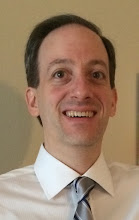
Ross Sprague, a dominant force in Midwest chess from the 1950s through the mid-2000s, recently passed away. Sprague achieved the National Master title during an era when there were only a few dozen Masters in the entire country and he later earned Senior Master status with a rating well over 2400. He did not have the opportunity to play FIDE rated chess during his prime or he certainly would have attained FIDE Master status and he quite possibly could have become an International Master. National Master David Presser, the 1964 Ohio co-champion, told me years
ago that he believes that Sprague is the most naturally talented native
Ohio chess player of all-time. Sprague was a powerful attacker who knew a lot of opening theory and was blessed with a tremendous memory. If you survived the opening and middlegame against Sprague you then discovered that he seemed like a walking endgame tablebase. He had an incredible sense of how to optimally place his pieces and pawns during the latter stages of the game.
Sprague's chess career began in Cleveland, Ohio in the 1950s. He often told stories about playing ping pong and speed chess against Bobby Fischer during one of the U.S. Junior Opens in the late 1950s. Sprague also formed a friendship with Grandmaster Pal Benko, who called him "Poopsie" and taught him a lot about endgame play. Sprague served as an airplane mechanic during the Vietnam War and later became a practicing attorney.
Sprague won or shared first place in the Ohio Chess Congress
four times (1958, 1975-76, 2005). He holds the record for longest time
span between OCC titles (47 years), breaking the record of 35 years set
by James Schroeder.
Based on my recollection of conversations with Sprague, I believe that
he said that he won several other state championships, including (I think)
Illinois, but I cannot find official confirmation of this. Sprague also
won the Dayton Chess Club Championship twice (2005-06).
After Sprague first moved to Dayton in the mid-2000s, I received many endgame lessons at
his hands as I drew seemingly winning positions and lost seemingly drawn
positions. He was past his prime (his U.S. Chess Federation rating had dropped from 2400-plus to the mid-2200s) but he could punch above his weight, as former World Chess Championship Challenger Gata Kamsky found out when Sprague held him to a draw at the Kings Island Open. I will never forget Sprague's concise recap: he said that Kamsky grumbled after the game that he had five different ways to win, to which Sprague replied in typical Sprague fashion "But you chose number six, which draws."
Clearly, I am far from the strongest player who crossed swords with Sprague but since 1991 (when the USCF first began keeping such records) I faced him 52 times in regular rated games, making him my most frequent opponent during that time frame. I am also listed as Sprague's most frequent opponent, one game ahead of International Master Calvin Blocker, but of course those records omit nearly 40 years of Sprague's chess career. Sprague scored 25 wins, 11 draws and 16 losses in our regular rated games.
I am Sprague's most frequent Quick chess opponent by a larger margin of 132-73 over Daytonian Mark Kellie. Sprague scored 56 wins, 28 draws and 48 losses against me in Quick chess.
He kept playing tournament chess until he completely lost his sight. He was too proud or stubborn to use the special equipment that is available to assist blind players to participate in tournament chess.
I believe that competing against and analyzing with Sprague
is one of the major factors that helped elevate my rating from
fluctuating in the low 2000s to consistently being above 2100 for
several years (and peaking at 2190 before various life events put
tournament chess on the back-burner for me for a while).
We first faced each other in a John Carroll University Action Tournament held on June 5, 1992; the 2427 rated Sprague beat me (I was then rated 1980) en route to finishing tied for second behind International Master Calvin Blocker. Our last regular rated game took place 19 years later to the day as I beat him in the final round of the 2011 Gem City Open. Sprague's rating was floored at 2200, while I was rated 2087; Sprague had been battling severe vision loss and other health problems for quite some time, so I have no illusions about my peak playing strength compared to his.
Sprague was well-read and our conversations were always interesting. If you caught him in the wrong state of mind, he could be a bit blunt and abrasive but he always treated me with respect and I think he knew how much I respected his chess abilities. We were from different generations and had different life experiences but we connected because of our mutual love of chess.
Here is my loss with Black against Sprague from the April 2005 Gem City Open. Sprague was rated 2205, while I was rated 2012. After an innocuous opening, we traded into an equal ending, whereupon Sprague methodically outplayed me:
1. e4 d6 2. d4 Nf6 3. Nc3 c6 4. Bg5 Qa5 5. Qd2 Nbd7 6. Nf3 h6 7. Bxf6 Nxf6 8. e5 dxe5 9. Nxe5 Be6 10. Bc4 Bxc4 11. Nxc4 Qb4 12. b3 Nd5 13. Nxd5 Qxd2+ 14. Kxd2 cxd5 15. Ne3 e6 16. Rhe1 Kd7?! 17. Kd3 Rc8 18. c4 dxc4+ 19. bxc4 Be7 20. Rab1 b6 21. f4 Rhd8 22. f5 exf5 23. Nxf5 Bf6 24. Ne3 Kc6 25. Nd5 Rxd5?! 26. cxd5+ Kxd5 27. Rbc1 Rxc1 28. Rxc1 Bxd4 29. Rc7 Be5 30. Rxf7 a5 31. h3 Bf6 32. Rc7 Kd6 33. Rc8 Kd5 34. a4 Ba1 35. Rc1 Bf6 36. Rb1 Bd8 37. Rb5+ Kc6 38. Kc4 Bf6 39. Rd5 Ba1 40. Rd1 Bf6 41. Re1 Bd8 42. Re6+ Kd7 43. Kd5 Kc7 44. Re8 Bf6 45. Rf8 b5 46. axb5 Kb6 47. Rb8+ Ka7 48. Re8 Kb6 49. Kc4 a4 50. Re6+ Kb7 51. Ra6 Be7 52. Rxa4 Kb6 53. Ra6+ Kb7 54. Kd5 Bg5 55. Rg6 Bf6 56. Rxf6 gxf6 57. Ke6 1-0.
I miss our nearly weekly friendly but fierce chess battles for Dayton Chess Club supremacy but I cherish the memories of competing against such a talented player who helped me to come closer to maximizing my potential. It is good to be challenged, to be pushed, to find out what you can do when you are tested. Thank you, Ross, and Rest in Peace.
Showing posts with label Ross Sprague. Show all posts
Showing posts with label Ross Sprague. Show all posts
Tuesday, November 27, 2018

Saturday, January 3, 2015
History of the Ohio Chess Congress
Dana Mackenzie, who was briefly a regular on the Ohio tournament scene and who earned the National Master title in the 1992 Ohio Chess Congress, notes that Ohio is one of just 13 states that does not publish a list of their official chess champions. Mackenzie's lament reinforces the notion that, in general, Ohio chess organizations do not have great respect for their tradition/history and their champions. The Dayton Chess Club repeatedly rebuffed my suggestions about including a history section on their website (or even just a bare bones listing of the winners of the Dayton Chess Club Championship, an event that dates back to 1959). In 2012, I posted a complete list of Dayton Chess Club Champions and the Chess section of this website includes several articles about Dayton Chess Club history and/or Ohio chess history, including The Dayton Chess Club Championship: Still Going Strong After Five Decades, Looking Back on Two Decades' Worth of Games Versus Clif Rowan, and Mike Anders is Gone Too Soon but His Joyful Spirit Will Never be Forgotten (11/7/24 note: I recently added articles about the Roosevelt Open and the Gem City Open).
Since it is doubtful that the Ohio Chess Association (or any other Ohio chess individual or group) is interested and/or able to produce a list of Ohio's Chess Champions, I decided to gather this information from official sources and publish it for posterity (11/7/24 note: the OCA used my list as a reference to update the Columbus Trophy and add the names of the 1994-2024 Ohio Chess Champions).
The list format is simple: year, site, Ohio Champion, score. I do not have full information for each year but I will continue to edit this list as my research uncovers more details. Each Ohio Chess Champion is listed in bold type; usually, the Ohio Chess Champion also finished first overall in the Ohio Chess Congress' Open section but for some years I was not able to determine the Ohio Champion's final score and/or whether or not the champion was also the overall tournament winner; any non-Ohio resident who finished with an equal or better score than the state champion(s) is listed in italic type in parentheses for the years in which such information is known.
OHIO CHESS CHAMPIONS
In the November/December 1990 Ohio Chess Bulletin,
David Moeser described the formative years of the Ohio Chess
Championship: "Early in the 1900s, and again from the late 1920s to
1944, the Ohio Championship was decided by a match between the Northern
Ohio Champion (NOC), representing Cleveland, and the Southern Ohio
Champion (SOC), representing Cincinnati." The modern Ohio Chess Association was founded in 1945.
????: Bluffton--C. Herman Bahnning 11/12 According to the September 1969 Chess Life, Bahnning scored 10 wins and two draws and he was one of the U.S. Chess Federation's "early state champions." That Chess Life article does not state the year that Bahnning won the Ohio Championship. Bahnning's name does not appear on Moeser's list, which includes the years 1910-11, 1928-1938 and 1944.
1945: Milton Ellenby 6/7
1946: Columbus--John Hoy 6/7
1947: Columbus--Thomas Ellison 6/7 Lawrence Jackson also scored 6/7 but, according to some 1947 Chess Life issues found by Mike Steve, Ellison won the title on tiebreak points. The Championship section included 27 players.
1948: Columbus--Elliott Stearns
1949: Walter Mann
1950: Akron--James Schroeder 5.5/6 The Championship section included 34 players.
1951: Columbus--Harald Miller 5.5/6
1952: Columbus--Tony Archipoff 6/7
1953: Columbus--Tony Archipoff 6/7
1954: Frank Ferryman 6/7 James Harkins also scored 6/7 but, according to the January/February 1991 Ohio Chess Bulletin, Ferryman won the title because he had 32.5 Solkoff tiebreak points compared to Harkins' 30.5.
1955: Charles Heising
1956: Robert McCready 6/7
1957: Robert Steinmeyer
1958: Ross Sprague 6/7 Charles Heising also scored 6/7 but, according to the January/February 1991 Ohio Chess Bulletin, Sprague won the title because he had 33.5 Solkoff tiebreak points compared to Heising's 29.5.
1959: Richard Kause 7/7
1960: Jack Witeczek 7/7
1961: Jerrold Fink/Saul Wachs/Thomas Lajcik 5.5/7
1962: George Miller/Richard Ling 6/7
1963: Rea Hayes 6.5/7
1964: Richard Kause/George Kellner/Thomas Wozney/James Harkins, Jr./David Presser 5.5/7 (Dave Reynolds 5.5). Per Parley Long's "OCA Yesterday" piece in the July-August 1989 Ohio Chess Bulletin, Richard Noel won the Speed Championship, Ann Jepson was the Women's Champion, and Edgar Lawrence was the Junior Champion. The tournament had 55 players.
1965: Richard Noel 7/7
1966: Saul Wachs 7/7
1967: Thomas Wozney 6.5/7
1968: Akron--James Harkins, Jr. 6.5/7 The September/October 1968 Ohio Chess Bulletin notes that Harkins became just the fourth two-time Ohio Champion, joining Archipoff, Kause and Wachs. It is not clear why Wozney was not also listed as a two-time Ohio Champion.
1969: Columbus--Thomas Wozney 6/7 Wozney won by five median tiebreak points over Robert Burns and Richard Garber. A then-record 122 players participated, though the September/October 1969 Ohio Chess Bulletin notes that figures for the event's early years are incomplete. Saul Wachs won the Speed Championship, scoring 6/6 in the final section (there were three separate preliminary sections, with the section winners facing each other in a round robin final section).
1970: Joseph Shaffer 6/7 Per the November 2015 Ohio Chess Bulletin obituary for Shaffer, Shaffer won on tiebreaks over Richard Kause, Tom Wozney, and David Lane. The obituary notes that Shaffer played in the OCC in 1967 (scoring a draw against eventual champion Wozney), 1969-71, 1973-76, 1979-81, and 1984. Shaffer earned the USCF Life Master title, and he also won state championships in Illinois and Pennsylvania.
1971: Columbus--Robert Burns, Jr. 6/7 Burns (rated 2211 at the time) won on tiebreaks over Thomas Wozney (2211) and Ross Sprague (2229). Burns and Wozney remained tied after the first tiebreaker but then Burns prevailed based on Sonnenborn-Berger points. Burns drew his individual encounters with both Wozney and Sprague. Carl Evans won the Problem Solving Contest, while Joseph Shaffer took second place over Dave Wolford in a playoff.
1972: Thomas Wozney 4.5/6 Wozney (2243) was awarded the title on tiebreaks over former champions Ross Sprague (2256), Richard Kause (2176) and Jerry Fink (2228). The event had a record 201 players. Art Keske won the Speed Championship, while Robert Burns and Paul Szilagyi tied for second place. Calvin Blocker won the Problem Solving Contest; future International Master Blocker, then rated 1865, scored 2.5/6 in the main event.
1973: Columbus--James Harkins, Jr. 5.5/6 Harkins prevailed on tiebreaks over Joseph Shaffer, Ross Sprague and Rea Hayes.
1974: Robert Burns, Jr. 5/6 Burns (2204) won on tiebreaks over Jerry Fink (2188), James Voelker (2090), Thomas Wozney (2294) and Arthur Keske (2192). Calvin Blocker (2169) scored 4/6, losing to Wozney in the last round.
1975: Dayton--Ross Sprague 5.5/6 Sprague's victory marked the "...first time in many years that the title has not been decided on tie-breaks" (Quote from the cover of the September/October 1975 Ohio Chess Bulletin). The tournament's top-rated player Milan Vukcevich (2489), fresh off of a third place finish in the U.S. Championship, lost in the second round to Perry Sill (1872) but bounced back to tie for second. Vukcevich also claimed first place honors in the Ohio Speed Championship with a 7/7 score. Future IM (and chess author) John Donaldson, then rated 1881, finished second (5.5), while Calvin Blocker, Alan Casden, Greg Fulkerson, Ed Diener, and Dean Hart tied for third (5/7 each) out of 30 players.
1976: Toledo--Ross Sprague 5.5/6
1977: Cleveland--Danny Shapiro 5.5/6 Ross Sprague and Nachum Salman tied for second-third with 5/6. Richard Horvitz won the Ohio Speed Championship with a 6/6 score, followed by Calvin Blocker (5/6).
1978: Dayton--Robert Burns, Jr. 5/6 According to the September 1978 Dayton Chess Club Review, Calvin Blocker (2325) and Richard Noel (1865) also scored 5/6 but Burns (2232) won the championship on tiebreaks. Blocker defeated Errol Liebowitz (2159) in a 106 move, 10 hour, 10 minute game in the final round. Blocker won the Ohio Speed Championship with a 7/7 score, ahead of Richard Horvitz (6/7).
1979: Columbus--Errol Liebowitz 5.5/6 "He is the first champion since 1966 to come from the southern half of the state and first non-Cleveland resident to win since 1970. Three former state champions, Bob Burns, Joe Shaffer and Ross Sprague, along with Cincinnati expert Perry Sill, tied for second with 5-1" (Quote from December 1979 Chess Life & Review). A total of 170 players participated. Craig Roll and Ted Halstead each scored 5.5/6 to tie for first place in the 32 player Ohio Speed Chess Championship. The September-October 1979 Ohio Chess Bulletin notes that Roll and Halstead were declared co-champions after they drew a tiebreak game.
1980: Columbus--Alan Federl
1981: Columbus--Calvin Blocker 6/6
1982: Lima--Calvin Blocker 6/6
1983: Columbus--David Glueck 5/6 (Ed Formanek 5.5, Vince McCambridge 5)
1984: Calvin Blocker 5.5/6 Charles Diebert, Jim Weitthoff, Bruce Steinfeld, Randy Andrews and Dennis Gogel tied for first in the Ohio Speed Championship (4/5). A total of 127 players participated in two sections.
1985: Columbus--Calvin Blocker/James Schroeder 5/6 (Anatoly Lein 5; Lein would later become an Ohio resident and win the state title in 1999). The November-December 1985 Ohio Chess Bulletin states that 209 players participated, but does not indicate if this is a record number.
1986: Columbus--Calvin Blocker 5/6 (Igor Ivanov 6, Michael Rohde/Boris Gulko/Vivek Rao 5). The November-December 1986 Ohio Chess Bulletin states that 207 players participated.
1987: Columbus--Calvin Blocker 5/6 (Boris Gulko/David Norwood 5.5). The November-December 1987 Ohio Chess Bulletin states that the number of players (224) broke the event record set in 1973 (209), and further notes that TD Larry Paxton directed the OCC in both record-setting years.
1988: Columbus--Calvin Blocker 5/6 (Anatoly Lein/Andrew Karklins/Mike Blankenau 5). Ohio Expert Steve Seward and Indiana Champion James Mills shared first place in the 51 player Ohio Active Championship with a score of 4-0. The November-December 1988 Ohio Chess Bulletin describes the Active event's time control as "sudden death in 30."
1989: Cleveland--Calvin Blocker 5.5/6. According to the September-October 1989 Ohio Chess Bulletin, Andrew Zebrowski and Connecticut's Eric Godin tied for first place in the 46 player Ohio Action Championship. Bruce Steinfeld earned first place in the 32 player Ohio Speed Championship with a 6/6 score.
1990: Columbus--Steve Wygle/Nachum Salman 4.5/6 (Vivek Rao/Ron Burnett 5.5, Sohan Ramakrishnepillai 5). Per the September/October 1990 Ohio Chess Bulletin, Ed Formanek won the "3rd Annual Ohio Active Chess Championship" with a score of 4.5/5. The time control is not listed, but was likely G/30 or faster; during that era, the designations "Rapid" or "Quick" were not used widely (if at all), and games contested at time controls slower than blitz but faster than classical were called "active" or "action" games. James Mills, Nachum Salman, Andrew Zebrowski, Bruce Steinfeld, Tom Britt, and Craig Stauffer tied for second with 4/5. Andrew Zebrowski won the Speed Chess Championship with a score of 5/5, while Ron Burnett, Pappu Murthy, Steve Seward, and Bruce Steinfeld finished tied for second with 4/5.
1991: Dayton--Boris Men 5/6 (Sergey Kudrin 5.5). Per the September/October 1991 Ohio Chess Bulletin, "Chuck Diebert convincingly thrashed a field of 19 participants in the WBCA-rated state speed chess championship" with 5.5/6, while James Mills finished second with 5/6. That issue also notes that Andrew Zebrowski won the Action Championship without providing any other details.
1992: Cleveland--Boris Men 5/6 (Gregory Kaidanov 5.5, Sergey Kudrin 5). Per the September/October 1992 Ohio Chess Bulletin (published in one volume labeled July-December 1992), Chuck Diebert, Joseph Belfer, David Allen and Carl R. Boor shared first place in the Ohio Action Championship with 3.5/4, finishing atop a 42 player field. William Wright's recap of the weekend's events notes, "A chess congress, by definition, is a number of different events all held at the same site. This year's event set what I claim to be a record number of side events." Wright states that five action quads were held, plus the blitz championship and the "first ever 15 minute championship." Andrew Zebrowski won the eight player 15 minute championship with 3.5/4. Zebrowski also won three of the five quads that he entered, while Vincent Charlette won the other two quads. Zebrowski won the 16 player blitz tournament with 12/14, two points ahead of Chuck Diebert. Joe Heithaus won the Reserve section of the blitz tournament with 11.5/14, while David Friedman finished second with 10/14.
1993: Columbus--Boris Men 5/6 (Alex Shabalov 5.5)
1994: Columbus--Boris Men 5.5/6 Ed Formanek and Steve Seward shared first place in the Ohio Action Championship, each scoring 4.5/5 in a 48 player field. The USCF crosstable is captioned "6th Ohio Action Championship," but event titles are chosen by the organizer and so the numbering may not be accurate. Novia Milojic scored 4/5 to finish first among Class "A" players (=3rd-7th overall), and David Friedman scored 3/5 to finish in a three way tie for second among Class "A" players (=10th-20th overall).
1995: Columbus--Alex Yermolinsky/Dmitry Berkovich/Calvin Blocker 5/6 Ram Dake and Carl R. Boor shared first place in what was reported to be the third Ohio Quick (G/15) Championship, each scoring 3.5/4 in a 22 player field (if it is correct that the first G/15 Championship was held in 1992 and the third in 1995, it is not clear if the second event was held in 1993 or 1994; based on the above notes, it appears that G/15 was being classified as "Quick" and distinguished from G/30 events that were designated as "Action").
1996: Columbus--Greg Serper/Boris Men/John Stopa 5/6
1997: Columbus--Greg Serper/Calvin Blocker/Boris Men/George Umezinwa 4/5 (Ed Formanek 4)
1998: Columbus--Greg Serper 4.5/6 (Alex Goldin/Eric Torman 5)
1999: Columbus--Calvin Blocker/Anatoly Lein 5/6
2000: Columbus--Calvin Blocker 5/6 Blocker's 13th title, according to the July/August 2000 Ohio Chess Bulletin, but my research proves that this was Blocker's 12th OCC title. Tom Britt won the 26 player Ohio Quick Chess Championship with a score of 5/5.
2001: Columbus--Mark Geist/Russell Wilson 4.5/6 (Stanislav Kriventsov 5.5). Stanislav Kriventsov won the 14 player Ohio Quick Chess Championship with a score of 3.5/4.
2002: Dayton--Anna Zatonskih/Carl B. Boor 4.5/6 (Alex Goldin 5.5, Stanislav Kriventsov/Yevgeniy Gershov/Jim Dean 4.5). Ananth Pappu won the Ohio Quick Championship (G/10, unrated) with a score of 5/5. David Friedman and Will Surlow tied for second (4/5).
2003: Dayton--Ananth Pappu/Mike Joelson/Bob Basalla 4.5/6 (Ron Burnett 5)
2004: Cleveland--Oliver Koo/Andrew Zebrowski/Paul Nemeth/Kasun Waidyaratne 4.5/6 (Ed Formanek 4.5)
2005: Columbus--Calvin Blocker/William Wright/Allan Bennett/Ananth Pappu/Ross Sprague 4/6 (Jaan Ehlvest 5.0, Stanislav Kriventsov 4.5, Mark Heimann 4). Kyle Jones and Ananth Pappu shared first place in the 22 player Ohio Blitz Championship by scoring 6.5/8 each.
2006: Dayton--John Bidwell 5/6 (Mark Heimann 5)
2007: Dayton--Carl B. Boor 5/6 (Mark Heimann 5)
2008: Columbus--Calvin Blocker 5/6 (Mark Heimann 5.5). Garrett Smith won the 32 player Ohio Blitz Championship with a score of 7.5/8. Tom Britt, Kyle Jones, and Fred Allsbrook tied for second with 6/8. Britt and Jones were the top Ohio finishers. Luis Benitez, Adonis Turner, and Brandon Mason shared first place in the 10 player Ohio G/30 Championship with 4/5. Benitez and Mason were the top Ohio finishers.
2009: Dayton--Kris Meekins 5/6 (Matthew Marsh 5) Meekins also won the Ohio Quick Championship (G/25 w/5 sec. delay) by scoring 4/4 in a field of 14 players. Ross Sprague and David Friedman tied for second (3/4). Ananth Pappu won the Ohio Blitz Championship by scoring 10.5/12. Marsh took clear second (8.5/12).
2010: Dayton--John Lodger Hughes/David Friedman 4.5/6 (Alex Goldin 5.5/Siddharth Ravichandran 5) The father-son duo Carl R. Boor and Carl B. Boor shared the Ohio Quick (G/25) Championship title by scoring 3.5/4 each.
2011: Columbus--Carl B. Boor/Walker Griggs 5/6 (Alex Zelner 5) The official USCF crosstable incorrectly lists Boor with 4.5 but the Ohio Chess Bulletin correctly credits Boor with four wins, one draw and one bye.
2012: Cleveland--Goran Vojinovic/Walker Griggs 5/6
2013: Cleveland--Calvin Blocker/Oliver Koo/William Wright/John Lodger Hughes 4.5/6 (Bryan Smith 5)
2014: Dayton--Hans Multhopp 5/6. Yuri Barnakov, Will Sedlar, and John Bidwill each scored 4/5 to share first place in the 13 player Ohio Quick Championship. Will Sedlar scored 7.5/8 to take clear first in the eight player round robin Ohio Blitz Championship.
2015: Columbus--Goran Vojinovic 4.5/5
2016: Columbus--Mika Brattain 6/7 (Alex Shabalov 6) Yuri Barnakov won the Ohio Blitz Championship (G/5, no delay) by scoring 7/7 in a field of 20 players. Carl B. Boor finished second (6/7) and David Friedman finished third (5/7).
2017: Cleveland--David Allen/Arvind Jayaraman 4/5 (Grant Xu 4.5) No side events were held.
2018: Cincinnati--Mika Brattain 6/6 No side events were held.
2019: Cleveland--Elton Cao 5.5/6 No side events were held.
2020: ONLINE (COVID-19)--Eigen Wang/John Miller/Christian Thornton 3/5 (Alex Lenderman/Gadir Guseinov 4) No side events were held.
2021: Akron--Eigen Wang/Deshawn Kelley 4/5 (Eyal Grinberg 4.5, Alex Shabalov/Omer Reshef 4) No side events were held.
2022: Newark--Deshawn Kelley 4/5 (Ivan Schitco 4.5, David Brodsky/Rahul Srivatshav 4) For the first time since 2016, a side event was held. Evan Park won the Ohio Blitz Championship (G/5, no delay) by scoring 8/8 in a field of 12 players. Benjamin Lin finished second (6.5/8) and David Friedman finished third (5/8, top Ohio scorer).
2023: Akron--Justin Storn 4/5 (Alex Fishbein 4.5, Mitch Fishbein 4) Jesse Ren won the Ohio Blitz Championship (G/3 w/2 second increment) by scoring 7/8 in a field of 32 players. Braeden Hart finished second (6.5/8).
2024: Newark--Arjun Soni 4.5/5 Soni was born in 2010, and is one of the youngest OCC champions ever. Kasun Waidyaratne (born in 1992, won in 2004), and Elton Cao (born in 2004, won in 2019) are the only other champions aged 15 or younger that I know about. Two side events were held for the first time since 2014. Henry Lu won the Friday night quick tournament (a three player double round robin) with 3.5/4. Sharath Radhakrishnan and Arjun Soni won the Ohio Chess Congress Blitz by scoring 6/7 each in a field of 12 players.
2025: Newark--Dalton Perrine 4.5/5 (Alex Shabalov, Erick Zhao 4.5) Erick Zhao won the Ohio Chess Congress Blitz by scoring 6.5/7 in a field of 18 players.
NOTES:
This history project will be an ongoing labor of love until I am able to provide complete information about every Ohio Chess Congress. I will update this list each year as new winners are crowned and I will make any other relevant additions/changes as my research uncovers more data about previous champions.
It is widely known that International Master Calvin Blocker has won the most Ohio Chess Championships, but for some time there has been uncertainty regarding how many titles he has actually captured. The July/August 2000 Ohio Chess Bulletin states that Blocker's win in that year's event was his 13th title but my research proves that the 2000 championship was Blocker's 12th title (1981-82, 1984-1989, 1995, 1997, 1999-2000). Perhaps the source of confusion for the writer of the 2000 article comes from counting Blocker as the 1978 champion or co-champion; even though Blocker shared top honors with a 5/6 score in 1978, he lost the title on tiebreaks to Robert Burns (the OCA has not followed a consistent policy regarding the use of tiebreaks to determine the state champion and in this article I have simply followed the standards that were applied at the time that each tournament was held).
Blocker added titles in 2005, 2008 and 2013 to push his total to 15. It is likely that very few players have won more state championships--in any state, not just Ohio--than Calvin Blocker. It is unfortunate that the Ohio Chess Association has not done a better job of keeping widely available, accurate records about this remarkable accomplishment--and about a great event that has been held annually without interruption since 1945.
*****
Sources: Various issues of the Ohio Chess Bulletin, U.S. Chess Federation crosstables, Chess Life issues dating back to the late 1960s, and the Dayton Chess Club Review.
1/6/15 edit: I added some names to the list after receiving dozens of Ohio Chess Bulletins from Earle Wikle.
1/15/15 edit: Thanks to information provided by Robert
Loggins and Mike Steve, I have been able to identify all of the pre-1969 Ohio Champions who did not appear on my original list.
4/15/15 edit: According to Mike Steve, Witeczek's perfect score in 1960 was reported in the local Lorain, Ohio newspaper. Steve notes that Witeczek later moved to Michigan and won the Michigan State Championship. Also, Steve found a 1981 OCC crosstable listing Blocker as the 6-0 winner, meaning that Blocker scored back to back perfect scores in 1981 and 1982. Blocker is the only player who can be confirmed with posting two perfect OCC scores.
9/5/22 edit: I not only added the information for the just-completed 2022 Ohio Chess Congress, but I also went through my Ohio Chess Bulletin archive and added details about the 1970 OCC, and about side events held in 1964, 1979, 1988-1992, 1995, 2000-2001, 2005, 2008, and 2014. Further, it should be noted that my consistent practice from when I first wrote this article is that if I can confirm that no side events were held in a given year then that is mentioned. If no note is provided, then I have no information about whether side events were held that year.
8/25/23 edit: I added information about the 1994 Ohio Action Championship, which is captioned "6th Ohio Action Championship" in the official USCF crosstable, and I expanded the notes about other Action and G/15 events held in the late 1980s/early to mid 1990s.
9/2/24 edit: I corrected the spelling of some champions' names to match the spelling displayed on "The Columbus Trophy," which used to be given to the Ohio Champion to keep for one year (it is now the property of the John G. White Collection at the Cleveland Public Library). Here are three pictures of "The Columbus Trophy" from the 2024 Ohio Chess Congress (the first picture is from a Facebook post by 2024 OCC organizer Kathy Lin; I took the second and third pictures):


No names have been engraved on the trophy since 1994. Hopefully, the OCA will remedy this lapse as soon as possible.
11/7/24 edit: The Columbus Trophy has been updated to include the names of all of the post-1994 champions.
9/5/25 edit: Here are pictures of the updated Columbus Trophy plaques for 1976-2005 and for 2006-2025 (both pictures courtesy of 2025 OCC organizer Kathy Lin):

.JPG)
*****
Author's Personal Note (edited 11/7/24):
In 2010, John Lodger Hughes and I each scored 4.5/6. We were the highest scoring established Ohio residents but initially Siddharth Ravichandran--a strong Indian playing in his one and only Ohio event--was erroneously considered to be an Ohio resident and thus was crowned as the Ohio Champion with 5/6. When the OCA updated the Columbus Trophy in 2024, I presented documentation regarding this situation, and the OCA correctly determined that John Lodger Hughes and I should be listed as co-champions for 2010. In 2010, I defeated reigning Ohio Champion Kris Meekins in the first round with a Queen sacrifice leading to checkmate, and then in the sixth round I defeated two-time Ohio Champion (2003, 2005) Ananth Pappu.
On 11/6/24, Kathy Lin interviewed me about my chess career in general, and the 2010 Ohio Chess Congress in particular:
In 2005, out of staters Jaan Ehlvest (5/6) and Stanislav Kriventsov (4.5/6) finished 1st-2nd, while five players shared the state title with 4/6. I finished with 3.5/6, though I was not truly in contention since it took a last round win for me just to pull within a half point of the Ohio co-Champions.
My strongest performance other than 2010 came in 2000, when I finished tied for 5th-9th overall with 4/6, one point behind tournament winner/Ohio Champion Calvin Blocker, who defeated me in round one.
Subscribe to:
Posts (Atom)