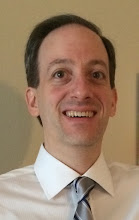
Sunday, April 29, 2012

Hard Fought Dayton Chess Club Championship Crowns Three Co-Winners

The Dayton Chess Club Championship has been held since 1959. I entered the 2012 event seeking my record ninth championship and my first back to back crowns since 1999-2000. This year's tough field included promising young Expert Les Whorton (the number one seed, sporting a career-high 2145 rating after winning the Board One prize in the recent Midwest Open Team Chess Festival), six-time former DCC Champion Earle Wikle (my first chess mentor) and several strong Class A players. I was the second seed but I got off to a rough start, scoring just 1.5/3 (conceding a draw to my talented student Noah Keating-Adams and blundering a piece in a winning position against Mark Kellie, my first loss in the DCC Championship to a player rated below Expert level since 2008). Whorton sprinted to four straight wins and seemed poised to lap the field--but I recovered to win my fourth and fifth round contests while veteran Class A player Riley Driver held Whorton to a draw in round five, giving me the opportunity to have a last round battle on board one with Whorton; Whorton had already clinched at least a share of first place and I needed to beat him with Black to join him in the winner's circle.

I took my inspiration from Garry Kasparov's win versus Anatoly Karpov in the 24th and final game of their 1987 World Championship match; Karpov only needed a draw to wrest the title away from the man who had dethroned him in 1985 but instead of attacking from the outset Kasparov patiently and methodically built up his position, turning around the notion that it is hard to win a chess game when you must win: Kasparov proved that it can also be challenging psychologically for the player who only needs a draw to find the proper balance between the necessary level of caution to keep the game equal and the appropriate amount of aggression to avoid drifting into a passive position. Kasparov later called that win "the most important game of my life." It is difficult for me to single out one game from the more than 2000 rated games that I have played since 1987 but this struggle with Whorton certainly ranks among the more memorable battles of my chess career; any last round game against a strong player with first place on the line is special. Also, Whorton and I have faced each other very frequently so--like Kasparov and Karpov (but obviously at a lower level of the sport)--we each entered the game with certain notions about how our opponent likes to play; according to the data at USCF's MSA webpage, I am Whorton's most frequent opponent at both Regular and Quick time controls, while Whorton is my third most frequent opponent at Regular time controls and is tied for my third/fourth most frequent opponent at Quick time controls (Whorton holds a slight lead over me in our Regular head to head encounters, while I have a larger lead in our Quick head to head encounters).

Here are the moves from my game with Whorton, along with some brief annotations:

[Event "DCC Championship 4/28/12 (6)"]  [White "Whorton, Les"] [Black "Friedman, David"] [Result "0-1"] [ECO "A53"] 1. d4 Nf6 2. c4 d6 3. Nf3 Nbd7 4. g3 (Objectively there is nothing wrong with this move but Whorton usually plays more aggressively so I took this as a sign that he would try to avoid risks because he only needed a draw to clinch clear first.) e5 5. dxe5 dxe5 6. Bg2 Bc5 7. a3 a5 8. Nc3 O-O 9. O-O Re8 10. Rb1 Qe7 11. Bg5 c6 12. Ne4 h6 13. Bxf6 (Superficially it may seem like these exchanges bring White closer to the desired result but in fact they actually free up Black's position a bit.) Nxf6 14. Nxf6+ Qxf6 (Black now has the two Bs on an open board.) 15. b4 Bf8 16. Nd2 Rd8 17. Ne4 Qe7 18. Qb3 Bf5 19. e3 axb4 20. axb4 Ra7 21. c5 Rda8 22. Qc3 Ra3 23. Rb3 R3a7 (A little bit of psychology is at play here. My 22nd move induced White to play Rb3, thus preventing White from trading off Rs with Ra1. White could of course play R3b1 here, repeating the position, but I gambled that Whorton would like his position too much to just settle for a draw by repetition.) 24. Nd6 (There is nothing wrong with this move but the game continues without pieces being exchanged and I sensed that White was a bit conflicted between wanting a draw and wanting to play for more.) Be6 25. Rbb1 Ba2 (I remember a classic game when Karpov [as White in a Ruy Lopez] closed the a file to double Rs and only opened the file again when he was ready for action. Objectively this position is equal but I felt very comfortable with my practical prospects here.) 26. Ra1 Qe6 27. Rfd1 f5 (This double-edged move is objectively not best--but it may have actually effectively been the winning move because it induced White to go for broke and abandon any pretense of seeking a draw;  27... g6 followed by ...Bg7 was my original plan but I wanted to first prevent White from enforcing an e4 blockade. I overlooked his clever response.) 28. Nb5! Bb3 (28... cxb5  29. Rxa2 is deadly: White threatens Bd5 winning the Q and Black's Q-side pawn structure is ruined.) 29. Nc7  (29. Nxa7 Bxd1 30. Nxc6! Houdini suggests this move, a desperado that neither player noticed during postmortem analysis; White wins a solid extra pawn and forces Black to trade Rs.) 29... Rxa1 30. Rxa1 (30. Nxe6 Rxd1+ 31. Bf1 Bxe6 and Black is winning) 30... Rxa1+ 31. Qxa1 Qc4 (This position is objectively equal but White has to play very carefully to keep Black's Bs under control while also avoiding back rank problems and making sure that the Nc7 does not become trapped.) 32. Qe1 e4 33. Qd2 (The losing move. White understandably--but carelessly--assumes that Black will not want to trade Qs. After the game, Whorton suggested 33. Bf1 and this is clearly better than the text.) 33... Qd3 34. Qe1 (34. Qxd3 exd3 and White must give up his B to stop Black's passed d pawn; this is the point that Whorton overlooked when he played his 33rd move.) 34... Qd8 35. Qc3 Bf7 (White's N is trapped.) 36. Bxe4 (36. Qe5 Qd1+ 37. Bf1 Bc4 and Black is winning) 36... fxe4 37. Qe5 Qd1+ 38. Kg2 Bc4 39. h4 Qf1+ 40. Kh2 Qxf2+ 41. Kh3 Bf1+ 42. Kg4 Qf3# 0-1

Class A player Richard Mercer bounced back from an upset loss in round one to finish with 4.5/6 as well; he defeated Driver in the last round to become a DCC Champion for the first time. The Dayton Chess Club Championship holds a special meaning for me and I am very happy to once again add my name to the list of champions on the Richard Ling Memorial Award trophy and I extend a warm welcome to Richard Mercer and Les Whorton as they each join that distinguished list for the first time. Each of this year's three winners are separated in age by approximately 20 years, so we represent three generations of chess players.

DCC Champions, 1959-2012


1959 J. Fink


1960 H. Fleat


1961 R. Ling


1962 V. Zukaitis


1963 D. Wolford


1964 D. Wolford


1965 R. Ling


1966 R. Ling


1967 R. Ling


1968 R. Buchanan


1969 D. Wolford


1970 V. Burk


1971 C. Unruh


1972 D. Wolford


1973 R. Ling


1974 B. Espedal


1975 A. Casden


1976 A. Mantia


1977 A. Mantia


1978 V. Burk


1979 D. Guehl


1980 D. Guehl


1981 B. Beard


1982 V. Burk


1983 V. Burk


1984 J. Jordan


1985 G. Vitko


1986 A. Hood


J. Jordan


E. Wikle


1987 D. Blossom


1988 T. Chou


1989 A. Miravete


1990 R. Springer


1991 M. Chiminiello


1992 V. Burk


A. Mantia


J. Langreck


1993 J. Vehre


1994 A. Mantia


1995 F. Titus


1996 C. Atkins


1997 D. Friedman


1998 M. Fowler


1999 D. Friedman


2000 D. Friedman


2001 E. Wikle


2002 D. Friedman


E. Wikle


2003 C. Atkins


E. Wikle


2004 E. Wikle


D. Friedman


J. Dowling


2005 R. Sprague


M. Kalafatas


J. Dowling


B. Coraretti


2006 R. Sprague


2007 D. Friedman


2008 E. Wikle


C.Atkins


J. Dowling


2009 D. Friedman


2010 A. Goldin


2011 D. Friedman


2012 D. Friedman


               R. Mercer
               L. Whorton

Notes: Dale Burk's given name was Vernon, so that is why he is
listed as "V. Burk" on the trophy; Chiminiello (1991) changed his
surname to Kalafatas (2005).

Most Wins:

David Friedman: 9
Earle Wikle: 6
Richard Ling, Dale Burk: 5
Dave Wolford, Tony Mantia: 4

Repeat Champions (including shared titles; except for special circumstances affecting the 1986 and 1992 championships, most first place ties were resolved by playoffs until the late 1990s when it was decided to simply list tied winners as co-champions):

Dave Wolford (1963-64)
Richard Ling (1965-67)
Tony Mantia (1976-77)
David Guehl (1979-80)
Dale Burk (1982-83)
David Friedman (1999-2000)
Earle Wikle (2001-04)
John Dowling (2004-05)
Ross Sprague (2005-06)
David Friedman (2011-12)

At Least Three Championships in a Four Year Span (including shared titles):

Richard Ling (1965-67)
David Friedman (1997, 1999-2000)
Earle Wikle (2001-04)
David Friedman (2009, 2011-12)


Saturday, April 7, 2012

Armageddon on the Chess Board

If you think that chess is boring, slow paced or not a real head to head sport, then check out this 1995 video of Grandmaster Viswanathan Anand (who is currently the World Chess Champion) versus Grandmaster Alexey Dreev in an "Armageddon" showdown. "Armageddon" is a tiebreaking procedure in chess; the two players face off in a one game showdown in which White has six minutes to Black's five minutes but Black only has to hold a draw to be considered the victor; a coin toss usually determines who gets to choose the white or black pieces. The commentators for this game are Grandmasters Daniel King and Maurice Ashley.

Tuesday, March 27, 2012

Federer and Nadal as Non-Religious Experience

David Foster Wallace's lengthy, well-regarded essay titled Federer as Religious Experience depicts Roger Federer as an incomparably gifted tennis player who literally should be worshiped. Wallace's experience as a successful junior tennis player no doubt heightened his appreciation for Federer's talents but Wallace became such a devoted member of the Church of Federer that he failed to fully grasp Rafael Nadal's equally compelling greatness. As Michael Mewshaw put it in his August 15, 2011 Newsweek article titled Rafa!, "Though Wallace dismissed Nadal as 'mesomorphic and totally martial,' it seems that almost everything he wrote about Federer applies to Rafa and that it was the Spaniard's apostasy in beating Federer over and over that clouded Wallace's judgment." Federer's "apostasy" has indeed inspired many commentators to twist and torture logic to its breaking point (and beyond) in elaborate attempts to avoid stating the obvious: Federer has had few answers for Nadal in their battles against each other and Nadal's career accomplishments are at least as impressive as Federer's. It is puzzling that so many tennis aficionados blithely dismiss Nadal's head to head dominance versus Federer as if it were a small dirt smudge carelessly smeared against a masterpiece painting, an irrelevant splotch easily removed by a good restorer; the reality is that no portrait of Federer or Nadal is complete unless it depicts just how convincingly Nadal has owned Federer: Nadal enjoys an 18-10 head to head advantage over Federer, including an 8-2 lead in their Grand Slam encounters after Nadal's 6-7 (5), 6-2, 7-6 (5), 6-4 victory against Federer in the 2012 Australian Open semifinals. Mewshaw adds, "A fantastic chimera, part bull, part bullfighter, Nadal has his own supernal gifts and wins not by making the game look easy, but by making it look every bit as demanding and difficult as it actually is. While Federer is planning points four shots in advance, Nadal often kills the ball before Federer has a chance to realize his arabesques of excellence."

Wallace's essay begins with an intricate--yet inaccurate (the New York Times later had to append a correction to the piece)--description of one point in Federer's 2005 U.S. Open match versus Andre Agassi; Wallace attempts to demonstrate why tennis observers--particularly those who also play the game--are so awestruck by Federer's skills. It is disappointing that Wallace focused more on breathlessly praising Federer than on accurately depicting the sequence from the Federer-Agassi match--lyrical flourishes are not more important than basic facts in a nonfiction article--but the larger issue is that, even though painting a vivid verbal portrait of a great athlete at work is a rare skill, such a portrait does not prove that Federer is greater than any one of several other players about whom Wallace could have also waxed poetic. When Wallace's essay was published in August 2006, Federer had played in 29 Grand Slam singles events, winning eight titles and losing six times in the first round. Bjorn Borg--the Sandy Koufax of tennis--won 11 Grand Slam singles titles in 27 appearances, never losing in the first round and only once losing in the second round. Pete Sampras won seven Grand Slam singles titles in his first 29 Grand Slam appearances, losing in the first round five times (he finished his career with a then-record 14 Grand Slam titles in 52 appearances, with seven first round losses). Rod Laver--who had five prime Grand Slam years stolen from him because of tennis' archaic rules preventing professionals from competing in the sport's most prestigious events--won six Grand Slam singles titles in 25 appearances as an amateur while suffering four first round losses (all in his first year on the tour) and then won five more Grand Slam titles as a professional for a career total of 11 wins in 40 appearances. Nadal won 10 Grand Slam singles titles in his first 29 appearances and did not suffer a single first round loss. Federer is an artist and Federer is a great player but Federer's artistry does not prove that he is greater or more dominant than some of his prestigious predecessors.

Federer acolytes are quick to point out that many great players--including Nadal himself--have anointed Federer as the greatest player ever but Mewshaw wryly notes that Nadal has good reason to say this: "Of course, humility is as much a part of the wallpaper of sport as Muhammad Ali's boasting. It's often good strategy to praise an adversary, all the better to aggrandize yourself. If Federer is the best ever and you beat him...well, you don't need to say the rest." Wallace's essay is an entertaining read but despite the large amount of technical and historical information Wallace included the lasting impression is not that Wallace objectively analyzed Federer's game but rather that he wrote a passionate fan letter about it.

Thursday, March 8, 2012

Chess Teacher Bruce Pandolfini's Credo

Renowned chess teacher/author Bruce Pandolfini recently won the Chess Educator of the Year award. His excellent acceptance speech is worth reading in its entirety but his credo is particularly striking:

"When I sit across from a talented young person, I'm aware how in time that individual may become one of the most important people in the world. I consider myself honor-bound to guide such minds on the way to full attainment of knowledge and power. Perhaps I can inspire them to make their own special commitment."

It certainly would be wonderful if more teachers, educators and administrators viewed gifted children that way!

Wednesday, March 7, 2012

More Insight into Bobby Fischer's Brilliant yet Tortured Mind

No reasonable and well informed person can dispute that Bobby Fischer was both a tremendous genius and a deeply troubled, mentally ill person. The fruits of his genius will live forever in the games that he artistically won, the tournaments and matches that he dominated and the great classic book that he wrote titled My 60 Memorable Games. Fischer's frustration about the republication and editing of his masterpiece book lends some insight into the nature of his mental illness and the way that the reckless actions of several people worsened Fischer's psychological imbalances. Edward Winter reports that the 1995 Batsford edition of My 60 Memorable Games contains over 570 changes from Fischer's original text. Fischer was understandably outraged that his creative work had been tampered with and he also alleged that Batsford neither had the right to publish his book nor had sent him any royalties after doing so. Winter takes no position on those two matters but he explains in detail how Batsford not only "butchered" Fischer's book but stubbornly refused to admit or correct this cascade of mistakes. As the affair dragged on with no resolution in sight, Fischer not only publicly lambasted Batsford but he even took aim at Winter, criticizing Winter for vastly understating how many changes Batsford had in fact made. Fischer had exhibited clear signs of paranoia for quite some time but the desecration of his great book only served to reinforce his belief that a grand Jewish conspiracy exists not only to conquer the world but to specifically target him.

The world was not out to get Fischer; the greed, carelessness and foolishness of various individuals does not prove the existence of some vast, organized conspiracy: the world is just messed up and does not function logically. Unfortunately, Fischer's mind was not able to accept and interact with the flawed world as it exists, so rather than acknowledge the true nature of the rampant chaos surrounding him he sought to impose order on that chaos by constructing elaborate conspiracies as an organizational framework that could explain why people act so illogically and foolishly. As a chess player, one of Fischer's greatest attributes was his ability to create order out of what seemed to be chaos but when you try to create order out of our messed up, chaotic world you may end up seeing (or inventing) connections and conspiracies that do not exist.

Winter notes that the David DeLucia collection of Fischer memorabilia includes a handwritten letter from Fischer to Osama bin Laden. Fischer considered bin Laden to be a kindred spirit because they both were wanted by the U.S. government and both were, in Fischer's twisted and paranoid world view, victims of a vast Jewish conspiracy. Fischer seriously believed that bin Laden would actually care about the books, magazines and other possessions that Fischer lost when the contents of his locker at the Bekins Storage facility were auctioned off after Fischer's representative failed to pay the storage fee despite being sent the requisite funds by the exiled Fischer. Fischer was rightfully outraged at what happened to his precious possessions just like he was rightfully outraged at the butchering of his book but in his tortured mind this rightful outrage simply fueled his paranoid delusions. Maybe Fischer would have been paranoid and delusional no matter what had happened to him but the fact that he repeatedly dealt with idiots and fools surely did not aid his peace of mind or fragile psychological state.

Monday, March 5, 2012

Mutiny on the Bounty: NFL Must Severely Punish Renegade Saints

Supposedly, "real" NHL fans don't want fighting taken out of their game and "real" NFL fans don't care about bounties paid out for hits that could maim a player or even end his career. If that is what it means to be a "real" fan then I am proud not to be a "real" fan because I believe that even in an inherently violent sport there still should be not just a written code of conduct--which the New Orleans Saints clearly and admittedly violated in several ways from 2009-2011--but also an unwritten code. Current and former players often speak of a "brotherhood" or "fraternity" that crosses team lines but the idea of an institutional mindset involving large cash payments expressly for "cart off" and "knockout" hits makes a mockery of such alleged unity.

This bounty scandal is inevitably being compared to the so-called Spygate situation but I still don't understand how something can be called "spying" when it involved someone in team regalia not even attempting to disguise the fact that he was gathering publicly available information. As King Kaufman put it, "Where a team has an expectation of privacy, it should get privacy. A guy standing on the sideline and flashing semaphores to the middle linebacker can't expect privacy." The Spygate situation did not affect the outcome of games, unlike three scandals that I mentioned in a September 15, 2007 BEST article: (1) the widespread use of steroids/PEDs by the 1970s Steelers teams that won four Super Bowls, (2) the use of steroids/PEDs by more recent Pro Bowl players like Shawne Merriman and (3) the salary cap circumvention that enabled the Denver Broncos to build and maintain a roster that won back to back championships.

The Saints' bounty program run by then-defensive coordinator Gregg Williams with the knowledge (and thus tacit approval) of Coach Sean Payton allegedly included between 22 and 27 players, resulted in injuries sustained by two star quarterbacks (Brett Favre and Kurt Warner) during playoff games won by the Saints in their 2009 championship run and is an egregious violation of both written and unwritten rules. The written rules involve the prohibition against specifically and deliberately targeting individual players with the intent of committing injuries and also involve circumvention of the salary cap through the payment of bonuses; the unwritten rules, as indicated above, involve the gross (in every sense of the word) and flagrant disregard for the brotherhood that supposedly unites all NFL players.

Another very real and significant issue here is that the NFL has to swiftly and severely punish everyone involved in the bounty program not only to react to what has happened and prevent it from ever happening again but also to make it clear that from an institutional standpoint the NFL firmly comes down on the side of player safety. Hall of Fame quarterback and current ESPN analyst Steve Young noted that if he had been injured playing against the Saints during the time period in question he would have to seriously consider filing a lawsuit because of the organized and institutional nature of the Saints' program to deliberately and seriously injure opposing players. The NFL is already under fire for its current and historical policies regarding head injuries and post-career health care, so the Saints' bounty program is a legal, ethical and public relations nightmare for the league (not to mention possible implications regarding legal wagering on games whose outcomes were altered by "cart off" and "knockout" hits). If it is true that Williams ran similar bounty programs with other teams and/or that such programs are also in place on other squads that he was not involved with then that only makes the NFL's problem even worse.

Today on ESPN, former NFL defensive back and head coach Herm Edwards summed it up best: "Players and coaches alike all know this: it's a privilege and not a right to be a part of the National Football League. The intent to maim or take a player out or maybe end his career is not professional football. It shouldn't be coached that way and shouldn't be taught that way and shouldn't be played that way."

The idea of deliberately targeting a specific opposing player for a "cart off" or "knockout" injury is so repugnant that I would not be opposed to the NFL permanently banning Gregg Williams (and possibly others, depending on the extent of their involvement) from coaching in the league. NFL Commissioner Roger Goodell has repeatedly said that he holds owners, executive and coaches to an even higher standard than players, so if that is the case then in addition to issuing long suspensions to the participating players Goodell must severely punish Williams and the other coaches or executives directly involved in the bounty program. This is not a matter of "boys will be boys" or football being an inherently violent sport; there is nothing wrong with delivering hard, clean hits or with trying to use legal physicality to break the will of your opponent but deliberately targeting opposing players for serious and possibly career-ending injuries simply cannot be tolerated.

***************

Postscript:

The hit that then-Indianapolis Coach Tony Dungy believes led to the neck problems that Peyton Manning is still dealing with was delivered by a Gregg Williams-coached Washington defense. Sports Illustrated's Peter King suggests that this topic should come up when Williams meets with NFL brass to discuss the extent of Williams' bounty programs.

Thursday, February 23, 2012

The Great Chess Movie: A Wonderful Time Capsule of World Class Chess in the Late 1970s/Early 1980s

The Great Chess Movie is a 1982 feature-length documentary about the world of chess. Director Gilles Carle and researcher Camille Coudari--a Canadian International Master who also appeared in the film--wanted to interview Bobby Fischer but the reclusive former World Champion (1972-75)/eight-time U.S. Champion declined to participate in the project. Carle and Coudari instead depict Fischer's rise and fall through a combination of archival footage and interviews with various Grandmasters who competed against Fischer. They also create interesting profiles of Anatoly Karpov (World Champion from 1975-85) and Viktor Korchnoi (who twice challenged Karpov for the World Championship).

International Master Michael Valvo and Professor Monty Newborn describe the efforts to build a strong chess playing computer. Belle, the strongest chess computer in the world in the early 1980s, evaluated over 100,000 positions a second--quite impressive for that era but laughably primitive compared to the current silicon beasts that evaluate millions of positions per second. The ability of computers to play chess very well--and yet not totally "solve" the game (unlike checkers, which was "solved" many years ago)--raises the question of exactly what kind of skill it takes to become a strong chess player. Coudari speculates that great chess players have a very specific kind of intellectual ability centered on the application of visual memory and he notes that Sammy Reshevsky--the prodigy who later became U.S. Champion--displayed uncanny visual memory when a psychologist tested him as a young boy but he did not score as exceptionally well in other categories.

The second Karpov-Korchnoi World Championship Match, held in Italy in 1981, receives extensive coverage in the film and the depredations of the Soviet Union are well worth remembering: Korchnoi defected from the Soviet Union in 1976 but his wife and son were forbidden to leave the country, so Korchnoi suffered enormous psychological pressure and torment while competing against Karpov, the darling of the Soviet system. That was just the culmination of decades of maneuvering that the Soviets did to make sure that the world championship title stayed in their hands as "proof" of the superiority of communism over capitalism. While there is no denying that Fischer suffered from psychological problems--and thus it is possible that he was in some way incapable of defending his title--the Soviets certainly took advantage of Fischer's fragile mindset during the tense negotiations for the eventually aborted 1975 Fischer-Karpov match; one clip--poignant viewing for any true chess fan--depicts a confident Fischer stating that once he captured the title he would make sure that future matches would be decided by who wins the most games (with draws not counting) but of course Fischer's insistence on this condition ultimately led to him losing the title to Karpov without a fight. Ironically, after Karpov became champion the Soviets eventually agreed to this change and Karpov's 1984 match versus Garry Kasparov was supposed to be won by the first player to amass six victories with draws not counting (Karpov took a 5-0 lead but Kasparov fought back to 5-3 and then after 48 total games the match was suspended without decision when it seemed that Karpov was on the verge of mental and physical collapse; they started a new match under the old format in 1985 and Kasparov ended Karpov's reign with a 13-11 victory, five wins to three with 16 draws).

The movie lasts 79 minutes and I have posted it below in three separate video clips (7/18/15 edit: the original links no longer work and I have not been able to find an English version, so I have reposted the movie--in French--in one link); the footage near the end of the first video clip and extending into the early portion of the second video clip is a particularly fascinating examination of the difference between Fischer's approach to chess and Karpov's approach to chess: Grandmaster Ljubomir Ljubojević, who eventually ascended to third in the world rankings behind only Kasparov and Karpov, says that Fischer played chess dynamically--seemingly creating chances for both sides but really only creating chances for himself because he saw so much more than his opponent--while Karpov played chess in a more controlled manner, seeking to eliminate his opponent's chances. Ljubojević confidently declares that Fischer's method is superior, a prescient statement considering that within a few years Kasparov employed a very dynamic playing style to dethrone Karpov.

Karpov was Kasparov's great rival--they battled for world chess supremacy for the better part of a decade--so it is understandable why Kasparov has expressed the belief that Karpov would have had good chances against Fischer in 1975 (i.e., Kasparov elevates himself by elevating Karpov) but it is interesting to observe that in the context of that time, even as Karpov dominated the chess scene in the late 1970s and early 1980s, the various Grandmasters interviewed in the film consider it obvious that Fischer was superior to Karpov, though Jan Timman concedes that Karpov had "proved more" (by winning tournaments as World Champion, while Fischer never played in a sanctioned event after capturing the title).

Monday, February 20, 2012

"Chess is its Own Universe"

"Chess is a brutal game. You can't take your moves back. Once you play your move you could be stepping into some horrible trap."--Grandmaster Daniel King

"Chess is its own universe. It is not a board game."--Grandmaster Daniel King

Bob Simon does not understand much about chess--or anything else--but chess is such an endlessly fascinating subject that this interview with Grandmaster Daniel King is worth watching anyway (just ignore the questions and concentrate on the answers):

Monday, February 6, 2012

Eli Manning Takes His Place Among NFL Immortals

Bart Starr, Terry Bradshaw, Joe Montana and Tom Brady: until yesterday, that was the complete list of quarterbacks who had won at least two Super Bowl MVPs--three Pro Football Hall of Famers and one mortal lock to be inducted in the Pro Football Hall of Fame after he retires. You can now add Eli Manning to that list and you can rest assured that, like Brady, Manning is a lock to be inducted in the Pro Football Hall of Fame. Manning played with surgical precision--30-40, 296 yards, one touchdown, no interceptions and a blistering 103.8 passer rating--and he was again a cold blooded fourth quarter killer as he led the New York Giants to a come from behind 21-17 victory over Brady's New England Patriots in Super Bowl XLVI. Manning has defined himself as one of the great clutch players in NFL history: he set an NFL record this season with 15 fourth quarter TD passes, he has now won a record seven playoff games at road or neutral sites and in both of his Super Bowl victories he has delivered late fourth quarter touchdown drives when his team trailed.

It's not Brady like played poorly, either; a few late incompletions on the last, desperate drive lowered Brady's completion percentage and passer rating but Brady still finished with very good numbers: 27-41, 276 yards, two touchdowns, one interception and a 91.1 passer rating. During the process of lifting the Patriots from a 9-0 deficit to a 17-9 lead, Brady broke Joe Montana's record by completing 16 straight passes (Montana's 1990 record was 13 passes). The one area where Brady did not excel in this game was the deep pass: he was 0-5 on passes that traveled at least 20 yards in the air, five whiffs that included a crucial fourth quarter drop by Wes Welker that could have all but clinched a New England victory, his sole interception and his first pass of the game, a long bomb over the middle that was ruled to be an intentional grounding safety (a somewhat questionable call that a few commentators disputed after the game). In contrast, shortly after Welker's drop led to a New England punt, Manning made the play of the game by delivering a perfect strike to Mario Manningham for a 38 yard fourth quarter completion that dramatically shifted field position and set the stage for New York's game-winning drive. As ESPN's Trent Dilfer--a Super Bowl-winning quarterback in his own right--often says, there is no defense for a perfect throw; Manningham made a nice catch and did a good job of getting both feet down inbounds but Manning's pinpoint accuracy made that play possible.

Victories are often won and legacies defined by the ability to execute--or the failure to execute--the most basic fundamentals in the most pressure packed moments. Bill Parcells often talks about the importance of not being "that guy"--the guy who makes the play that potentially costs his team the game. The reality is that games are rarely truly decided by the last, most obvious gaffe--it would be just as accurate to say that the Patriots lost because of that first play safety--but the drop by the sure-handed Welker definitely gave the Giants an opportunity that they otherwise likely would not have gotten; if Welker holds on to the ball then the Patriots probably would have, at the very least, drained most of the time off of the clock before kicking a short field goal to obtain a 20-15 lead. Instead, the Giants got the ball back and Manning had the chance to once again display his steely nerves and cool execution under fourth quarter duress.

New York's win neither ended a Patriots' dynasty nor did it create a Giants' dynasty; New England's dynasty lasted from 2001-04 when the Patriots won three Super Bowls in four seasons, then the uptempo Patriots went 16-0 in 2007 before falling to the Giants in the Super Bowl and now the Patriots used a two tight end offense to once again reach the Super Bowl: Coach Bill Belichick and Tom Brady have been the constants but the Patriots have essentially experienced three different eras since 2001. Two Super Bowl wins sandwiched around a three year span in which the Giants twice failed to even qualify for the playoffs hardly establishes the Giants as a dynasty at this point, though a third title within the next couple years would perhaps be cause to reevaluate that assessment. New York's win also did not diminish the legacy that Belichick and Brady built in 2001-04 but it did accentuate the point that the Patriots have had some difficulties finishing their playoff runs from 2005-11 and it did distinguish Coach Tom Coughlin and Eli Manning as exceptional clutch performers; Coughlin does an excellent job preparing his team and Manning does an excellent job not only executing Coughlin's game plan but also at times creating something out of nothing when a play breaks down.

Saturday, February 4, 2012

Super Bowl XLVI Analysis and Prediction

As he usually does, ESPN's Steve Young provided excellent and concise analysis when he gave his take on the upcoming Super Bowl XLVI showdown between the New England Patriots and the New York Giants. Young said that he is surprised that the Patriots are favored because if you break down the individual matchups objectively the Giants have the edge on paper--but Young added that the Patriots do enjoy two important advantages: Coach Bill Belichick and quarterback Tom Brady. Young meant no disrespect to Tom Coughlin and Eli Manning, who both played important roles when the Giants upset the Patriots four years ago in the Super Bowl to ruin New England's attempt to complete an unprecedented 19-0 season, but Young stated that he believed that somehow the Patriots will find a way to beat the Giants this time.

I agree with Young on both counts: the Giants look better on paper but Belichick and Brady will find a way to get it done. Coughlin is an excellent coach and Manning may very well be a future Hall of Famer but Belichick and Brady will be remembered as the avatars of early 21st century NFL football much like Chuck Noll and Terry Bradshaw owned the 1970s by winning four Super Bowls in a six year period. The key matchups tomorrow will involve Brady versus New York's pass rush and New York's wide receivers versus New England's suspect secondary. I think that Belichick's offensive adjustment will involve using a heavy dose of no huddle and/or hurry up offense to prevent New York from making situational substitutions and to wear New York's defense down mentally and physically. Look for Wes Welker to have a big game in the slot--10 or more receptions--and while most of his plays will likely be for less than 15 yards he may have one long play that could prove to be the gamebreaker in a close contest. Defensively, the Patriots will have to rely on formation shifts, gimmicks and stout run stopping at the point of attack to keep New York off balance. Turnover differential is always an important statistic and it will be critical in the Super Bowl; Brady has been unusually interception prone in his last few playoff games and he must be "clean" on Sunday if the Patriots are going to win.

I predict that the Patriots will survive a tough battle that is not decided until the final possession, emerging with a 27-24 victory.

Wednesday, February 1, 2012

The Ryan Braun MVP Fiasco Delivers Yet Another Black Eye to MLB

The so-called "Steroids Era" in Major League Baseball is supposedly over--but someone forgot to tell the players; last year, Manny Ramirez--a two-time World Series champion and one of the most prolific sluggers of his era--retired rather than serve a 100 game ban after failing a performance-enhancing drug test for the second time in his career. It is bad enough that MLB spent more than a decade turning a blind eye while Mark McGwire, Barry Bonds, Alex Rodriguez and many other cheaters won home run titles, picked up numerous MVP awards and turned the MLB record book into a fraudulent, meaningless document--but it is becoming increasingly apparent that PED usage is such a deeply ingrained part of MLB culture that even the belated adoption of a drug testing program has not discouraged big name players from continuing to cheat. The MLB's blind eye has been blackened so many times that I don't think integrity and honesty can ever be fully restored to the sport's record book and history; too many players successfully cheated the game to win MVPs and World Series rings.

Before Ryan Braun had the chance to pick up the 2011 NL MVP trophy, MLB revealed that he failed a PED test during the season. Neither MLB nor the baseball writers who vote on the award have expressed any interest in taking away MVPs from the previous generation of cheaters and the same low standard is being applied in Braun's case; even if Braun's appeal is denied and he is suspended for the first 50 games of the 2012 season he will still get to keep his trophy and his name will still be listed for all time as one of the sport's MVPs.

Maybe Braun is truly innocent--but if his best defense is that he unknowingly ingested a banned substance that is not much of a defense at all; all players have access to the banned substances list and they have the opportunity to easily check with MLB to make sure that they are complying with the rules. It strains credulity to believe the pathetic excuses offered by the long list of top notch players who claim to have "accidentally" taken a PED; an athlete's body is his primary source of his income and it is hard to believe that elite athletes "accidentally" put harmful (but temporarily performance-enhancing) substances in their bodies.

Monday, January 30, 2012

Novak is No Joke: Djokovic Defeats Nadal in Match for the Ages

Novak Djokovic's epic 5-7, 6-4, 6-2, 6-7 (5), 7-5 victory over Rafael Nadal in the Australian Open final dramatically demonstrated that Djokovic is still the best player in the game today. Since Nadal has accomplished so much more than Djokovic in Grand Slam events despite the fact that their careers almost perfectly overlap, it was fair to wonder if Djokovic's sensational 2011 campaign merely signified a one year wonder or in fact marked the belated rise of a true all-time great (Bjorn Borg's career--arguably still the greatest in the Open Era--was already all but over by the time he was Djokovic's age). I don't believe that one event necessarily proves or disproves a sweeping characterization of a player's career but the 2012 Australian Open certainly lends credence to the idea that soon--if not right now--Djokovic must be ranked somewhere among the all-time greats; I will refrain from making the all too common mistake, particularly among tennis commentators, of hastily proclaiming Djokovic to be the greatest player of all time, a pronouncement that seemed to follow every Grand Slam victory by Roger Federer--but it is clear that Djokovic is the greatest player of this time and the longer this time lasts the stronger a claim Djokovic will have to be ranked very highly on the all-time list.

Djokovic's triumph over Nadal is the longest Grand Slam singles final match ever, officially lasting 5:53. The play was hardly perfect--Djokovic committed 69 unforced errors while hitting 57 winners and Nadal had an even drearier ratio of 71 unforced errors to 44 winners--but it was fast, furious and tenacious, making for gripping viewing that may have been almost as emotionally draining for the spectators as it was for the players.

Djokovic has joined an elite group of men (Rod Laver, Pete Sampras, Roger Federer and Rafael Nadal) who won at least three Grand Slam singles titles in a row since the Open Era began in 1968; Nadal lost to Djokovic in each of those championship matches, earning the dubious distinction of becoming the first player to lose three straight Grand Slam finals. Nadal has now lost seven straight matches overall to Djokovic, each of them a finals match. Nadal still enjoys a narrow 16-14 advantage head to head, but Djokovic has the edge in finals matches (7-5) and Grand Slam finals (3-1). This was the first five set duel in the 30 Djokovic-Nadal encounters.

Nadal is just one year older than Djokovic but has won twice as many Grand Slam Singles titles (10-5). The Australian Open is the only Slam that Djokovic has won multiple times (three) and the French Open is the lone Slam that he has yet to win; Nadal has already completed the career Slam, along the way winning a pair of Wimbledon titles and tying Borg's record with six French Open crowns. Nadal twice won the French Open and Wimbledon in the same year (2008 and 2010), coming close to equaling Borg's fantastic feat of winning both events for three consecutive years (1978-80; Borg won the French Open in 1974-75 and 1978-81 and he took five straight Wimbledons from 1976-80).

It is the beauty and agony of sports that dominance can balance on a razor's edge; in the 2007 NFL season, the New England Patriots came within three minutes of achieving unprecedented 19-0 perfection but the story of that season ultimately became not their drive for an undefeated championship season but rather the emergence of Eli Manning and the New York Giants. The story of the 2012 Australian Open ultimately is Djokovic's victory but Nadal came within two points of taking a 5-2 lead in the fifth set; if Nadal had come back from a two set to one deficit to triumph in five sets we undoubtedly would look at both players differently, even though objectively the difference between those divergent outcomes can be literally measured in inches.

Nadal survived three break points at 4-4 in the fourth set en route to winning that set in a tiebreaker and he seemed to have the match in hand when he took a 4-2 lead in the fifth set--but Nadal missed a routine backhand volley that could have put him up 40-15 in the seventh game and Nadal unraveled after that, while Djokovic managed to hit timely shots despite showing obvious signs of physical fatigue (I make a distinction between physical and mental fatigue because I think that the outcome--and those timely shots that Djokovic converted--indicates that he retained mental sharpness throughout the match even as his body began to betray him).

It is hard to take seriously the notion that Roger Federer is the greatest player of all-time for the simple reason that Federer is not even the greatest player of his time; Nadal owns a decisive 18-9 head to head advantage versus Federer, including a victory in the 2012 Australian Open semifinal that increased Nadal's margin over Federer in Grand Slam play to 8-2. Nadal has accumulated enough overall achievements to merit inclusion in the greatest player of all-time discussion; in addition to completing the career Slam, Nadal has won 10 career Grand Slam singles titles overall (tying with Bill Tilden for sixth-seventh on the all-time list) and he has spent 102 weeks as the number one ranked player (the sixth most since the ATP began using computerized rankings in 1973), finishing in the top spot in the year end rankings twice (2008 and 2010). If all Nadal had to his credit was a slight head to head advantage over Federer in a small number of matches then those head to head results would just be a bizarre historical footnote--but Nadal has beaten Federer decisively head to head in a large sample size of encounters and Nadal has not just defeated Federer due to some matchup quirk but he has also been a dominant player for quite some time. A little over a year ago, Djokovic was not even on the radar in terms of being the greatest player now--let alone the greatest player of all-time--and his recent head to head dominance against Nadal still has not wiped out the huge advantage that Nadal built up versus Djokovic in previous years. Djokovic is the best player right now but his overall career can not yet be compared favorably with Nadal's or Federer's. Instead of prematurely trying to rank and classify every player we should simply enjoy the great tennis being played by Djokovic, Nadal and Federer; the all-time rankings will sort themselves out over time, as we saw with the Chris Evert-Martina Navratilova rivalry that started out lopsided in Evert's favor before becoming even more lopsided in Navratilova's favor.

Wednesday, January 25, 2012

Joe Posnanski on Joe Paterno's Upbeat Spirit

Sports Illustrated's Joe Posnanski spent some time with Joe Paterno in the days before the legendary Penn State coach passed away. Posnanski reports that Paterno had a very positive outlook despite the unceremonious and shameful way that Penn State's Board of Trustees fired him and despite suffering from terminal cancer:

"In the moments after Joe Paterno died, it became common for people to write and say that he died of a broken heart. He did not. Joe Paterno died of lung cancer and the complications it caused. He did not die a bitter or broken man."

Posnanski provides several quotes from Paterno. Here are two of them:

"I made a lot of mistakes in my life. But I thought people could see that I tried my best to do the right things. I tried to do the right thing with Sandusky too."

"It doesn't matter what people think of me. I've lived my life. I just hope the truth comes out. And I hope the victims find peace."

I look forward to reading Posnanski's upcoming Joe Paterno biography and I am confident that it will be much better than the salacious book that Posnanski's fellow SI writer Jeff Pearlman wrote about Walter Payton.

Tuesday, January 24, 2012

Joe Paterno's Legacy

"They ask me what I'd like written about me when I'm gone. I hope they write I made Penn State a better place, not just that I was a good football coach."--Joe Paterno, 1926-2012

Joe Paterno, who led Penn State's football team with distinction and honor for 46 years, passed away on Sunday, succumbing to lung cancer at the age of 85. Paterno's legacy first and foremost is the "Grand Experiment," which Paterno once described as "not football that puts winning first, but first class football played by students who put first-class lives first." Paterno arrived at Penn State in 1950 and served as an assistant coach under Rip Engle through the 1965 season before taking the helm in 1966 after Engle retired. Penn State was lightly regarded as both an academic institution and a football program but Paterno quickly elevated Penn State's status in both categories: after posting a 5-5 record in 1966 and an 8-2-1 mark in 1967, Paterno led the Nittany Lions to twin 11-0 records in 1968 and 1969, capping off both campaigns with Orange Bowl wins. Paterno's on field success combined with strong moral character greatly raised Penn State's overall national profile and helped to enhance Penn State's reputation as an academic institution. Paterno did not just give lip service to the value and importance of education; he made sure that the vast majority of his players graduated and he worked tirelessly to help Penn State grow: Joe Paterno and his wife Sue donated more than $4 million to various departments and colleges at Penn State.

Joe Paterno is a unique figure in major college sports history and we will never see someone like him again: no one will have his amazing combination of longevity, on field success and off field integrity. Bobby Knight consistently won at the highest level of college basketball while emphasizing academics but he is also a boorish bully who acted abusively toward his players, staff members, referees, media members and anyone else within earshot; Knight stood for much that is right about college sports but he also is a deeply flawed person. John Wooden perhaps comes closest to matching Paterno in terms of maintaining high standards on the field/court and off the field/court but Sam Gilbert's shady dealings helped Wooden to acquire many of the talented players who built Wooden's UCLA dynasty. Ohio State once hoped/believed that Jim Tressel stood for both victory on the field and integrity off of it but that fictional facade barely lasted a decade before completely crumbling. Perhaps Duke's Mike Krzyzewski comes closest to matching Paterno's standards but I doubt that Krzyzewski will equal Paterno's longevity.

No, I am not forgetting or ignoring the elephant in the room--but when a great man dies, the first words uttered about his legacy simply must describe his decades of good work molding the character and lives of thousands of young men while playing a crucial role in helping to build a little known small town school into an internationally respected academic institution. Joe Paterno was not flawless and he freely acknowledged--perhaps too freely in a soundbite driven media age that abhors context or any semblance of intellectual depth--that "in hindsight" (emphasis added) he wishes that he had done more to stop Jerry Sandusky, the longtime Penn State assistant football coach who has been accused of child sexual molestation. Paterno was not close with Sandusky off the field and in 1999 he made it clear to Sandusky that Sandusky would not succeed Paterno because (in an irony whose full horror is only now apparent) Sandusky was too devoted to his Second Mile charity, the organization that Sandusky founded and apparently used as a convenient source of vulnerable victims.

Only Joe Paterno and Mike McQueary know what McQueary told Paterno on that fateful and now infamous night in 2002 but the grand jury that indicted Sandusky believed the testimonies provided by both Paterno and McQueary. Paterno informed Penn State Athletic Director Tim Curley and Penn State Vice President Gary Shultz (who was in charge of the school's campus police) that McQueary had observed Sandusky engaging in questionable conduct with a young boy. McQueary subsequently met with Curley and Schultz and provided them with graphic details of what he saw. The grand jury did not find Curley or Schultz to be credible witnesses and thus indicted both men.

Paterno benched key players before big bowl games if they violated rules. "Success with honor" was not just a catchphrase for Paterno but a way of life. It is vile for anyone to suggest that Paterno deliberately and knowingly covered up Sandusky's alleged crimes in order to protect the Penn State football program, particularly since all of the evidence demonstrates that Paterno immediately reported McQueary's concerns to the appropriate authorities. Curley and Schultz dropped the ball (forgive the sports analogy) in this matter. Should Paterno have followed up to see what Curley and Schultz did and/or should Paterno have confronted Sandusky? Those are certainly valid questions but I think that what Paterno was most guilty of is that he trusted Curley and Schultz too much. Sandusky was no longer on Paterno's staff and it should not have been up to Paterno to interrogate Sandusky. What do Paterno's critics think would have been the result of that? Do they think that Sandusky have broken down and confessed? This was not an episode of Perry Mason or Law & Order.

The bottom line regarding Paterno's role in the Sandusky sex abuse case is that Sandusky's alleged crimes did not occur on "Paterno's watch." They happened on Curley and Schultz' watch and on the watch of the Penn State Board of Trustees--and that Board revealed itself to be, individually and collectively, a bunch of clueless cowards and blowhards; the Board members admitted that they had been completely in the dark about the Sandusky matter during the grand jury proceedings but as soon as a media firestorm erupted in the wake of the indictments of Sandusky, Curley and Schultz the Board wasted no time seeking out, finding and executing (I choose this word most deliberately, because the Board in essence hit Paterno with the death penalty) the most convenient and vulnerable scapegoat: Joe Paterno, the public face (and ailing body) of Penn State University. The Board wiped out six decades of "success with honor" with a hastily held meeting culminating in a message to Paterno to call a phone number to find out that he had been fired. Paterno's declining physical health--even before the public revelation that he had the cancer that would ultimately end his life just months later--made it unlikely that he would have been capable of coaching the team for much longer and Paterno had already announced his intention to retire after the 2011 season but the Board could not stand being upstaged nor resist the heat being applied by yellow journalists demanding blood. The Board transformed a Sandusky-Penn State scandal into a Joe Paterno scandal; we hardly heard a word from Penn State University President Graham Spanier (who the Board rightfully fired) or from Curley and Schultz and the Board members admitted that they did not know anything more about Paterno's actions than the information contained in the indictment (which cleared Paterno of any wrongdoing) but the Board terminated Paterno immediately, ensuring that Sandusky's dreadful alleged crimes will always be associated in the public mind with Paterno. Sandusky will get his day in court, as will Curley and Schultz. The Board of Trustees should have, at the very least, met face to face with Paterno to communicate their concerns directly to him. The best solution would have been for the Board to graciously accept Paterno's offered resignation while expressing sincere appreciation for his decades of service.

The media witch hunt not only contributed to Paterno's demise but the media also prematurely reported his death, a despicable lapse of journalistic ethics that has become increasingly common (an article in USA Today called this trend of premature death reporting "obiticide"--a word coined by Craig Silverman of the Poynter Institute--and noted that previous victims included Pope John Paul II and Bob Hope). Let it be clearly noted that CBSSports.com--which led the way by incorrectly reporting Scottie Pippen's bankruptcy (Pippen is not broke and has sued 10 media outlets, including CBS)--not only committed obiticide against Paterno but committed plagiarism in doing so, relying on (but not acknowledging) an unverified (and incorrect) report from a student-run news organization. During journalism's free fall from grace it is hard to top a national news network falsely reporting a person's death by relying on an unconfirmed (and unmentioned) item provided by an amateur media outfit staffed by students.

Hopefully, with the passage of time cooler heads will prevail and Paterno will be remembered first and foremost for the "Grand Experiment" (the Big Ten Conference could make one move in that direction by reversing the hasty decision to remove Paterno's name from the Conference's football championship trophy). Joe Paterno was a shining light in the increasingly murky cesspool of college sports.

Although Joe Paterno should be most remembered for the "Grand Experiment," it should not be overlooked that a good case can be made that he is the greatest and most accomplished coach in college football history. Here is a partial list of his achievements during his 46 year career at Penn State:
  1. Most wins in Division I/Football Bowl Subdivision (FBS) history: 409 (409-136-3 record overall)
  2. Most bowl wins and most bowl appearances: 24-12-1 bowl record overall
  3. First coach to win Orange, Rose, Sugar, Fiesta and Cotton Bowls at least once each
  4. Five undefeated, untied seasons: 1968, 1969, 1973, 1986, 1994; only the 1986 team was officially crowned as the national champion but each of the other four squads also won major bowl games (the first three each won the Orange Bowl, while the 1994 squad defeated Oregon 38-20 in the Rose Bowl)
  5. Two National Championships: 1982, 1986
  6. Three Big Ten Championships: 1994, 2005, 2008
  7. Posted a winning record in 38 of 46 seasons, breaking Paul "Bear" Bryant's record (Bryant had 37 winning seasons in his 38 year career)
  8. Sports Illustrated Sportsman of the Year: 1986
  9. Five-time American Football Coaches Association (AFCA) Coach of the Year: 1968, 1978, 1982, 1986, 2005
  10. In 2009, the Sporting News ranked Paterno 13th on their list of the 50 all-time greatest coaches (MLB, NBA, NFL, NHL, college basketball, and college football)
**********
Further Reading:

Cowardly Lions: Penn State Acted Slowly on Sandusky Allegations but Swiftly Made Paterno a Scapegoat (November 10, 2011)

Christine Flowers Blasts Penn State for Hastily Firing Joe Paterno (November 11, 2011)

Joe Posnanski Criticizes the Media's Coverage of the Sandusky Scandal (November 11, 2011)

Members of Penn State's Board Attempt to Justify Abrupt Paterno Firing (January 19, 2012)

Thursday, January 19, 2012

Members of Penn State's Board Attempt to Justify Abrupt Paterno Firing

There has been mounting criticism of the manner and swiftness with which the Penn State Board of Trustees fired Coach Joe Paterno, so 13 of the 32 members of that Board spoke with The New York Times to try to justify their actions. It has almost been an afterthought that prior to firing Paterno the Board also fired Penn State President Graham Spanier but it should be abundantly clear why that decision was not in any way controversial: Spanier kept the Board largely uninformed about the grand jury investigation of former Penn State assistant coach Jerry Sandusky for multiple charges of child abuse and then when the story became public Spanier immediately issued a statement defending Athletic Director Tim Curley and one of the school's former Vice Presidents, Gary Schultz; the grand jury charged Curley and Schultz with failing to report Sandusky's alleged crimes to the authorities and with committing perjury when testifying to the grand jury.

Whether or not Spanier, Curley and Schultz are criminally guilty, it is obvious that Penn State should want to sever ties with those men. However, the grand jury found Joe Paterno's testimony to be credible and the grand jury concluded that Paterno fulfilled his responsibilities by informing Curley and Schultz--who was then in charge of, among other things, Penn State's campus police--about what Mike McQueary had told him regarding Sandusky's suspicious conduct with a young boy in the Penn State locker room shower area. McQueary did not explicitly tell Paterno that Sandusky had committed sexual assault and thus Paterno understandably turned the matter over to his superiors with the expectation that they would take whatever action was appropriate and necessary. The fact that Curley and Schultz failed to do so is why the grand jury indicted both men.

Paterno has a sterling record not just as a field general but also as a contributor--both in the literal sense of financial contributions and also in the sense of the standards he set for his players--to the Penn State community. Scientists often say that extraordinary theoretical claims require extraordinary proof; that kind of standard should have been applied when the Board of Trustees met to decide Paterno's fate: firing Paterno would place a large taint on his good name and such a decision should not be taken lightly or made hastily. The 2011 football season was almost over and it was pretty obvious that Paterno's physical condition would not permit him to coach the team much longer. Rather than publicly disgracing a man who had served so well for so long, the Board could have and should have permitted Paterno to finish out the season before retiring. Instead, the Board took the quick and easy path, dismissing Paterno with a dismissive phone call; the Board members were too cowardly to even deliver the news face to face.

It is easy for people to say that if they had been in Paterno's shoes they would have handled the situation better. For instance, several ESPN employees made that assertion on the air but their commentaries ring hollow in light of the fact that ESPN and other media outlets suppressed for nearly a decade an audio tape Bernie Fine accuser Bobby Davis made of Fine's wife admitting knowledge of Fine's homosexual/pedophilic proclivities and activities. Unlike ESPN, Paterno did not cover up anything; McQueary made a vague report of alleged improprieties to Paterno and Paterno immediately informed his superiors about what McQueary had said. Sandusky was not a member of Paterno's coaching staff at that time and there really is nothing more that Paterno could have or should have done. On what basis could Paterno have gone to the police based on what he knew? It was up to Curley and Schultz to investigate the situation and decide upon an appropriate course of action. Perhaps Paterno should have followed up with Curley and Schultz to find out what they did but I suspect that Paterno had a great degree of misplaced trust that those men would handle things the right way.

The Penn State Board of Trustees was asleep at the switch for a long time and when the Sandusky charges woke them up they decided to make Paterno a high profile scapegoat for their own inadequacies and for the allegedly criminal conduct of two men (Curley and Schultz) employed by their university.

**********

Further Reading:

Cowardly Lions: Penn State Acted Slowly on Sandusky Allegations but Swiftly Made Paterno a Scapegoat (November 10, 2011)

Christine Flowers Blasts Penn State for Hastily Firing Joe Paterno (November 11, 2011)

Joe Posnanski Criticizes the Media's Coverage of the Sandusky Scandal (November 11, 2011)

Thursday, December 15, 2011

Can Tim Tebow's Denver Broncos Outduel Bill Belichick's New England Patriots?

Tim Tebow has had a magical 2011 season, posting a 7-1 record as a starter and leading the Denver Broncos to several seemingly miraculous come from behind wins, but New England Coach Bill Belichick has specialized in devising defensive schemes to torture and confuse young, inexperienced quarterbacks. New England officially ranks last in total defense, yielding 416 yards per game, but that statistic is very misleading: the Patriots opportunistically force turnovers and thus rank a respectable 14th in points allowed (21.0 per game). The Patriots score 30.5 points per game so, much like Green Bay and New Orleans, in a very real sense their offense is their defense; it is unlikely that the Broncos can beat the Patriots by laying low for 50-55 minutes and then putting up a couple late scores to win a 13-10 nailbiter.

In terms of NFL betting, TopBet Sportsbook likes the Patriots by nearly a touchdown but Fox Sports' Peter Schrager thinks that the Broncos will win outright. The fascinating thing about Tebow, as ESPN's Tom Jackson has mentioned, is that Tebow's critics focus relentlessly on what they think Tebow cannot do but are seemingly unwilling to acknowledge the significant role he has played in Denver's victories; Jackson noted that the critics first said that Tebow could not win a game, then they said that he could not win consistently, then they said that he could not win a shootout and now they are saying that he cannot win a playoff game. Jackson half jokingly noted that if Tebow leads the Broncos to a Super Bowl victory then Tebow's critics will have to resort to saying that Tebow surely cannot lead a team to back to back championships.

Yes, Denver's defense has played well, the offensive line has blocked well for a flourishing running game and kicker Matt Prater has come through in the clutch but the Broncos were not expected to be very good this year (USA TODAY ranked Denver last in the AFC West, as did Sports Illustrated's Peter King) and the Broncos were just 1-4 before Tebow took over for Kyle Orton. Tebow has had a direct impact on the running game and the ability to control the clock has surely helped out Denver's defense as well--but in addition to those obvious tangibles it is foolish to discount the equally obvious but harder to measure intangible ways that Tebow's leadership, demeanor and poise have inspired his teammates: Tebow has a fierce will to win but he is quick to diminish the importance his own efforts in order to praise his teammates and that also surely has affected how the Broncos play on both sides of the ball. Contrast a Tim Tebow soundbite after a Denver win with one of LeBron James' infamous soundbites from last season (including such gems as "taking my talents to South Beach," boasting that he would win "not one, not two, not three" championships and dismissing critics because they would have to return to their dreary lives while James would still get to live his glorious life) and you can vividly see and hear the difference between being a real leader as opposed to simply puffing out your chest before your team has accomplished anything significant.

I expect that the Patriots will "sell out" at the line of scrimmage to force Tebow to pass the ball quickly and that the Patriots will stick to this defensive game plan for all 60 minutes, not just 50 or 55 minutes; Tebow will probably hit one or two long passes against New England's suspect secondary but if the Patriots shut down the run completely and force a couple timely turnovers then they will ultimately put up too many points for the Broncos to match.

Wednesday, November 30, 2011

Uncrowned Champion: Viktor Korchnoi

This article was originally published in the March/April 2009 issue of the Ohio Chess Connection.

Viktor Korchnoi, who lost World Championship matches to Anatoly Karpov in 1978 and 1981, is still going strong today; the 77 year old Grandmaster competes regularly and ranks among the top 230 players in the world! In September 2006, Korchnoi won the World Senior Chess Championship and as recently as 2007 he was still on FIDE’s top 100 list.

Jeff Sonas' Chessmetrics ratings are calculated slightly differently than FIDE ratings. According to Sonas' reckoning, Korchnoi was the number one chess player in the world from September 1965-December 1965. After briefly dropping as low as sixth on Sonas' list, Korchnoi was the second highest rated player in the world from August 1967-July 1970. Sonas ranked Korchnoi between second and eighth in the world for the next four years but Korchnoi then held on to the second spot on Sonas' list from September 1974 until December 1981. Korchnoi remained in Sonas' top ten through January 1983, dropped as low as #17 in July 1983 and then returned to Sonas' top 10 from February 1984 until March 1988. Korchnoi's last top 10 appearance in Sonas' rankings came in October 1990 when Korchnoi was 59 years old.

Korchnoi's one year peak rating in Sonas' system ranks 13th best all-time. Considering his remarkable durability, it is not surprising that Korchnoi's ranking goes up when one examines longer time frames; his best 20 year peak average ranks fifth all-time behind only Garry Kasparov, Anatoly Karpov, Emanuel Lasker and Alexander Alekhine, impressive company for a player who never won the World Championship.

Much like Paul Keres and David Bronstein faced certain pressures from Soviet authorities when they battled Mikhail Botvinnik for the World Championship, Korchnoi's path to the ultimate title was made more difficult--if not outright blocked--by the Soviets, who clearly preferred Karpov, an ethnic Russian and proud Communist party member, over Korchnoi, a player with Jewish ancestry who was hardly a Communist party loyalist even before he defected to the West.

In addition to the 1978 and 1981 World Championship matches, Korchnoi also lost the 1974 Candidates' Final match to Karpov; that turned out to be a de facto World Championship match after reigning World Champion Bobby Fischer forfeited the title to Karpov in April 1975. Karpov won his 1974 encounter with Korchnoi by the score of 12.5-11.5 (3-2, with 19 draws). The match was played in Moscow and Karpov enjoyed the full weight of Soviet support: he had the best trainers--Semyon Furman and Efim Geller; Furman had worked with Korchnoi in the past and thus was keenly familiar with his strengths and weaknesses. Meanwhile, other strong players were discouraged and/or prevented from offering any assistance to Korchnoi.

After the match, the Soviet authorities decided to punish Korchnoi for a host of "crimes" that he had committed in recent years, including various public statements that they considered to be unpatriotic; they forbade him from traveling abroad for a year, reduced his salary and denied him opportunities to write about chess or appear on television to talk about the game. In his 1978 autobiography Chess is My Life, Korchnoi wrote (p.119), "Strong pressure was being brought to bear on me, but there was also the feeling that they were awaiting for an appropriate moment, when I should begin playing less strongly, to bring me down completely." Understandably, Korchnoi defected from the Soviet Union in 1976, seeking asylum after sharing first place with Tony Miles in a tournament in Amsterdam. Although the Soviet authorities no longer directly controlled Korchnoi, they still put tremendous psychological pressure on him because his wife and son were now essentially prisoners of the state, forbidden to go live with him in the West.

In the next World Championship cycle, Korchnoi defeated former World Champions Tigran Petrosian and Boris Spassky to earn the right to face Karpov again. Prior to the match with Karpov, Korchnoi wrote an open letter to Soviet Premier Leonid Brezhnev: "Soviet leaders have declared more than once that sport must be separated from politics. It is self-evident that those states should also adhere to this principle who will participate in the World Sport Olympiad destined for Moscow in 1980. I appeal to your political common sense, my dear General Secretary: In order to ensure that this match for the World Chess Championship should take place under normal conditions, without political complications, I beg you to allow my family to depart from the Soviet Union."

Needless to say, the Soviets rejected Korchnoi's plea; they had already tried to get him banned from participating in the Candidates cycle and when that failed they found other ways to attack him politically and psychologically but--even though he ultimately fell just short of his goal--Korchnoi displayed his great fighting spirit in his match with Karpov. In the first 12 games, the players battled to a standstill (one win each, 10 draws) but Korchnoi had squandered several promising positions. Karpov then took what seemed to be a decisive lead by winning three of the next five games. Needing only two more wins to retain his crown--the match winner would be the first player to win six games, draws not counting--Karpov faltered, failing to win for nine straight games (eight draws, one Korchnoi win).

Karpov finally achieved his fifth win but then Korchnoi remarkably struck back with three victories in the next four games to tie the match at 5-5 (plus 21 draws). Karpov won game 32, ending one of the most rancorous matches in World Championship history. It is worth remembering that in addition to the political and psychological factors which favored Karpov in this match he also had Father Time on his side: the champion was 27 years old, while the challenger was 47.

The 1978 World Championship match seemed like a last hurrah at the top level for Korchnoi but he confounded the doubters, once again battling through the Candidates cycle to earn the right to challenge Karpov for the World Championship. Korchnoi's family was still trapped behind the Iron Curtain and in 1981 Karpov had a much easier time versus Korchnoi, winning 6-2 with 10 draws. Korchnoi made it to the semifinal round in the next Candidates cycle before losing to Garry Kasparov, the young titan who would ultimately end Karpov's reign. Korchnoi advanced to the Candidates round three more times (1985, 1988, 1991) but never again seriously challenged for the title.

Korchnoi has long been renowned for his defensive prowess but early in his career he understood that to contend for the World Championship he would have to change his style. As he explained in Chess is My Life (p. 51), "There came a time when I realized that the ability to defend was--for a good chess player--insufficient. You can't be dependent upon your opponent's will, you must try to impose your will on him...I would put down my successes in the 1960s, and my rise in stature as a chess player, to the fact that I learned how to fight for the initiative and maintain it." Here is an example of Korchnoi at his attacking best:

Efim Geller - Viktor Korchnoi [B03]

27th USSR Championship, 1960

1.e4 Nf6 Korchnoi needed a victory to retain any serious chances of winning the tournament, so he chose a sharp opening that Geller had not yet faced in serious tournament play. 2.e5 Nd5 3.d4 d6 4.c4 Nb6 5.f4 Bf5 6.Nc3 dxe5 7.fxe5 e6 8.Nf3 Be7 9.Be2 0–0 10.0–0 f6 "By undermining the opponent's center, Black solves his opening problems, although White retains a certain advantage in space" (Garry Kasparov). 11.Bf4?! Kasparov criticizes this move, saying that in this structure the B belongs on e3, supporting the d pawn. Since Geller only needed a draw to clinch at least a tie for first place, Kasparov adds, "The line that best corresponded with White's tournament objective was 11.exf6 Bxf6 12.Be3 Nc6 13.Qd2 Qe8 14.Rad1 Rd8 15.Qc1." In that case, Kasparov gives White a slight edge, but Korchnoi had played this position before, so from his perspective the opening had already been a success: "I had some experience with it, in contrast to Geller, who knew of the position only by hearsay. My choice of opening had been correct! Now it was just a matter of playing well." 11...Nc6 12.exf6 Bxf6 13.d5 Na5 14.Ne5 Bxe5 Korchnoi says of this move, "A mistake, typical of the early period of my chess career: in striving to win material as soon as possible, I underestimated the opponent's tactical possibilities." However, Kasparov concludes that Korchnoi's suggested improvement, ...Qe7, is in fact not objectively any stronger than the text: 14...Qe7 15.g4! Bxe5 16.Bxe5 exd5 17.Bg3 Be6 18.cxd5 Rxf1+ 19.Bxf1 Nxd5 20.Nxd5 Qc5+ 21.Bf2 Qxd5 22.Qxd5 Bxd5 23.Rd1 c6 24.b4 Nc4 25.Bxc4 Bxc4 26.Rd7 and White has sufficient counterplay for his material deficit. 15.Bxe5 Naxc4 16.Bxc4 Nxc4 17.Bxg7! Korchnoi admits that he overlooked this move but Kasparov praises "the very interesting possibility of counterplay" that Korchnoi found. 17...Ne3 17...Kxg7 18.Qd4+ Rf6 19.Qxc4 and White has the initiative (Kasparov). 18.Qe2!? 18.Qd4 Qg5 19.Rf2 Nc2 20.Rxc2 Qxg7= (Korchnoi). 18...Nxf1 19.Bxf8 Nxh2! 20.Bc5 20.Kxh2? Qh4+ 21.Kg1 Qd4+ (21...Rxf8 22.Qe5 is less clear [Kasparov].) 22.Kh2 Rxf8 23.Rd1 Qf4+ 24.g3 Qg4 and Black is better. However, after 20.dxe6 Ng4 21.e7 Qd6 (21...Qd4+ 22.Kh1 Qf4 23.g3 Qxg3 24.Rf1 Bd7 25.Qc4+ Kh8 26.Bg7+ Kxg7 27.Qf7+ Kh6 28.Qf8+ and White has a perpetual.) 22.Qf3 Be6 23.Ne4 Qh2+ 24.Kf1 Qe5 25.Kg1 White can hold. 20...Ng4 21.dxe6 Qh4 22.e7 Qh2+ 22...Re8?? 23.Qc4+ Kg7 24.Qf4± (Korchnoi). 23.Kf1 Qf4+ 24.Kg1 24.Ke1 "would have quickly led to the draw that White so desired" (Kasparov): 24...Qg3+ (24...Re8 25.Nd5 Qh2 26.Nxc7 Rxe7 27.Qxe7 Qg3+ 28.Kd2 Qd3+ 29.Ke1 Qg3+ with an equal position) 25.Kd1 Kf7 26.Qc4+ Kg6 27.Rc1 Ne5 28.Ne2 Qd3+ 29.Qxd3 Nxd3= 24...Re8 25.Qf3 Qh2+ 26.Kf1 Qh5 27.Qd5+? "In his career, Geller played and won many decisive games. When he needed to win, and his opponent was satisfied with a draw, he would calmly break down his opponent's resistance. He rarely found himself in the opposite situation--of fighting for a draw. And in this game his nerves let him down. Incidentally, similar situations also occurred with me and I did not always emerge with honor from a difficult situation" (Korchnoi). After 27.Kg1! Black has nothing better than forcing a repetition: 27...Qh2+ 28.Kf1 Qh5 (28...Qh1+?? 29.Ke2 Qxa1 30.Qxf5 Qxb2+ 31.Kd3+-) 27...Kg7 28.Qd4+ After 28.Re1 Bd3+ 29.Qxd3 Qxc5 30.Qg3 h5 White cannot play 31.Qh4?? because of 31...Qc4+ 32.Kg1 Qd4+ 33.Kf1 Ne3+ 34.Rxe3 Qxh4–+, but Kasparov points out that 31.Qf4 Rxe7 32.Rxe7+ Qxe7 33.Nd5 Qf7 34.Qxf7+ Kxf7 35.Nxc7 Ne3+ 36.Kf2 Nd1+ 37.Kg3 Nxb2 38.Nb5 would have led to a draw. 28...Kg6 29.Ne2 29.Qd8 Qh1+ 30.Bg1 Ne3+ 31.Ke2 Qxg2+ 32.Bf2 Kf7 33.Kxe3 Qg5+ 34.Kf3 Qg4+ 35.Ke3 Rxe7+–+ 29...Qh1+ 30.Ng1? 30.Qg1 Qxg1+ 31.Kxg1 b6 32.Ba3 Ne3 offers more resistance (Korchnoi). 30...b6 31.Qd8 Nf6 32.Ba3 Be4 33.Qd2 c5 34.b4 c4 35.b5 Bd3+ In the wake of Korchnoi's success in this tournament, David Bronstein wrote, "The play of the new USSR champion is characterized by amazing tenacity in defense, resourcefulness in attack and virtuoso mastery in the endgame." Famed Grandmaster and trainer Vladimir Simagin added, "In the field of tactical mastery, Korchnoi, in my view, is not inferior to Tal." In a career that has spanned six decades and counting, this still remains one of Korchnoi's favorite games: "This is a special game, one that is closest to my heart. Played towards the end of a difficult tournament, it is full of fighting spirit from start to finish." 0–1

This win helped Korchnoi to clinch the first of his four Soviet Championship titles. Although Korchnoi clearly proved that he could be a devastating attacker, he will forever be remembered mainly for his durability and for being a tenacious, opportunistic and resourceful defender. In Chess is My Life (p. 40), he recalled at least three occasions that he drew games after being down a minor piece, concluding, "It is evidently all a question of optimism. If a player believes in miracles, he can sometimes perform them."