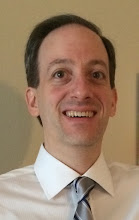
The Bobby Fischer story began with an American boy's passionate obsession for chess and climaxed with his remarkable 1972 triumph over the Soviet chess machine at the height of the Cold War. Instead of enjoying a long reign at the top, Fischer fled into a self-imposed exile from tournament play punctuated by a brief return to public view for a controversial 1992 20th anniversary rematch with his 1972 opponent Boris Spassky. Fischer won that match, received a $3.5 million purse in violation of a United States trade embargo with the former Yugoslavia and spent his remaining days on the run from U.S. authorities. After much controversy--including nine months of incarceration in a Japanese jail--Fischer's story concluded with a quiet denouement in Iceland, the site of his 1972 victory.
Although Fischer (1943-2008) has been world famous since the 1950s, much of his adult life has been shrouded in mystery and he has been subjected to a great deal of armchair psychoanalysis/random speculation. When Fischer was a rising chess star, Dr. Frank Brady wrote Profile of a Prodigy, a book that stood for many years as the definitive biography of the young Fischer. In his new book Endgame: Bobby Fischer's Remarkable Rise and Fall--From America's Brightest Prodigy to the Edge of Madness, Dr. Brady both adds depth to his earlier depiction of Fischer the prodigy and also provides the most compelling and complete treatment to date of what Dr. Brady calls Fischer's "wilderness years"--the second half of Fischer's life, largely spent in seclusion after his 1972 defeat of World Champion Boris Spassky in what has been justifiably called "The Match of the Century."
Dr. Brady's account is well sourced: he had access to a previously unknown autobiographical essay that Fischer wrote as a teenager, numerous personal letters to/by Fischer and a host of other materials located in various historical archives. Dr. Brady served as an arbiter (tournament director), a U.S. Chess Federation official (founding editor of Chess Life magazine) and a chess journalist during Fischer's prime years and in those capacities he frequently had personal interactions with Fischer.
In his "Author's Note," Dr. Brady explains that Endgame is his attempt to answer a question he has been asked hundreds of times: "What was Bobby Fischer really like?" Dr. Brady adds, "For this book, I obtained access to portions of the KGB and FBI files on Bobby and his mother; the files not only provided me with insights but also with specific information that corrects previously published versions of Bobby's life (including my own)." One of Dr. Brady's most appealing traits as a writer/researcher is the obvious value that he places on truth over speculation and/or sensationalism. A fascinating aspect of Dr. Brady's new book is that he found much evidence to correct the long-held belief that Fischer became estranged from his mother Regina at a very early age; Dr. Brady refutes the notion that Fischer went decades without speaking to his mother and notes that when Fischer became financially strapped Regina arranged for her Social Security checks to be sent to him. Fischer supposedly made an off-hand remark in a 1962 interview with Ralph Ginzburg that he had to "get rid of her" because he did not get along with his mother but while it is true that for a while the high school dropout lived in an apartment alone (Regina went on a peace march and then relocated to England after getting married) it is not true that their relationship suffered a permanent rift. In fact, Fischer angrily denied making that specific statement about his mother and asserted that Ginzburg misquoted him several times. Dr. Brady writes, "Previous to this, Bobby had already been wary of journalists. The Ginzburg article, though, sent him into a permanent fury and created a distrust of reporters that lasted the rest of his life" (p. 139). As a 14 year old, Fischer pleaded with a New York Times writer, "Ask me something usual, instead of trying to make me look unusual." The media's attempts to make Fischer seem strange--"an idiot savant, with the emphasis on the first word rather than the second" as Dr. Brady puts it (p. 71)--and Fischer's sensitivity about how he was portrayed undoubtedly had a powerful effect on many of his later attitudes and actions.
Fischer's IQ was reportedly in excess of 180 but he proved to be a bored, disinterested and restless student. Fischer attended six different schools by the time he reached fourth grade, including a one day stint at a private school for gifted children. The best academic match for him during his early days proved to be Brooklyn Community Woodward, an institution that emphasized the value of each student studying individually according to his own inclinations as opposed to dryly memorizing facts and dates. Fischer's primary role at the school was to teach the other students how to play chess. One teacher later recalled, "He easily beat everybody, including the chess-playing members of the faculty. No matter what he played, whether it was baseball in the yard, or tennis, he had to come out ahead of everybody. If he'd been born next to a swimming pool he would have been a swimming champion. It just happened to be chess." Fischer attended Brooklyn Community Woodward for four years, until it was time to go to high school, and he enjoyed the relative freedom he experienced there.
Although Fischer set numerous age-related records--including youngest U.S. Chess Champion (14 years old) and youngest Grandmaster (15 years old, a mark that stood from 1958 until 1991)--he was a relatively late bloomer as prodigies go: Wolfgang Amadeus Mozart began composing music at the age of five, while Grandmaster Samuel Reshevsky performed simultaneous exhibitions against adult chess players starting at age eight; in contrast, as late as age 13 Fischer had a relatively modest chess rating of 1726 (as posted in the U.S. Chess Federation's May 20, 1956 official rating list)--Class "B," a very solid club level player, but well below Expert (2000) or Master (2200) status, let alone Grandmaster level (2500+ on the more prestigious FIDE rating chart). It is certainly impressive for a 13 year old to become a "B" player but it is far from unprecedented--and in today's era there have been many players who reached Grandmaster level by age 13 (though current ratings are perhaps inflated to some degree).
However, as Fischer famously put it, he quickly "just got good"; only a couple months after the publication of that 1726 rating, Fischer became the youngest U.S. Junior Champion (a record he still holds) and he soon followed up that triumph by tying for fourth-eighth place in the 1956 U.S. Open. In October 1956, Fischer stunned the chess world with the "Game of the Century," sacrificing his Queen to defeat Donald Byrne, one of the top players in the United States. By May 1957, Fischer had gained an astounding 500-plus rating points in just one year, becoming the youngest master in U.S. history (a mark later broken). At age 16, Fischer dropped out of Erasmus Hall High School and completely dedicated all of his efforts to becoming the best chess player in the world.
Although Fischer's abrupt disappearance from professional chess after 1972 is well known even to people who do not follow chess closely, Fischer's entire career was punctuated by sudden hiatuses followed by surprising returns to action. Fischer won the U.S. Championship a record eight times but after organizers rejected his request to change the format from a round robin to a double round robin he never played in the event again; ironically, while the 1968 U.S. Championship was in progress Fischer--who later became infamous for spouting anti-Semitic slurs--journeyed to Israel to participate in small international tournament. In the previous year, Fischer had a nearly insurmountable lead but withdrew from the Sousse Interzonal when organizers would not adjust the playing schedule to accommodate his religious beliefs (at the time Fischer was a member of the Worldwide Church of God and he therefore observed the Jewish Sabbath from sundown on Friday to sundown at Saturday).
Fischer very publicly stated his belief that the Soviet Union's top players were conspiring to prevent him from breaking that country's decades-long hold on the World Championship. Fischer's complaints reeked of paranoia and/or sour grapes--except for the fact that information later released from KGB files proved that Fischer's charges were true! As the saying goes, just because you are paranoid it does not mean that people aren't out to get you. Fischer's paranoia seems to be a complex amalgamation of legitimate grievances thrown together with bizarre conspiracy theories; in many instances, any reasonable person in possession of all of the facts would agree with Fischer that he had been wronged--but no reasonable person would make the leaps in "logic" (and I use that term extremely loosely) that Fischer did when he issued his sweeping accusations about vast conspiracies directed against him. The blunt question I have always asked myself about Fischer is this: How could someone who was clearly brilliant not only believe such nonsense but spout it with such vigor and conviction? The only answer I can come up with is that Fischer possessed a highly logical, though in some ways very rigid, mind; much as he sought to impose order on the chessboard with a clear and pure chess style focused on searching for the essential truth in a position, Fischer sought to discern order in the functioning of political, economic and societal systems--but the problem is that such systems are inherently disorderly and illogical. Rather than accept that much of what happens in the world is messy, nonsensical and even evil, Fischer tried to construct a framework to explain all of the bad things that happened to him (and others). I think that in many ways it is a struggle for a genius of Fischer's caliber to remain completely sane unless he has a very strong psychological character, because a high level genius is not only keenly aware of how flawed the world is but it is very difficult for such a person to just disregard this knowledge and focus on day to day living. In Fischer's case, his problem was exacerbated at times by the presence of hangers-on who sometimes goaded Fischer into saying controversial things; I think that it is very noteworthy that in his last years in Iceland when Fischer was finally granted a measure of the peace and solitude he had long sought we no longer heard reports of Fischer publicly spewing hate: without people constantly reminding him of how he had been wronged, Fischer no longer felt the need to construct a "rational" (to him) explanation for actions that had hurt him personally or professionally.
Dr. Brady's book is meant to appeal to an audience beyond chess aficionados, so it is perhaps understandable that his account of Fischer's ascent to the World Championship contains no detailed game analysis and glosses over some of the particulars regarding how players qualified for the World Championship cycle but there is one odd omission: since Fischer did not participate in the U.S. Championship (a Zonal tournament in the parlance of the day) he would not have been eligible for the 1970-72 World Championship cycle if Pal Benko had not graciously given up his spot after Fischer switched gears and expressed interest in competing in the Interzonal. Dr. Brady's account jumps straight to the 1970 Interzonal without mentioning how Benko's self-sacrifice helped Fischer. After Benko stepped aside, Fischer embarked on an unprecedented run of dominance--including 20 straight victories versus elite Grandmasters, punctuated by back to back 6-0 sweeps in Candidates matches--that culminated in his victory over Spassky.
Fischer's incessant demands nearly derailed the match with Spassky and Dr. Brady describes (p. 193) a crucial moment when "Fischer, in his underwear, sat in his hotel room, the door bolted and the telephone unplugged, a picture in stony resistance. His mind was made up: 'If I ask for one thing and they don't give it to me, I don't play.'" Spassky could easily have returned to the Soviet Union in a huff, forcing FIDE to forfeit Fischer, but Spassky felt great fondness for his over the board rival--he later said "My brother is dead" after Fischer passed away--and he defied Soviet authorities by staying in Iceland until the match organizers were able to placate Fischer. A similar story had a much different ending three years later when Anatoly Karpov, the Soviet Union's newest chess star, emerged as Fischer's challenger. Fischer had a long list of requirements and FIDE ultimately agreed to all but two. This was unacceptable to Fischer, who sent a short cable to FIDE President Max Euwe declaring, "FIDE has decided against my participation in the 1975 World Chess Championship. Therefore, I resign my FIDE World Chess Championship title." The sticking points for Fischer were that he wanted draws to not count, with victory going to the first player to win 10 games (in the event of a 9-9 tie, the players would split the prize money but the champion would retain the title). Chess fans, statisticians and others have debated about what is the best format for a World Championship match but it is important to note that for years the Soviet World Champion Botvinnik enjoyed a rematch clause that essentially enabled him to control the title from 1948-63 with only a couple brief interruptions; having to beat the World Champion two matches in a row to keep the title is surely more onerous than having to win 10 games in one match with draws not counting.
The proposed Fischer-Karpov match would have awarded $3.5 million to the winner and $1.5 million to the loser; Dr. Brady reports that it is the largest rejected purse in sports history. Fischer turned down many other potentially lucrative matches and/or endorsement opportunities in the next few years. Fischer tithed a significant portion of his 1972 winnings to the Worldwide Church of God and after he broke from the Church he subsisted on book royalties. His financial situation became increasingly precarious and eventually he was residing in flophouses while depending on his mother's Social Security checks for his basic needs. In 1981, Fischer spent a night in a Pasadena jail when police questioned him about a bank robbery and then arrested him for vagrancy after he could not provide proof of his identity or residence. Needless to say, the descent from World Champion to vagrant in less than a decade is not a pretty picture but Dr. Brady describes with sensitivity Fischer's desire for solitude and his fear that the KGB wanted to kill him for dethroning Spassky. There is no proof that the Soviets ever plotted to kill Fischer, though there is ample evidence that they engaged in psychological warfare against him when he was an active player and that their players colluded against him in World Championship qualifying play before the Candidates round was changed from a tournament to a series of matches to prevent such collusion.
Fischer returned to public view in 1992 when a shady figure named Jezdimir Vasiljevic offered to sponsor a Fischer-Spassky match for $5 million. Vasiljevic had a simple method for dealing with the mercurial Fischer's numerous demands: he complied with everything Fischer asked, including providing $500,000 to Fischer before the match began. Spassky, guaranteed at least $1.5 million even if he lost the match, was hardly in any mood to complain--by that time he barely cracked the top 100 in the world rankings and had no other way to obtain such a payday. Fischer insisted that draws not count, with victory going to the first player to win 10 games, and he also insisted that they use the digital chess clock he invented to eliminate the time scrambles that Fischer felt ruined the artistry of the game; Fischer's clock added an increment after each move and has now become standard tournament fare.
The only problem about the match was Vasiljevic's chosen venue: Sveti Stefan, an island just off the coast of war-torn Yugoslavia, a country that had been slapped with a trade embargo by the United States. The U.S. Treasury Department sent Fischer a letter commanding him to not participate in the match--and Fischer famously read the letter aloud at a press conference before spitting on it and throwing it in the trash. Fischer won the match and banked $3.5 million but he spent the rest of his life as a fugitive from the U.S. government. Dr. Brady writes that Fischer "identified with the character played by Jim Carrey in The Truman Show, that he sometimes felt as though he lived in a Kafkaesque world where he--Bobby--like Truman, was the only honest person in the world and everyone else was an actor" (p. 270). Fischer had not paid U.S. taxes since 1977, when his lawsuit regarding the book Bobby Fischer vs. the Rest of the World was thrown out of court; Fischer felt that the court system was corrupt and therefore he refused to subsidize the government that ran the court system.
Fischer believed that every setback he faced was the result of a vast conspiracy against him and his fury really boiled over after a mistake led to many of his prized possessions being auctioned off. Fischer exclaimed that his "whole life" had been robbed from him; in addition to the sentimental value of the items in question, it has been estimated that just the original scoresheets from Fischer's exhibition tour of South America were likely worth more than $100,000. Dr. Brady explains what happened: after Fischer left California in 1992 for the Spassky match, he arranged for all of his property to be consolidated in a room at a public storage facility and he annually sent $5,000 to attorney Robert Ellsworth to pay the storage fees (and handle some other matters). Somehow, Ellsworth neglected to pay a $480 fee to the storage facility, so the owners of that facility contractually had the right to dispose of the contents of the storage room. When Ellsworth realized his mistake he spent $8,000 to buy back some of Fischer's property but after he shipped 12 boxes to Fischer (who then lived in Hungary) a heartbroken Fischer asked "Where's the rest?" Fischer said that there had been more than 100 boxes in the storage room. Fischer was understandably outraged and he did numerous radio interviews "expounding on his theory that he was a victim of a conspiracy that involved a Jewish cabal, the U.S. government, the Russians, Robert Ellsworth and the Bekins Storage company" (p. 273). The interviews did not receive much initial attention but got a much wider audience once they made it on to the internet. Fischer sank to an all-time low with a 12 minute diatribe that he delivered in the wake of the 9/11 attacks; his deplorable comments were widely disseminated on the internet and they inspired the U.S. government to renew its interest in arresting Fischer for his 1992 embargo violations.
Fischer had been able to travel freely with a U.S. passport even after 1992 but when he ventured to Tokyo in 2004 officials detained him and said that his passport was not valid. Fischer languished in jail for nine months as U.S. and Japanese authorities wrangled about what to do with him. Meanwhile, Fischer's supporters appealed to Iceland--site of Fischer's greatest triumph--to offer him citizenship and asylum. Dr. Brady quotes (p. 291) a letter sent by the Icelandic Chess Federation to U.S. President George W. Bush:
"The Icelandic Chess Federation is, of course, aware of the obscene anti-Semitic and anti-American remarks that Bobby Fischer has made over the last year on different occasions. The Federation is appalled by these remarks, as any civilized body would be, and sees them as signs of a deranged and devastated psyche. In 1992, in Yugoslavia, however, Bobby Fischer's only crime was to play chess again, after years of isolation. The Icelandic Chess Federation urges the President of the United States to pardon Bobby Fischer and let him go free."
A "deranged and devastated psyche"--what a poignantly apt description of Fischer's inner torments!
Ultimately, Fischer received Icelandic citizenship and Japan released him from jail. Fischer spent his remaining years in Iceland, away from the spotlight and free to spend his days alone in a bookstore or library reading books on a wide variety of subjects. However, that happy ending was not really so happy: Fischer eventually turned against even the very people who had helped obtain his freedom. Dr. Brady explains, "Bobby had been using different forms of fallacious logic to accuse and attack whole classes of people, such as the Jews. Now he used his spurious logic against benevolent Icelanders. His illogical syllogism went something like this:
Saemi cheated and betrayed me.
Saemi is an Icelander.
Therefore all Icelanders are cheaters and betrayers" (p. 313).
Saemi Palsson had been Fischer's bodyguard during the 1972 match and he played a role in helping Fischer to become an Icelandic citizen but Fischer broke ties with Palsson because Fischer felt that Palsson was trying to make money off of Fischer's name by cooperating with a producer who was making a movie about Fischer.
Dr. Brady concludes, "Those who directly experienced his thanklessness were saddened but stoic. 'Well, that's Bobby,' one Icelander observed. 'We have to take him as he is.' It was as if he were a changeling, a troubled child not so secretly adopted by the Icelanders, but with love and understanding" (p. 314).
In 2007, Fischer became quite ill but he resisted getting medical treatment due to his lifelong distrust of doctors. By the time he went to the hospital, Fischer was told that he had less than three months to live unless he received dialysis. Fischer refused and he also declined to receive any pain medication. Fischer's friend Pal Benko later told Dr. Brady that he believed this was a despondent Fischer's way of committing suicide slowly; Fischer had come to view Iceland as a "prison" but he feared that if he left the country he would be arrested and sent to the United States to stand trial.
Fischer got his wish to have a simple funeral ceremony without any media presence but even in death he still could not completely rest in peace: a dispute about the disposition of his estate resulted in him being disinterred so that a DNA sample could be taken to ascertain whether or not he had fathered a child in the Philippines. The paternity test results were negative but it still has not been determined who will inherit what remains of Fischer's 1992 winnings.
Dr. Brady's rendering of Fischer's life is sympathetic but balanced, a story of a genius' great triumphs and heartrending suffering.
Endgame: Bobby Fischer's Remarkable Rise and Fall--From America's Brightest Prodigy to the Edge of Madness (hardcover, 416 pages), is available in stores now and can also be ordered directly from the publisher.
Further Reading:
Interview With Dr. Frank Brady, Author of Endgame: Bobby Fischer's Remarkable Rise and Fall--From America's Brightest Prodigy to the Edge of Madness
Bobby Fischer's Mixed Legacy
Sunday, February 13, 2011

Thursday, February 10, 2011
Jake Plummer Lives His Life With No Regrets
Jake Plummer retired from the NFL after the 2006 season. The 32 year old Plummer earned Pro Bowl honors in 2005, started 136 of his 143 career regular season games in 10 years and left a $5.3 million/year contract on the table. Most people would find it incomprehensible to turn down that much money and the elevated status that goes along with being an NFL quarterback but Plummer has no regrets. Sports Illustrated's Chris Ballard explains that Plummer's decision was at least partially inspired by the way that Plummer's college/NFL teammate Pat Tillman retired from the NFL to volunteer for military service. Tillman eventually was killed by "friendly fire" in Afghanistan; this is what Plummer said at Tillman's funeral:
"I was in the store the other day and I saw PEOPLE magazine, and it had the cover of the 50 most beautiful people in the world, or America, and there was a picture of Pat. It was kind of ironic because I really looked and said, What is beauty? Is beauty a pretty face, a nice smile, flowing hair, nice skin? Not to me, it's not. To me beauty is living life to higher standards, stronger morals and ethics and believing in them, whether people tell you you're right or wrong. Beauty is not wasting a day. Beauty is noticing life's little intricacies and taking time out of your busy day to really enjoy those little intricacies. Beauty is being real, being genuine, being pure with no facade—what you see is what you get. Beauty is expanding your mind, always seeking. I believe that to really honor Pat, we should all challenge ourselves. No more I'm going to do this or I'm going to do that. Do it. As Pat would say, probably, 'Get off your ass and do it.' Why, you ask, should we honor him this way? Because that's what Pat did his whole life."
"I was in the store the other day and I saw PEOPLE magazine, and it had the cover of the 50 most beautiful people in the world, or America, and there was a picture of Pat. It was kind of ironic because I really looked and said, What is beauty? Is beauty a pretty face, a nice smile, flowing hair, nice skin? Not to me, it's not. To me beauty is living life to higher standards, stronger morals and ethics and believing in them, whether people tell you you're right or wrong. Beauty is not wasting a day. Beauty is noticing life's little intricacies and taking time out of your busy day to really enjoy those little intricacies. Beauty is being real, being genuine, being pure with no facade—what you see is what you get. Beauty is expanding your mind, always seeking. I believe that to really honor Pat, we should all challenge ourselves. No more I'm going to do this or I'm going to do that. Do it. As Pat would say, probably, 'Get off your ass and do it.' Why, you ask, should we honor him this way? Because that's what Pat did his whole life."
Sunday, February 6, 2011
Interview With Dr. Frank Brady, Author of Endgame: Bobby Fischer's Remarkable Rise and Fall--From America's Brightest Prodigy to the Edge of Madness
In 1965, Dr. Frank Brady wrote Profile of a Prodigy, the definitive biography of Grandmaster Bobby Fischer's early life (a subsequent edition published in 1973 updated Fischer's life story with details about Fischer's triumph in the 1972 World Championship match versus Boris Spassky and the 1989 reprint of that version is still easily available now). Dr. Brady is a full professor at St. John's University (he formerly served as Chairman of St. John's Communications Department), an international chess arbiter and the former editor of Chess Life magazine (the official publication of the U.S. Chess Federation). He has also written biographies of Hugh Hefner, Aristotle Onassis and Barbra Streisand.
Dr. Brady's newest book, Endgame: Bobby Fischer's Remarkable Rise and Fall--From America's Brightest Prodigy to the Edge of Madness (hardcover, 416 pages), is available in stores now and can also be ordered directly from the publisher. I recently had the opportunity to speak with Dr. Brady about Endgame:
Bobby Fischer's Mixed Legacy
Wilt and Bobby: Not a Random Encounter (short story about Wilt Chamberlain, Bobby Fischer and Dick Schaap)
Patent awarded to Bobby Fischer in 1989 for digital chess clock with incremental function (the kind of timing device that has become standard fare in chess tournaments around the world).
A Brief History of the Development of Fischer Random Chess
Dr. Brady's newest book, Endgame: Bobby Fischer's Remarkable Rise and Fall--From America's Brightest Prodigy to the Edge of Madness (hardcover, 416 pages), is available in stores now and can also be ordered directly from the publisher. I recently had the opportunity to speak with Dr. Brady about Endgame:
Friedman: “You interacted with Bobby Fischer from the 1950s through 1972 and played hundreds of chess games against him—I’m assuming those were mostly blitz games.”
Dr. Brady: “All blitz games. Often it was five minutes against five minutes but after he beat me two or three times doing that he would reduce the time to four minutes on his clock. After he beat me with that he would reduce it to three minutes and then after he beat me with that he would reduce it to two minutes; so he was playing with two minutes and I was playing with five minutes and I would say I won two games out of hundreds that we played. At that time I could not beat him at five-five or five-four or five-three.”
Friedman: “What was your playing strength at that time?”
Dr. Brady: “At that time, my playing strength was about 2000 I think—somewhere in that neighborhood” (Ed. Note: this is Expert level, which is above the 90th percentile of rated tournament players).
Friedman: “When was the first time you played him?”
Dr. Brady: “The first time we played he was already U.S. Champion. He was a Grandmaster and he was probably the strongest player in the country by the time I started playing him” (Fischer became the youngest U.S. chess champion—a record he still holds—in 1958 at the age of 14, an accomplishment that earned him the International Master title; months later as a 15 year old, Fischer qualified for the Candidates round in the World Championship cycle, becoming the youngest Grandmaster ever, a record that stood until 1991).
Friedman: “A lot of people have talked about the phenomenon of 'Fischer fear' and the reaction that he would inspire in his opponents. How would you describe ‘Fischer fear’ both from the perspective of playing blitz games against him and also—I know that you directed the U.S. Championship when he went 11-0 and you were present at other high level events—what are your observations and thoughts about ‘Fischer fear’ pertaining to his games against elite caliber opponents?”
Dr. Brady: “I don’t think that the terminology of ‘Fischer fear’ really could apply to him. I don’t see that people got frightened of him or nervous or excited about playing him. I guess if you were a very weak player and had the opportunity to play him you would be afraid but what it was is you started to play him and very early on—I mean, you’re hardly out of the opening—you begin to realize that your position is deteriorating. Also, you begin to realize that his position is strengthening and because he is the best player in the United States and one of the best players in the world you realize that even if your position is slightly superior—which I hardly ever experienced personally—he is going to find a way to beat you because he is so good. But you continue to play; I never heard anyone say, ‘Boy, I’m really scared to play him.’ When I directed the U.S. Championship when he won 11 straight I didn’t hear any of the players say, ‘Boy, I’m afraid to face Fischer,’ nor did I hear any international players say that in the tournaments that we were at together. But people realized that he was a great player and that they were going to lose, so to that extent I guess there may have been players who did not like to play him.”
Friedman: “I don’t think that the phrase was uttered or expressed by a player but I believe it was a journalist who coined that term with the idea that in some of Fischer’s games—particularly when he made his run to the World Championship and had that streak of 20 straight wins—it seemed like some of his opponents kind of crumbled; as well as Fischer was playing, there also seemed to be a reverse effect with some of his opponents playing below their previous standards. They seemed to be having an adverse reaction to playing him, perhaps because he was playing so well that this put psychological pressure on them just to stay in the game. Maybe the term is not precise or not 100% apt but I remember this passage about how some strong Grandmasters—even former World Champions like Petrosian—seemed to be playing below their standards or they would get to a critical point and just blunder. Even Spassky did this (in the World Championship match).”
Dr.Brady: “Taimanov blundered. Larsen also blundered, but Fischer often said that many of the players he beat said that they were ill or playing below their usual strength and that is the reason that they lost. I like to think—and I’m not trying to trumpet Fischer’s strength—that it was not a fear of Fischer but merely Fischer’s strength that overwhelmed them; at the time that he beat Larsen six straight Larsen was truly one of the great players in the world.”
Friedman: “Much has been written about mastery of a given subject being the result of 10,000 hours of what is called 'effortful study.'”
Dr. Brady: “Malcolm Gladwell.”
Friedman: “Yes, right. How much of Fischer’s success do you attribute to innate talent, to a gift that he had, and how much do you attribute to the legendary work ethic he had?”
Dr. Brady: “It’s hard to put a percentage on it but he had all of these things. He was probably the foremost student of the game and I don’t know if there is anyone even now who is close to him. He studied six, seven, eight hours a day. He played over many games, studied endings. I could not confirm this story but someone said that one time when Fischer was trying to figure out a particular Rook ending that he had trouble understanding he took a hotel room—I think in Manhattan--so that he would be away from everybody and nobody would know where he was and he spent an entire weekend just going over this Rook ending so that he could master it. A great deal of what Bobby Fischer was resulted from his study. He also was brilliant and had an astronomical IQ. He had a tremendous competitive spirit. He was always competing, not only in chess—though chess may have perhaps made him even more competitive—but also in conversations and in other sports: when he swam he always wanted to win the race, when he went up to Grossinger’s to play tennis only the tennis pro could beat him—he beat everybody else. Even in social situations, he often got into arguments and he wanted to win the argument; it didn’t matter what would happen to the relationship, he always wanted to win. I quote him in the book—and I think that this is a telling quote—that Bobby once said, ‘I am always on the attack.’ He wasn’t just talking about the chessboard. So he had a competitive spirit, great study habits and a passion for the game. All of those factors made him great.”
Friedman: “In excerpts of the book that I have seen and in previous interviews in which you discussed the book, you took a very measured tone. You didn’t sensationalize different aspects of Fischer’s life or try to make speculations about anything if you didn’t have hard facts to support any conclusions. I know that you have been involved in journalism as both a writer and as an educator for several decades. Do you think that journalistic standards have declined recently, that there is a tendency for people to just make speculations and say reckless things without any support? If you agree that this is the case, why do you think this has happened and what could be done to improve the situation?”
Dr. Brady: “Wow. That is more of an educational question than a chess question but certainly I think that standards have reduced in terms of sensationalizing content. It comes down to money: that’s what sells. Standard kinds of books that do not expose dirty linen don’t sell. So you see movies with gratuitous sex and violence scenes that don’t really need to be there—and I am not a prude by any means; I am not talking about a moral point of view but scenes that don’t need to be there from a narrative point of view. People are drawn into it. Natalie Portman, who has been nominated for Best Actress, was quoted as saying that no one—no young males—would have come to see Black Swan if there had not been a lesbian scene in the film. People are attracted to sensationalized content. I don’t know what to do about it but I can tell you that publishers and film directors and everybody else want that kind of content in their work.”
Friedman: “The commercial element has always been present but do you think that recently it has gotten worse?”
Dr. Brady: “Everybody is trying to make a buck and indeed it is very difficult to stay afloat in publishing; Barnes and Nobles bookstores are closing all over Manhattan. I guess that people aren’t reading, so the books that are going to emerge are the books that are sensationalized. I try not to do that, as you pointed out—and thank you for observing that. It would be easy to do it, but not morally or ethically correct.”
Friedman: “I have so much respect for what you have done. When the second edition of Profile of a Prodigy came out you had new information that contradicted some of the things you had previously written but you did not cover it up or say that you had it right the first time; you were trying to find the truth, not trying to present yourself as flawless and not trying to write something that would be scandalous just to sell more copies. One of the things that struck me from your recent Chess Life
Dr. Brady: “I knew Regina Fischer. I spent time with both of them alone. She was sort of a slightly pushy woman but only for Bobby’s good. She would say ‘Bobby, I want you to do this now.’ It’s called being a stage mother. ‘Why don’t you do this or do that for your career?’ She was directing him in ways that mothers might do with kids in their early teens: ‘Why don’t you say hello to that person?’ But I didn’t spend all that much time with her, so I didn’t know the true nature of their relationship. What happened was a certain number of stories appeared—especially that Harper’s magazine story, I don’t know if you ever read it.”
Friedman: “Right, the one by Ralph Ginzburg.”
Dr. Brady: “That story really made Bobby look terrible and it also negatively portrayed his relationship with his Mom. Bobby was perhaps guilty of braggadocio; even if he really said ‘I had to get rid of my Mom’ I don’t believe that this was the case. His mother indeed left to pursue other things—she went on this peace march and then she went back to medical school. In any event, I was under the impression that they had had many more contretemps than they actually did. As I pointed out in Chess Life, people do indeed argue with their parents—most of us did during our teen years—but that doesn’t mean we don’t love each other. Almost anything that Bobby said was going to be publicized and it could be distorted. People were always trying to make Bobby look unusual or crazy.
How did I find out the truth? It was through examination of his letters to his Mom covering a large period of years. She was a speed typist and she kept carbon copies of many of the letters that she sent to Bobby. You could just tell by the quality of the letters, the birthday cards, the Mother’s Day cards, the gifts that Bobby sent, the way that he wanted her to come back to the United States after she got her medical degree. He wanted a photograph of her when he was on his deathbed. Everything led up to the fact that they had a long term, loving relationship as mother and son—in fact, probably closer than almost anyone I know. So, I had to reinterpret that; I had to restate that.”
Friedman: “You mentioned in the Chess Life interview that for a period of time when he was destitute or did not have other forms of income he was surviving in part because she sent him her Social Security check.”
Dr. Brady: “That is another point. He knew that she loved him enough to do that. If they had a bad relationship then she wouldn’t have done it and he wouldn’t have asked for it. He did live on that for a number of years.”
Friedman: “Some accounts about Fischer’s personality and attitudes contend that he changed or got worse after he left chess in 1972 but I also remember a statement from GM Hartston who said—I am paraphrasing—that chess did not make Bobby Fischer crazy but rather it kept him sane. In other words, some people felt that chess provided balance for Fischer while other people felt that it contributed to whatever mental health problems he had. With all the research that you did and the new information that you found, do you think that Fischer showed some signs of mental disturbance when he was young or did something change when he got older? How do you think that aspect of his psychology evolved over the years?”
Dr. Brady: “Quite honestly, I never saw any aberration or even any deep neurosis when he was younger. He always marched to his own drummer. He could be obnoxious sometimes or aberrant in some ways but nothing that I would call in any way, shape or form mentally unbalanced. Then he won the World Championship in 1972 and from that point in time until his death he started reading and reading and reading. Yeah, he gave up chess but he was never really away from it. He continued studying. I don’t know if you knew that.”
Friedman: “I do.”
Dr. Brady: “In fact, thinking about his relationship with his Mom, when she was studying for her medical degree in Germany she could get Russian chess books for a very small amount of money so she was constantly sending him all of the Russian chess books.”
Friedman: “This was after 1972?”
Dr. Brady: “Yeah. In fact, he was getting so many of these packages of chess books and magazines that he finally had to write to her and say don’t send any more because it won’t fit in my apartment. So he never really gave up chess. That’s not what made him get more neurotic, I don’t think. He wanted to be alone. He was a J.D. Salinger/Greta Garbo kind of character and he enjoyed his own company more than that of others.”
Friedman: “Is it correct that when he was in his teens some of the other players—maybe even Reuben Fine (a strong Grandmaster who became a psychoanalyst)—suggested either to him or to chess organizers or to his mother that perhaps he should receive counseling or some kind of psychiatric treatment? Or is that a misnomer? I read that and I am wondering if you know if this is correct.”
Dr. Brady: “Alan Kaufman, who is a master level player and was a member of the Board of Governors at the Marshall Chess Club, may know the answer to that because he was a member of the Board of Governors for at least 40 years. I am going to see him at a book signing that I am doing in Queens on the 16th of February so I will ask him if he ever heard that because that supposedly happened at the Marshall. I don’t know; it’s an apocryphal story right now as far as I am concerned.”
Friedman: “I know that in between the 1972 and 1992 matches with Spassky, Fischer played three games against the Greenblatt chess computer. He had been in seclusion for several years and then all of a sudden he played these games that eventually surfaced in the press. Did your research shed any light on how this match came about?”
Dr. Brady: “I can’t suggest anything. Wasn’t Greenblatt from MIT?”
Friedman: “Yes, I believe so.”
Dr. Brady: “I went up to IBM in Westchester and snooped around and talked to P.R. people and so forth but I got nothing. Nobody remembered anything or knew anything about it, so the answer is I have no idea. I just could never find out about it.”
Friedman: “My last question is the one issue with Fischer that makes a lot of people squeamish, it’s kind of uncomfortable, but I am interested in the insight that you can provide. Why did Fischer direct so much public antipathy toward Jews? There seemed to be a contradiction, because he had cordial relations later in his life with the Polgar sisters, at one stage with Larry Evans and with other players and people who were Jewish or of Jewish ancestry. Yet he made all of these statements that I don’t even want to repeat. He seemed to have some strange obsession with this issue; apparently you could have a normal conversation with him on any kind of subject but I think one of the Polgar sisters once said that as soon as that issue came up he would just rant and rant and rant and you could not direct him back to any other topic—and he would say these things even to the Polgars, who are Jewish. They would say, ‘Bobby, we’re Jewish’ and he would say, ‘You’re the exception.’”
Dr. Brady: “He used the word Jewish, by the way, as a pejorative for any bad person, even if that person was not Jewish.”
Friedman: “Right. How did that come about?”
Dr. Brady: “I can only speculate. He personally told me many years ago that when his Mom would have people over for dinner or just to visit for the evening in many cases they were Jewish intellectuals. He was a just a little kid and they would talk about philosophy and about Palestine and about educational issues and about politics. He hated that conversation, probably because he couldn’t contribute to it. So there was that kind of feeling that Jewish intellectuals have this kind of conversation and I can’t participate in it. He did say—not to me, but to someone else—‘I reserve the right to generalize.’ As we know, generalizations are wrong sometimes. So there is that aspect to it. The second aspect is almost all of the members of the Board of the American Chess Foundation were Jewish; they were backing (Fischer’s rival Sammy) Reshevsky, paying him $200 a month as a salary. When he (Reshevsky) was a young man, Julius Rosenwald paid for him to go to college; he was given plum exhibitions and entrance fees and appearance fees to play in tournaments. Bobby wasn’t getting any of that. So there is that aspect to it, too. It’s hard to say why he turned. I read a wonderful book by David Mamet called The Wicked Son. It is about self-hating Jews and why they become self-hating Jews and why they repudiate Judaism. Mamet says that it is because there are some people who cannot bear--for psychological, emotional and political reasons—to be in the minority as Jews are, especially in this country. So they want to identify with another group because they can’t be in the minority. If you’re Black there is nothing you can do, because you are Black. I hope that is not misinterpreted as a politically incorrect statement. So Bobby used the fact that he was not circumcised as ‘proof’ that he was not Jewish but it’s a shame. I hate it. I could not tolerate—people would ask what my relationship was with Bobby and I would say that I had not spoken with him in years but if I did speak with him the first question I would ask is, ‘Bobby, are you really and truly an anti-Semite? Are you really saying these things? Or is this some kind of an act?’ If indeed he would have said, ‘No, I hate Jews’ then I would have just walked away and never talked to him again.”
Friedman: “It seems like such a contradiction when you describe these intellectuals who used to visit his mother and you say that he could not follow or participate in the conversation; it almost sounds like you are describing an inferiority complex and yet we know that he had an extraordinarily high IQ and a fantastic memory so if he had some interest in the conversation then there is no reason—even though he was young—that he could not have picked up on it and followed it.”
Dr. Brady: “The problem was that almost up until the time he won the World Championship he was uneducated to some extent. He read some literature in high school and he could talk about certain things but generally he could not talk on a high level (about subjects other than chess) until later in his life; so, the intelligence had nothing to do with his education.”
Friedman: “Of course, those are two different things. It also seemed like, at least from some accounts I have read about when he stayed with the Polgar family, that the Polgars could play blitz with him or have pleasant conversations but if anything came up pertaining to Jews it was like his whole demeanor would change and you could not get him off of that subject. With some of his public statements going all the way back to the Ginzburg interview and the way that you said some people tried to make him look bad—which is not to excuse anything Fischer actually said—it seemed like some people would find the right buttons to push with Fischer, whether it was the mother issue or his later interviews on Philippine radio with those guys laughing in the background and egging Fischer on to say more things. It was almost like they would get him going and then he would rant and could not control himself--but I am not excusing anything he said.”
Dr. Brady: “That is a good interpretation and that’s a very astute observation. I also say in the book that it’s almost like—I’m not really serious about this statement—he had Tourette’s Syndrome and could not control himself from saying that anything having to do with Judaism must be bad but once that was over he could talk normally.”
Bobby Fischer's Mixed Legacy
Wilt and Bobby: Not a Random Encounter (short story about Wilt Chamberlain, Bobby Fischer and Dick Schaap)
Patent awarded to Bobby Fischer in 1989 for digital chess clock with incremental function (the kind of timing device that has become standard fare in chess tournaments around the world).
A Brief History of the Development of Fischer Random Chess
Sunday, January 23, 2011
Jets Prove Once Again That Talk is Cheap
Rex Ryan's New York Jets talk big but they still have no rings to show for it after the Pittsburgh Steelers raced to a 24-0 lead and then held on to beat the Jets 24-19 in the AFC Championship Game. This is the second year in a row that the Jets lost in the AFC Championship Game. The Jets' slow start versus Pittsburgh markedly contrasts with how the Jets kept the New England Patriots off balance for most of their Divisional playoff game last week and--considering all of the woofing that Ryan and the Jets did about Bill Belichick, Tom Brady and the Patriots--makes one wonder if at some level beating New England really was New York's biggest goal.
New York linebacker Bart Scott--who has made one Pro Bowl and has never won a Super Bowl in his nine season NFL career--barked last week about New England's defense not being able to "stop a nosebleed" but he was largely invisible as Rashard Mendenhall bulldozed over the Jets' defense in the AFC Championship. Scott exclaimed "Can't wait!" when asked about playing the Steelers and his emphatic, colorful comments during that interview with Sal Paolantonio rank up there with Lee Flowers' "paper champions" line regarding the Tampa Bay Buccaneers; Flowers ran his mouth and then watched the Buccaneers later win a Super Bowl while he never won a ring (or even made a Pro Bowl) and Scott's premature boasting and posturing looks just as foolish.
On the fifth anniversary of Kobe Bryant's 81 point game, ESPN commentator Jalen Rose--who guarded Bryant part of the time during that epic performance--said that his Toronto Raptors did not commit a flagrant foul against Bryant because Bryant's demeanor never changed during the game: Bryant was focused on winning the game, not showing up the Raptors; it is worth remembering that earlier in that season Bryant outscored the Dallas Mavericks--a championship-contending team--62-61 in the first three quarters but he sat out the entire fourth quarter because the Lakers had total control over the game: Bryant clearly could have scored at least 70 points (and probably more than that) but the larger goal--the only goal--is winning, not padding one's stats or puffing out one's chest (that is also why Bryant plays hurt even though this damages his stats: he knows that even when he is not 100% healthy he can still draw double teams and maybe even hit a game-winning shot).
I have no problem with guys who talk as long as they deliver the goods--champions like Muhammad Ali, Reggie Jackson and Deion Sanders backed up their words by delivering multiple championships--but here is a bit of wisdom from Julius Erving: "I wanted to win without boasting and lose without crying. If you chew on that one, it's going to keep you in a good place that helps you maintain your sanity while all the madness is going on around you."
New York linebacker Bart Scott--who has made one Pro Bowl and has never won a Super Bowl in his nine season NFL career--barked last week about New England's defense not being able to "stop a nosebleed" but he was largely invisible as Rashard Mendenhall bulldozed over the Jets' defense in the AFC Championship. Scott exclaimed "Can't wait!" when asked about playing the Steelers and his emphatic, colorful comments during that interview with Sal Paolantonio rank up there with Lee Flowers' "paper champions" line regarding the Tampa Bay Buccaneers; Flowers ran his mouth and then watched the Buccaneers later win a Super Bowl while he never won a ring (or even made a Pro Bowl) and Scott's premature boasting and posturing looks just as foolish.
On the fifth anniversary of Kobe Bryant's 81 point game, ESPN commentator Jalen Rose--who guarded Bryant part of the time during that epic performance--said that his Toronto Raptors did not commit a flagrant foul against Bryant because Bryant's demeanor never changed during the game: Bryant was focused on winning the game, not showing up the Raptors; it is worth remembering that earlier in that season Bryant outscored the Dallas Mavericks--a championship-contending team--62-61 in the first three quarters but he sat out the entire fourth quarter because the Lakers had total control over the game: Bryant clearly could have scored at least 70 points (and probably more than that) but the larger goal--the only goal--is winning, not padding one's stats or puffing out one's chest (that is also why Bryant plays hurt even though this damages his stats: he knows that even when he is not 100% healthy he can still draw double teams and maybe even hit a game-winning shot).
I have no problem with guys who talk as long as they deliver the goods--champions like Muhammad Ali, Reggie Jackson and Deion Sanders backed up their words by delivering multiple championships--but here is a bit of wisdom from Julius Erving: "I wanted to win without boasting and lose without crying. If you chew on that one, it's going to keep you in a good place that helps you maintain your sanity while all the madness is going on around you."
Tuesday, December 28, 2010
Tactics, Tactics, Tactics
Ken Smith, a FIDE Master/USCF Senior Master who also finished fourth in the 1981 World Series of Poker, declared that until a chess player at least becomes a strong "A" player (one level below Expert) his first name should be tactics, his middle name should be tactics and his last name should be tactics: Smith felt that a player must improve his tactical acuity to a certain base level in order to most efficiently beat lower rated players and at least be able to compete with Experts and Masters; if a player's tactics are weak then even if he knows a lot of opening theory and can build a good position it will be difficult for him to convert that position into a win.
I enjoy solving chess tactics; recently, I looked at some tactical puzzles at Chessbase.com and thought that I had solved the first position but then saw that my proposed move order was not listed as the correct solution. I sent an email to the Chessbase.com editor about this and he amended the listed solution to include my move order as well. Here is a link to the tactic:
Master Moves
I have not made USCF Master yet but I guess now I can say that I made a "Master Move"!
I enjoy solving chess tactics; recently, I looked at some tactical puzzles at Chessbase.com and thought that I had solved the first position but then saw that my proposed move order was not listed as the correct solution. I sent an email to the Chessbase.com editor about this and he amended the listed solution to include my move order as well. Here is a link to the tactic:
Master Moves
I have not made USCF Master yet but I guess now I can say that I made a "Master Move"!
Tuesday, December 7, 2010
Thoughts About Patriots-Jets
1) New York Coach Rex Ryan said a lot of things prior to New England's 45-3 demolition of his Jets but only two of them made any sense: New England does indeed have both the better coach and the better quarterback.
2) While the "experts" focused their preseason talk on Brett Favre/Minnesota, the Dallas Cowboys and the New York Jets, Bill Belichick quietly continued the process of overturning New England's roster and molding the Patriots into a Super Bowl contender.
3) Attention sports editors: the next time a writer pitches you a story about how the New England Patriots will not be the same football team because of the departure of a "key" assistant coach--don't listen! Romeo Crennel, Charlie Weis, Josh McDaniels and Eric "Mangenius" Mangini all left New England and found much less success elsewhere than they did while working for Bill Belichick; meanwhile, the Patriots are still top contenders, posting their eighth straight 10-plus win season. Belichick is now serving as the team's defensive coordinator and the Monday Night Football commentators noted that this extra responsibility had limited the time he spent watching film with Tom Brady this season--but the Patriots had an extra few days to prepare for the Jets game and Belichick used some of that time to break down film with Brady. The results of that film study were very evident on the scoreboard and should leave little doubt about who really is the schematic mastermind of New England's offense.
4) I have a great story pitch for any sports editor who is really interested in publishing a story about a prominent head coach whose success is indeed linked to the greatness of a particular assistant: the story describes the career of a two-time Super Bowl champion who posted an 11-5 postseason record (including 2-1 in Super Bowls) with a certain assistant coach but an 0-3 postseason record without that assistant coach, including a head to head loss to that assistant coach when he served as another team's head coach. Of course, I am talking about Bill Parcells, who never won a single playoff game without Bill Belichick on his staff and whose Patriots lost 20-13 to Belichick's Cleveland Browns in the 1994 playoffs (the last time the Browns won a playoff game). Many members of the media used to love to derisively call Belichick "Little Bill," as if he were some inadequate baby brother trying to fill his big brother's shoes. Looking at things in historical perspective, who looks "little" now?
5) After the Patriots finished routing the Jets, Brady said that the Patriots all heed the motto of their coach: "When you win say little and when you lose say less."
2) While the "experts" focused their preseason talk on Brett Favre/Minnesota, the Dallas Cowboys and the New York Jets, Bill Belichick quietly continued the process of overturning New England's roster and molding the Patriots into a Super Bowl contender.
3) Attention sports editors: the next time a writer pitches you a story about how the New England Patriots will not be the same football team because of the departure of a "key" assistant coach--don't listen! Romeo Crennel, Charlie Weis, Josh McDaniels and Eric "Mangenius" Mangini all left New England and found much less success elsewhere than they did while working for Bill Belichick; meanwhile, the Patriots are still top contenders, posting their eighth straight 10-plus win season. Belichick is now serving as the team's defensive coordinator and the Monday Night Football commentators noted that this extra responsibility had limited the time he spent watching film with Tom Brady this season--but the Patriots had an extra few days to prepare for the Jets game and Belichick used some of that time to break down film with Brady. The results of that film study were very evident on the scoreboard and should leave little doubt about who really is the schematic mastermind of New England's offense.
4) I have a great story pitch for any sports editor who is really interested in publishing a story about a prominent head coach whose success is indeed linked to the greatness of a particular assistant: the story describes the career of a two-time Super Bowl champion who posted an 11-5 postseason record (including 2-1 in Super Bowls) with a certain assistant coach but an 0-3 postseason record without that assistant coach, including a head to head loss to that assistant coach when he served as another team's head coach. Of course, I am talking about Bill Parcells, who never won a single playoff game without Bill Belichick on his staff and whose Patriots lost 20-13 to Belichick's Cleveland Browns in the 1994 playoffs (the last time the Browns won a playoff game). Many members of the media used to love to derisively call Belichick "Little Bill," as if he were some inadequate baby brother trying to fill his big brother's shoes. Looking at things in historical perspective, who looks "little" now?
5) After the Patriots finished routing the Jets, Brady said that the Patriots all heed the motto of their coach: "When you win say little and when you lose say less."
Tuesday, September 14, 2010
Nadal Cruises Through U.S. Open to Complete Career Grand Slam
Rafael Nadal dropped just one set in the entire tournament en route to claiming his first U.S. Open title with a 6-4, 5-7, 6-4, 6-2 win over Novak Djokovic in the championship match. Pundits had eagerly anticipated a showdown between Nadal and Roger Federer but Djokovic wore down an error-prone Federer in a five set semifinal match. Federer has been so frequently referred to as the greatest player of all-time that it seems like that is part of his name--"Greatest Player of All-Time Roger Federer"--but that designation was always premature and now it simply looks fraudulent: Nadal has dominated Federer head to head right from the start of their rivalry and the scope of that dominance has markedly increased in the past few years as Nadal added grass and hard court mastery to his peerless clay court play.
Tennis has changed so much over the years that it is very difficult to fairly compare players from different eras; "Greatest Tennis Player of All-Time" is a mythical title but even if we confine the discussion to the Open Era it is not easy to choose from among Bjorn Borg, Pete Sampras, Roger Federer and Rafael Nadal.
Borg is the prodigy, setting numerous records (some of which have been broken but many of which still stand) for being the youngest player to accomplish various impressive feats, and he established an incredible simultaneous dominance at the French Open and Wimbledon: Borg won a record six French Open titles plus five straight Wimbledon titles and for an unprecedented three straight years (1978-80) he conquered both events. When he retired he held the modern record for titles won at both events; Federer and Sampras subsequently surpasssed Borg's Wimbledon mark but Sampras never even reached the French Open Final while Federer has managed to win that event just once (and only by avoiding a showdown with Nadal, who has bested Federer in three French Open Finals). Even after Nadal's most recent triumph, Borg is still the youngest player to win nine Grand Slam singles titles and he also did so in the fewest number of events (22). Borg won at least one Grand Slam for a record eight straight years (1974-81), a mark later tied by Sampras. He retired at just 25 years of age, after a year in which he won the French Open and made it to the Finals at both Wimbledon and the U.S. Open. Borg finished with 11 Grand Slam singles titles but he played in an era when the Australian Open was hardly treated like a major by most of the top non-Australian players: Borg competed in that event just once. If Borg had played more frequently in the Australian Open and/or not retired in his prime he likely would have added several Grand Slam titles to his resume. The only significant accomplishment that he failed to attain is winning the U.S. Open crown; he reached the Finals there four times without success. Borg won 11 of the 27 Grand Slams that he entered (41%) and he won 141 of his 157 Grand Slam singles matches (89.8%); both of those percentages are all-time records. Borg made the Finals 16 times in those 27 Grand Slams, he never lost in the first round of a Grand Slam and he only lost in the second round once. Borg was renowned for his phenomenal conditioning and his emotional steadiness; he did not get rattled if his opponent hit a great shot because he figured that his opponent would have to hit many such shots to beat him, a task that most players were not mentally and/or physically equipped to do.
Sampras broke Borg's Wimbledon record by capturing seven titles there and he set records for most weeks holding the number one ranking (286) and most years finishing as the number one ranked player (six, 1993-98). Sampras broke Roy Emerson's career record by winning 14 Grand Slam singles titles but he played in 51 Grand Slam events so he was much less dominant than Borg; comparing Sampras' Grand Slam career to Borg's is like comparing Emmitt Smith's rushing statistics with Jim Brown's: Smith set the all-time NFL career rushing record but he played for many more seasons and had many more rushing attempts than Brown, so few if any football experts consider Smith to be the greatest running back of all-time. Also, while Sampras' powerful serve proved to be very effective at Wimbledon and the U.S. Open the slow clay at Roland Garros made Sampras look very ordinary: in 13 French Open appearances Sampras made it to the semifinals just once while suffering three first round losses and five second round defeats.
Federer is the artist; even casual fans marvel at the way that he seems to effortlessly glide around the court. He started out his Grand Slam career slowly--amassing six first round losses before winning his first title (2003 Wimbledon)--but he made up for lost time by reaching the semifinals in a record 23 straight Grand Slam events and tallying a record 16 Grand Slam wins, including the career Grand Slam that eluded both Borg and Sampras. Federer dominated Wimbledon and the U.S. Open while padding his Grand Slam totals with four Australian Open titles in 11 tries; Federer has played in the Australian Open each year of his career but, as noted above, Borg--like most of the best players in his era--generally bypassed this tournament, while Sampras won there twice in 11 attempts but also skipped the event three times. Federer won each of the other Grand Slams at least once before he even reached the French Open Finals--and then he lost three straight times to Nadal in those Finals before winning there in 2009 after an injury-plagued Nadal lost in the fourth round. Federer's Grand Slam percentages are 16 titles in 46 appearances (34.8%) and a 208-30 match record (87.4%). Federer held the number one ranking for a record 237 straight weeks and he has been number one for a total of 285 weeks, just one week short of Sampras' record.
Nadal is the grinder; his physical conditioning and mental toughness are very reminiscent of Borg. Like Borg, Nadal started out as a clay court specialist but eventually developed his game to the point that he could win on any surface--and, like Borg, Nadal was a prodigy, tying Borg's record by winning 16 professional singles titles as a teenager. Nadal is the second youngest player to win nine Grand Slam titles, trailing Borg by three months and requiring four more appearances than Borg did. Nadal owns a sparkling 9-2 record in Grand Slam Finals, he has won nine of the 26 Grand Slams that he has entered (34.6%) and he has a 120-17 career record in Grand Slam matches (87.6%).
Borg never faced Sampras or Federer, while Federer played Sampras just once, beating him at Wimbledon in 2001 to end Sampras' streak of four straight titles (and seven wins in eight years)--but Nadal enjoys a 14-7 head to head advantage over Federer and he has beaten Federer five times out of seven in Grand Slam Finals with victories at three different events (Australian Open, French Open, Wimbledon). At first, "experts" dismissed Nadal's head to head dominance over Federer because many of those matches took place on clay--a distinction which never made sense, because if Federer is truly the greatest player then that should not matter--but now Nadal has proven that he can beat Federer on any surface at any time. If Federer had beaten Djokovic there is every reason to believe that Nadal would have added yet another win to his Federer ledger, so it is ironic that the criticism lobbed at Nadal early in his career--that his record versus Federer was padded because he usually lost at Wimbledon or the U.S. Open before running into Federer--could be directed at Federer regarding this year's U.S. Open.
Maybe Federer will finish his career with a flourish, winning a few more Grand Slams and narrowing the head to head gap with Nadal--but that seems doubtful. It is more likely that in the next three to five years Nadal will break Federer's career Grand Slam record--but let's forget about speculation for the moment and look at the facts as they stand now. Sampras had a great career but his ineptitude at the French Open means that he simply cannot be ranked ahead of Borg, Nadal or Federer. Borg had the shortest career of this quartet but he was the most dominant (in terms of his winning percentages) and he had to battle two of the 10 greatest players ever (Jimmy Connors, John McEnroe) while Federer won many of his Grand Slams before Nadal really hit his stride and without having to deal with another all-time great player at or near his prime. If Borg had captured just one U.S. Open title then his resume would have no gaps but the absence of that jewel from his collection stands in contrast to the career Grand Slams owned by Federer and Nadal.
Federer's artistry is very appealing to the eye and he broke Sampras' Grand Slam singles titles record just seven years after Sampras had set it, a surprising development considering that Sampras' predecessor Roy Emerson held the mark for 35 years, but Federer's overall Grand Slam record is not as dominant as Borg's nor has Federer simultaneously mastered Wimbledon and the French Open the way that Borg did.
After his victory over Djokovic, Nadal modestly deflected comparisons with Federer but the reality is that at this point there is no compelling reason to rank Federer ahead of Nadal on the all-time list: Nadal has accomplished more than Federer did at a comparable age, he has demonstrated that he can win a Grand Slam on any surface and there is that "little" matter of Nadal owning a decisive head to head advantage versus Federer, a statistic that simply cannot be diminished or ignored in light of how well Nadal has now filled out the rest of his resume.
Anyone who felt justified in calling Federer the greatest player of all-time circa 2006--when he was 25, had won eight Grand Slam singles titles and had yet to complete the career Grand Slam--must now accord the same deference to a 24 year old Nadal who owns nine Grand Slam singles titles and a career Grand Slam. Failing that, the "experts" could follow the path that I have recommended all along and refrain from crowning a mythical greatest player until the Federer-Nadal rivalry has completely run its course and we can examine each player's complete body of work.
Tennis has changed so much over the years that it is very difficult to fairly compare players from different eras; "Greatest Tennis Player of All-Time" is a mythical title but even if we confine the discussion to the Open Era it is not easy to choose from among Bjorn Borg, Pete Sampras, Roger Federer and Rafael Nadal.
Borg is the prodigy, setting numerous records (some of which have been broken but many of which still stand) for being the youngest player to accomplish various impressive feats, and he established an incredible simultaneous dominance at the French Open and Wimbledon: Borg won a record six French Open titles plus five straight Wimbledon titles and for an unprecedented three straight years (1978-80) he conquered both events. When he retired he held the modern record for titles won at both events; Federer and Sampras subsequently surpasssed Borg's Wimbledon mark but Sampras never even reached the French Open Final while Federer has managed to win that event just once (and only by avoiding a showdown with Nadal, who has bested Federer in three French Open Finals). Even after Nadal's most recent triumph, Borg is still the youngest player to win nine Grand Slam singles titles and he also did so in the fewest number of events (22). Borg won at least one Grand Slam for a record eight straight years (1974-81), a mark later tied by Sampras. He retired at just 25 years of age, after a year in which he won the French Open and made it to the Finals at both Wimbledon and the U.S. Open. Borg finished with 11 Grand Slam singles titles but he played in an era when the Australian Open was hardly treated like a major by most of the top non-Australian players: Borg competed in that event just once. If Borg had played more frequently in the Australian Open and/or not retired in his prime he likely would have added several Grand Slam titles to his resume. The only significant accomplishment that he failed to attain is winning the U.S. Open crown; he reached the Finals there four times without success. Borg won 11 of the 27 Grand Slams that he entered (41%) and he won 141 of his 157 Grand Slam singles matches (89.8%); both of those percentages are all-time records. Borg made the Finals 16 times in those 27 Grand Slams, he never lost in the first round of a Grand Slam and he only lost in the second round once. Borg was renowned for his phenomenal conditioning and his emotional steadiness; he did not get rattled if his opponent hit a great shot because he figured that his opponent would have to hit many such shots to beat him, a task that most players were not mentally and/or physically equipped to do.
Sampras broke Borg's Wimbledon record by capturing seven titles there and he set records for most weeks holding the number one ranking (286) and most years finishing as the number one ranked player (six, 1993-98). Sampras broke Roy Emerson's career record by winning 14 Grand Slam singles titles but he played in 51 Grand Slam events so he was much less dominant than Borg; comparing Sampras' Grand Slam career to Borg's is like comparing Emmitt Smith's rushing statistics with Jim Brown's: Smith set the all-time NFL career rushing record but he played for many more seasons and had many more rushing attempts than Brown, so few if any football experts consider Smith to be the greatest running back of all-time. Also, while Sampras' powerful serve proved to be very effective at Wimbledon and the U.S. Open the slow clay at Roland Garros made Sampras look very ordinary: in 13 French Open appearances Sampras made it to the semifinals just once while suffering three first round losses and five second round defeats.
Federer is the artist; even casual fans marvel at the way that he seems to effortlessly glide around the court. He started out his Grand Slam career slowly--amassing six first round losses before winning his first title (2003 Wimbledon)--but he made up for lost time by reaching the semifinals in a record 23 straight Grand Slam events and tallying a record 16 Grand Slam wins, including the career Grand Slam that eluded both Borg and Sampras. Federer dominated Wimbledon and the U.S. Open while padding his Grand Slam totals with four Australian Open titles in 11 tries; Federer has played in the Australian Open each year of his career but, as noted above, Borg--like most of the best players in his era--generally bypassed this tournament, while Sampras won there twice in 11 attempts but also skipped the event three times. Federer won each of the other Grand Slams at least once before he even reached the French Open Finals--and then he lost three straight times to Nadal in those Finals before winning there in 2009 after an injury-plagued Nadal lost in the fourth round. Federer's Grand Slam percentages are 16 titles in 46 appearances (34.8%) and a 208-30 match record (87.4%). Federer held the number one ranking for a record 237 straight weeks and he has been number one for a total of 285 weeks, just one week short of Sampras' record.
Nadal is the grinder; his physical conditioning and mental toughness are very reminiscent of Borg. Like Borg, Nadal started out as a clay court specialist but eventually developed his game to the point that he could win on any surface--and, like Borg, Nadal was a prodigy, tying Borg's record by winning 16 professional singles titles as a teenager. Nadal is the second youngest player to win nine Grand Slam titles, trailing Borg by three months and requiring four more appearances than Borg did. Nadal owns a sparkling 9-2 record in Grand Slam Finals, he has won nine of the 26 Grand Slams that he has entered (34.6%) and he has a 120-17 career record in Grand Slam matches (87.6%).
Borg never faced Sampras or Federer, while Federer played Sampras just once, beating him at Wimbledon in 2001 to end Sampras' streak of four straight titles (and seven wins in eight years)--but Nadal enjoys a 14-7 head to head advantage over Federer and he has beaten Federer five times out of seven in Grand Slam Finals with victories at three different events (Australian Open, French Open, Wimbledon). At first, "experts" dismissed Nadal's head to head dominance over Federer because many of those matches took place on clay--a distinction which never made sense, because if Federer is truly the greatest player then that should not matter--but now Nadal has proven that he can beat Federer on any surface at any time. If Federer had beaten Djokovic there is every reason to believe that Nadal would have added yet another win to his Federer ledger, so it is ironic that the criticism lobbed at Nadal early in his career--that his record versus Federer was padded because he usually lost at Wimbledon or the U.S. Open before running into Federer--could be directed at Federer regarding this year's U.S. Open.
Maybe Federer will finish his career with a flourish, winning a few more Grand Slams and narrowing the head to head gap with Nadal--but that seems doubtful. It is more likely that in the next three to five years Nadal will break Federer's career Grand Slam record--but let's forget about speculation for the moment and look at the facts as they stand now. Sampras had a great career but his ineptitude at the French Open means that he simply cannot be ranked ahead of Borg, Nadal or Federer. Borg had the shortest career of this quartet but he was the most dominant (in terms of his winning percentages) and he had to battle two of the 10 greatest players ever (Jimmy Connors, John McEnroe) while Federer won many of his Grand Slams before Nadal really hit his stride and without having to deal with another all-time great player at or near his prime. If Borg had captured just one U.S. Open title then his resume would have no gaps but the absence of that jewel from his collection stands in contrast to the career Grand Slams owned by Federer and Nadal.
Federer's artistry is very appealing to the eye and he broke Sampras' Grand Slam singles titles record just seven years after Sampras had set it, a surprising development considering that Sampras' predecessor Roy Emerson held the mark for 35 years, but Federer's overall Grand Slam record is not as dominant as Borg's nor has Federer simultaneously mastered Wimbledon and the French Open the way that Borg did.
After his victory over Djokovic, Nadal modestly deflected comparisons with Federer but the reality is that at this point there is no compelling reason to rank Federer ahead of Nadal on the all-time list: Nadal has accomplished more than Federer did at a comparable age, he has demonstrated that he can win a Grand Slam on any surface and there is that "little" matter of Nadal owning a decisive head to head advantage versus Federer, a statistic that simply cannot be diminished or ignored in light of how well Nadal has now filled out the rest of his resume.
Anyone who felt justified in calling Federer the greatest player of all-time circa 2006--when he was 25, had won eight Grand Slam singles titles and had yet to complete the career Grand Slam--must now accord the same deference to a 24 year old Nadal who owns nine Grand Slam singles titles and a career Grand Slam. Failing that, the "experts" could follow the path that I have recommended all along and refrain from crowning a mythical greatest player until the Federer-Nadal rivalry has completely run its course and we can examine each player's complete body of work.
Sunday, September 12, 2010
Three-time Interzonal Winner Bent Larsen Passes Away
Bent Larsen, the six-time Danish chess champion (1954-56, 1959, 1963-64) who is the only person other than Mikhail Tal to win three Interzonal tournaments (1964, 1967, 1976), passed away on September 9 at the age of 75. Larsen earned the Grandmaster title in 1956 after scoring 11 wins, six draws and just one loss while representing Denmark on board one at the Chess Olympiad. Larsen was a serious World Championship contender from the early 1960s through the mid-1970s but he never quite reached the summit; however, Larsen won a total of 26 games against the seven players who reigned as World Champion from 1948-85: Mikhail Botvinnik, Vasily Smyslov, Mikhail Tal, Tigran Petrosian, Boris Spassky, Bobby Fischer and Anatoly Karpov (you can find all of those games at the bottom of this page; be sure to scroll all the way through, as only the first 20 games are initially visible).
Larsen won numerous strong tournaments--particularly during his prime years in the 1960s--and in 1967 he was awarded the inaugural Chess Oscar, a prestigious honor bestowed on the chess player of the year (as voted on by Grandmasters and chess journalists); Larsen and Viktor Korchnoi (1978) are the only Chess Oscar winners who never became World Champion. For many years, Fischer and Larsen were the two strongest non-Soviet players in the world. Although Fischer infamously quit playing chess in public from 1972-92, many people forget (or don't realize) that even during his prime he had several extended absences from serious competition, including 1968-70 when he only played in two relatively minor events plus one game in the New York Metropolitan Chess League. When Bobby Fischer returned to serious competition in the 1970 USSR versus the World match he showed great respect for Larsen by playing on board two even though he had a higher rating than Larsen; Larsen scored 2.5/4 versus World Champion Boris Spassky and Grandmaster Leonid Stein and Fischer tallied 3/4 versus former World Champion Tigran Petrosian but the USSR won the match 20.5-19.5.
Larsen finished tied for second behind Fischer in the 1970 Interzonal, though Larsen did win their head to head encounter in that event despite having the black pieces; this was Fischer's only defeat in 23 rounds. Here is a lightly annotated version of that game:
Fischer-Larsen, 1970 Palma de Mallorca Interzonal
1. e4 c5 2. Nf3 d6 3. d4 cxd4 4. Nxd4 Nf6 5. Nc3 Nc6 6. Bc4 e6 7. Bb3 Be7 8.Be3 O-O 9. Qe2 a6 10. O-O-O Qc7 11. g4 Nd7 12. h4!? In his book Bobby Fischer GM Karsten Muller criticizes this move and says that the main line starts with 12. g5. In Modern Chess Openings (15th Edition), this opening is classified as Sicilian Defense/Velimirovic Attack (pp. 330-331) and 11...Nd7 is critiqued for giving White the flexibility to choose among h4, Rhg1 and even the speculative Nf5 (played by current World Champion Viswanathan Anand in a 1997 game). MCO 15 suggests that Black should have traded Ns on d4. The chess engine Fritz assesses the position to be equal after ...Nd7 or ...Nxd4 but gives Black a slight edge after ...Na5. As for Fischer's 12th move in the actual game, Fritz prefers a3 (presumably to preserve the KB), though I doubt that any top level human player would play that move in this kind of position for fear of weakening his K. 12... Nc5 13. g5 b5 14. f3 Bd7 15. Qg2 b4 16. Nce2 Nxb3+ 17. axb3 a5 18. g6 fxg6 19. h5 Nxd4 20. Nxd4 g5 21. Bxg5 Bxg5+ 22. Qxg5 h6 23. Qg4 Rf7 Black has deftly rebuffed Fischer's K-side attack and now can operate with impunity in the center and on the Q-side. 24. Rhg1 a4 25. bxa4 e5 26. Ne6 Qc4 27. b3 Qxe6 28. Qxe6 Bxe6 29. Rxd6 Re8 The smoke has cleared. Fischer halted Black's looming attack by trading off Qs but at the price of sacrificing a piece for two pawns, which should not be quite sufficient compensation here because White's pawns are not yet very dangerous. 30. Rb6 Rxf3 31. Rxb4 Rc8 32. Kb2 Although GM Muller does not say anything about this move, it appears to be a serious mistake because now Black can seize the seventh rank with great effect. Instead of the text, Fritz recommends 32. c4 Bf7 33. Rb7 Rh3 34. a5. 32... Rf2 33. Rc1 Bf7 34. a5 Ra8 35. Rb5 Bxh5 36. Rxe5 Be2 37. Rc5 h5 38. e5?? GM Muller says that this is the fatal error. Fischer had to try to slow down the h pawn by playing 38. Rh1. 38... Bf3 Larsen seizes control of the promotion squares of his h pawn and Fischer's a pawn. 39. Kc3 h4 40. Kd3 Re2 41. Rf1 Rd8+ 42. Kc3 Be4 43. Kb4 Rb8+ 44. Ka3 h3 45. e6 Bxc2 46. b4 Re3+ 47. Kb2 Bd3 48. Ra1 Ba6 49. Rc6 Rxb4+ 50. Kc2 Bb7 51.Rc3 Re2+ 52. Kd1 Rg2 0-1
Larsen later faced Fischer in the 1971 Candidates semifinals but Fischer blanked him 6-0 (Fischer was in the midst of an amazing streak of 20 straight wins versus elite Grandmasters en route to taking the title from Spassky). It has been suggested that Larsen never quite recovered from that setback--at least in terms of contending for the World Championship--but that is perhaps an unfair and unfounded contention: by the time the next World Championship cycle began Larsen was already pushing 40--i.e., he was at or near the end of what are typically the prime years for a world class chess player--and a young generation of Grandmasters was emerging, led by Karpov, who became World Champion after Fischer forfeited the crown. Karpov reigned from 1975 until Garry Kasparov defeated him in 1985; regardless of what happened in Larsen's 1971 match with Fischer it is unlikely that Larsen could have dethroned Karpov even if he had battled his way to a World Championship match in the 1970s or early 1980s.
Larsen so often played b3 as his first move with White that this opening is most commonly referred to by his name. Although superficially that is not a very aggressive way to begin a game Larsen was in fact a courageous attacking player who fearlessly would take risks to win and who was notorious for declining draw offers (a trait he shared with Fischer).
Larsen won numerous strong tournaments--particularly during his prime years in the 1960s--and in 1967 he was awarded the inaugural Chess Oscar, a prestigious honor bestowed on the chess player of the year (as voted on by Grandmasters and chess journalists); Larsen and Viktor Korchnoi (1978) are the only Chess Oscar winners who never became World Champion. For many years, Fischer and Larsen were the two strongest non-Soviet players in the world. Although Fischer infamously quit playing chess in public from 1972-92, many people forget (or don't realize) that even during his prime he had several extended absences from serious competition, including 1968-70 when he only played in two relatively minor events plus one game in the New York Metropolitan Chess League. When Bobby Fischer returned to serious competition in the 1970 USSR versus the World match he showed great respect for Larsen by playing on board two even though he had a higher rating than Larsen; Larsen scored 2.5/4 versus World Champion Boris Spassky and Grandmaster Leonid Stein and Fischer tallied 3/4 versus former World Champion Tigran Petrosian but the USSR won the match 20.5-19.5.
Larsen finished tied for second behind Fischer in the 1970 Interzonal, though Larsen did win their head to head encounter in that event despite having the black pieces; this was Fischer's only defeat in 23 rounds. Here is a lightly annotated version of that game:
Fischer-Larsen, 1970 Palma de Mallorca Interzonal
1. e4 c5 2. Nf3 d6 3. d4 cxd4 4. Nxd4 Nf6 5. Nc3 Nc6 6. Bc4 e6 7. Bb3 Be7 8.Be3 O-O 9. Qe2 a6 10. O-O-O Qc7 11. g4 Nd7 12. h4!? In his book Bobby Fischer GM Karsten Muller criticizes this move and says that the main line starts with 12. g5. In Modern Chess Openings (15th Edition), this opening is classified as Sicilian Defense/Velimirovic Attack (pp. 330-331) and 11...Nd7 is critiqued for giving White the flexibility to choose among h4, Rhg1 and even the speculative Nf5 (played by current World Champion Viswanathan Anand in a 1997 game). MCO 15 suggests that Black should have traded Ns on d4. The chess engine Fritz assesses the position to be equal after ...Nd7 or ...Nxd4 but gives Black a slight edge after ...Na5. As for Fischer's 12th move in the actual game, Fritz prefers a3 (presumably to preserve the KB), though I doubt that any top level human player would play that move in this kind of position for fear of weakening his K. 12... Nc5 13. g5 b5 14. f3 Bd7 15. Qg2 b4 16. Nce2 Nxb3+ 17. axb3 a5 18. g6 fxg6 19. h5 Nxd4 20. Nxd4 g5 21. Bxg5 Bxg5+ 22. Qxg5 h6 23. Qg4 Rf7 Black has deftly rebuffed Fischer's K-side attack and now can operate with impunity in the center and on the Q-side. 24. Rhg1 a4 25. bxa4 e5 26. Ne6 Qc4 27. b3 Qxe6 28. Qxe6 Bxe6 29. Rxd6 Re8 The smoke has cleared. Fischer halted Black's looming attack by trading off Qs but at the price of sacrificing a piece for two pawns, which should not be quite sufficient compensation here because White's pawns are not yet very dangerous. 30. Rb6 Rxf3 31. Rxb4 Rc8 32. Kb2 Although GM Muller does not say anything about this move, it appears to be a serious mistake because now Black can seize the seventh rank with great effect. Instead of the text, Fritz recommends 32. c4 Bf7 33. Rb7 Rh3 34. a5. 32... Rf2 33. Rc1 Bf7 34. a5 Ra8 35. Rb5 Bxh5 36. Rxe5 Be2 37. Rc5 h5 38. e5?? GM Muller says that this is the fatal error. Fischer had to try to slow down the h pawn by playing 38. Rh1. 38... Bf3 Larsen seizes control of the promotion squares of his h pawn and Fischer's a pawn. 39. Kc3 h4 40. Kd3 Re2 41. Rf1 Rd8+ 42. Kc3 Be4 43. Kb4 Rb8+ 44. Ka3 h3 45. e6 Bxc2 46. b4 Re3+ 47. Kb2 Bd3 48. Ra1 Ba6 49. Rc6 Rxb4+ 50. Kc2 Bb7 51.Rc3 Re2+ 52. Kd1 Rg2 0-1
Larsen later faced Fischer in the 1971 Candidates semifinals but Fischer blanked him 6-0 (Fischer was in the midst of an amazing streak of 20 straight wins versus elite Grandmasters en route to taking the title from Spassky). It has been suggested that Larsen never quite recovered from that setback--at least in terms of contending for the World Championship--but that is perhaps an unfair and unfounded contention: by the time the next World Championship cycle began Larsen was already pushing 40--i.e., he was at or near the end of what are typically the prime years for a world class chess player--and a young generation of Grandmasters was emerging, led by Karpov, who became World Champion after Fischer forfeited the crown. Karpov reigned from 1975 until Garry Kasparov defeated him in 1985; regardless of what happened in Larsen's 1971 match with Fischer it is unlikely that Larsen could have dethroned Karpov even if he had battled his way to a World Championship match in the 1970s or early 1980s.
Larsen so often played b3 as his first move with White that this opening is most commonly referred to by his name. Although superficially that is not a very aggressive way to begin a game Larsen was in fact a courageous attacking player who fearlessly would take risks to win and who was notorious for declining draw offers (a trait he shared with Fischer).
Saturday, July 31, 2010
"Love This Game and the Game will Love you Back": Andre Dawson's Powerful Hall of Fame Induction Speech
Last weekend, Andre Dawson--the great five tool player known as the "Hawk"--received his long overdue induction into Baseball's Hall of Fame and he delivered a heartfelt, passionate and eloquent speech that not only detailed his path to baseball immortality but also offered a succinct yet powerful indictment of the performance-enhancing drug (PED) users whose disgraceful conduct has made a mockery of baseball's record book: "Individuals have chosen the wrong road," Dawson declared. "They've chosen (cheating) as their legacy. For those who still have a chance to choose theirs, don't be lured to the dark side. It's a stain on the game, a stain that is gradually being removed."
I wish that Dawson were right that the "stain is gradually being removed" but I fear that the "stain" is in many ways permanent and that the "stain" may someday become even bigger if some of the PED cheaters are inducted in the Hall of Fame.
The recurring theme in Dawson's speech was "Love this game and it will love you back." Much like his former teammate Ryne Sandburg, who was inducted in the Hall of Fame five years ago, Dawson was not very talkative as a player but they both proved that they had a lot to say once they ascended to the Hall of Fame podium.
Dawson is a man of character who never took the easy way and it is criminal that his path to the Hall of Fame was blocked for many years because the numbers that he shed blood, sweat and tears to post were blasted to smithereens by the totals stacked up by PED cheaters. During his speech, Dawson thanked his mother--who passed away four years ago but never lost faith that Dawson would be recognized as a Hall of Famer--and other family members who molded his character and work ethic. Listening to Dawson speak should be more than enough to convince anyone beyond the shadow of any doubt that the Hall's doors simply cannot be opened up to any of the players who tainted themselves and the sport by using PEDs. Who would Barry Bonds or Mark McGwire or Alex Rodriguez or Roger Clemens--and the list goes on, as you can see for yourself--thank if the dark day ever comes that they are selected as Hall of Famers? Their drug dealers?
I don't want to hear any analysis about how good some of those guys were before they started cheating and I don't want to see any projections about how many home runs they might have hit or strikeouts they might have thrown without using PEDs. They cheated, point blank. They turned baseball's record book into something that belongs in the fiction section. They cost other players money, awards and championships. They forced good men like Andre Dawson and Jim Rice to wait years to be inducted in the Hall of Fame (and other good men, like Dale Murphy, are still waiting).
Real baseball lovers know that Henry Aaron is still the all-time career home run king and that Roger Maris--a two-time MVP, seven-time All-Star, three-time World Series champion and one-time Gold Glove winner--is the all-time single season home run king.
I sincerely hope that all of the PED cheaters never come close to being inducted in the Hall of Fame and that in the next few years the Hall of Fame reexamines the careers of some of the stars from the past few decades whose accomplishments were temporarily forgotten as cartoon-sized sluggers pounded baseballs for Herculean distances.
I wish that Dawson were right that the "stain is gradually being removed" but I fear that the "stain" is in many ways permanent and that the "stain" may someday become even bigger if some of the PED cheaters are inducted in the Hall of Fame.
The recurring theme in Dawson's speech was "Love this game and it will love you back." Much like his former teammate Ryne Sandburg, who was inducted in the Hall of Fame five years ago, Dawson was not very talkative as a player but they both proved that they had a lot to say once they ascended to the Hall of Fame podium.
Dawson is a man of character who never took the easy way and it is criminal that his path to the Hall of Fame was blocked for many years because the numbers that he shed blood, sweat and tears to post were blasted to smithereens by the totals stacked up by PED cheaters. During his speech, Dawson thanked his mother--who passed away four years ago but never lost faith that Dawson would be recognized as a Hall of Famer--and other family members who molded his character and work ethic. Listening to Dawson speak should be more than enough to convince anyone beyond the shadow of any doubt that the Hall's doors simply cannot be opened up to any of the players who tainted themselves and the sport by using PEDs. Who would Barry Bonds or Mark McGwire or Alex Rodriguez or Roger Clemens--and the list goes on, as you can see for yourself--thank if the dark day ever comes that they are selected as Hall of Famers? Their drug dealers?
I don't want to hear any analysis about how good some of those guys were before they started cheating and I don't want to see any projections about how many home runs they might have hit or strikeouts they might have thrown without using PEDs. They cheated, point blank. They turned baseball's record book into something that belongs in the fiction section. They cost other players money, awards and championships. They forced good men like Andre Dawson and Jim Rice to wait years to be inducted in the Hall of Fame (and other good men, like Dale Murphy, are still waiting).
Real baseball lovers know that Henry Aaron is still the all-time career home run king and that Roger Maris--a two-time MVP, seven-time All-Star, three-time World Series champion and one-time Gold Glove winner--is the all-time single season home run king.
I sincerely hope that all of the PED cheaters never come close to being inducted in the Hall of Fame and that in the next few years the Hall of Fame reexamines the careers of some of the stars from the past few decades whose accomplishments were temporarily forgotten as cartoon-sized sluggers pounded baseballs for Herculean distances.
Tuesday, July 6, 2010
Nadal Clearly Establishes Himself as the Best Player in the World
In most sports it is difficult to single out who is the best player of all-time but it is generally somewhat easier to determine who is the best player at any given time--and right now Rafael Nadal is clearly the best tennis player in the world.
Nadal's convincing Wimbledon victory is a landmark event in Open Era history. Nadal now owns a Secretariat-like 3840 point lead over number two ranked Novak Djokovic, while Roger Federer has dropped to number three, his lowest ranking since November 2003. Nadal's Wimbledon triumph is his eighth career Grand Slam singles title, making him the second youngest player in the Open Era to win that many majors; the prodigious Bjorn Borg was just 23 years, 31 days old when he reached that milestone, exactly one year younger than Nadal was on Sunday when he blew away Tomas Berdych in straight sets in the Wimbledon Finals. Nadal has dominated the ATP Tour this year with a 47-5 match record while winning five events; he was similarly dominant in 2008 and the early portion of 2009--winning three out of four Grand Slams at one point, including the tough French Open/Wimbledon double--before injuries slowed him down and enabled Federer to also pull off a French Open/Wimbledon double to reclaim the number one ranking. Borg remains the only player in tennis history to accomplish the French Open/Wimbledon double three times and he did it consecutively (1978-80), arguably the most difficult feat in the history of the sport.
Nadal is now tied for seventh on the all-time Grand Slam singles title list, matching Fred Perry, Ken Rosewall, Jimmy Connors, Ivan Lendl and Andre Agassi; two more wins will enable Nadal to tie Bill Tilden for sixth on the list and one more win after that would match the 11 Grand Slam wins tallied by Rod Laver and Borg. If Nadal wins the U.S. Open he will become just the fourth player to complete a career Grand Slam in the Open Era, joining Laver, Agassi and Federer.
When Federer was Nadal's age he had won six Grand Slam singles titles, so Nadal is significantly ahead of the pace established by the player who many people have proclaimed to be the greatest tennis player of the Open Era. I have repeatedly said that these pundits prematurely crowned Federer; in a 2008 post titled Fantastic Four: Nadal Matches Borg's French Open Streak I wrote:
For quite some time, people have been trying to anoint Federer as the greatest tennis player of all-time but despite his impressive accomplishments it makes no sense to confer that title on him when it is not even certain that he will be considered the best player of the current era: his main rival Nadal owns an 11-6 head to head record against him and has come much closer to beating him on the grass at Wimbledon than Federer has come to defeating him on the clay at the French Open. Considering that Nadal is almost five years younger than Federer it is entirely possible that he will eclipse what Federer has done; after all, five years ago Federer had just won his first Grand Slam, while Nadal already owns four Grand Slam titles, beating Federer along the way each time.
Then, in a 2009 post titled Debunking Myths about Bjorn Borg, John McEnroe and Roger Federer, I declared:
Wilt Chamberlain once said that if he had thought that anyone was going to break his all-time NBA career scoring record then he would have put it "way out of sight." If Borg had been interested in setting the career Grand Slam record, then he would have annually journeyed down to Australia and most likely dominated that event the way that he dominated Wimbledon and the French Open--and he certainly would not have skipped the 1982 French Open when a victory there would have tied Roy Emerson's then record total of 12 Grand Slams (six of which were Australian Open titles won by the amateur Australian player between 1961 and 1967; professional players were banned from playing in any of the Slams until the start of the Open Era in 1968).
Nadal has consistently dominated Federer head to head, owning a 14-7 advantage, and after Nadal's 2008 Wimbledon win it was clear that Nadal had surpassed Federer as an all-around player; if injuries had not hobbled Nadal during 2009 then Federer would likely only enjoy a 14-10 lead over Nadal in career Grand Slam singles titles instead of his current 16-8 margin--but even as things stand now Nadal has a very realistic chance of approaching Federer's record.
I will not make the mistake of prematurely crowning Nadal the way that some people foolishly prematurely elevated Federer; all that can reasonably and objectively be said right now with both Federer and Nadal still actively playing is that the short list of greatest Open Era tennis players must include Borg, Pete Sampras, Federer and Nadal.
Nadal's convincing Wimbledon victory is a landmark event in Open Era history. Nadal now owns a Secretariat-like 3840 point lead over number two ranked Novak Djokovic, while Roger Federer has dropped to number three, his lowest ranking since November 2003. Nadal's Wimbledon triumph is his eighth career Grand Slam singles title, making him the second youngest player in the Open Era to win that many majors; the prodigious Bjorn Borg was just 23 years, 31 days old when he reached that milestone, exactly one year younger than Nadal was on Sunday when he blew away Tomas Berdych in straight sets in the Wimbledon Finals. Nadal has dominated the ATP Tour this year with a 47-5 match record while winning five events; he was similarly dominant in 2008 and the early portion of 2009--winning three out of four Grand Slams at one point, including the tough French Open/Wimbledon double--before injuries slowed him down and enabled Federer to also pull off a French Open/Wimbledon double to reclaim the number one ranking. Borg remains the only player in tennis history to accomplish the French Open/Wimbledon double three times and he did it consecutively (1978-80), arguably the most difficult feat in the history of the sport.
Nadal is now tied for seventh on the all-time Grand Slam singles title list, matching Fred Perry, Ken Rosewall, Jimmy Connors, Ivan Lendl and Andre Agassi; two more wins will enable Nadal to tie Bill Tilden for sixth on the list and one more win after that would match the 11 Grand Slam wins tallied by Rod Laver and Borg. If Nadal wins the U.S. Open he will become just the fourth player to complete a career Grand Slam in the Open Era, joining Laver, Agassi and Federer.
When Federer was Nadal's age he had won six Grand Slam singles titles, so Nadal is significantly ahead of the pace established by the player who many people have proclaimed to be the greatest tennis player of the Open Era. I have repeatedly said that these pundits prematurely crowned Federer; in a 2008 post titled Fantastic Four: Nadal Matches Borg's French Open Streak I wrote:
For quite some time, people have been trying to anoint Federer as the greatest tennis player of all-time but despite his impressive accomplishments it makes no sense to confer that title on him when it is not even certain that he will be considered the best player of the current era: his main rival Nadal owns an 11-6 head to head record against him and has come much closer to beating him on the grass at Wimbledon than Federer has come to defeating him on the clay at the French Open. Considering that Nadal is almost five years younger than Federer it is entirely possible that he will eclipse what Federer has done; after all, five years ago Federer had just won his first Grand Slam, while Nadal already owns four Grand Slam titles, beating Federer along the way each time.
Then, in a 2009 post titled Debunking Myths about Bjorn Borg, John McEnroe and Roger Federer, I declared:
Wilt Chamberlain once said that if he had thought that anyone was going to break his all-time NBA career scoring record then he would have put it "way out of sight." If Borg had been interested in setting the career Grand Slam record, then he would have annually journeyed down to Australia and most likely dominated that event the way that he dominated Wimbledon and the French Open--and he certainly would not have skipped the 1982 French Open when a victory there would have tied Roy Emerson's then record total of 12 Grand Slams (six of which were Australian Open titles won by the amateur Australian player between 1961 and 1967; professional players were banned from playing in any of the Slams until the start of the Open Era in 1968).
Nadal has consistently dominated Federer head to head, owning a 14-7 advantage, and after Nadal's 2008 Wimbledon win it was clear that Nadal had surpassed Federer as an all-around player; if injuries had not hobbled Nadal during 2009 then Federer would likely only enjoy a 14-10 lead over Nadal in career Grand Slam singles titles instead of his current 16-8 margin--but even as things stand now Nadal has a very realistic chance of approaching Federer's record.
I will not make the mistake of prematurely crowning Nadal the way that some people foolishly prematurely elevated Federer; all that can reasonably and objectively be said right now with both Federer and Nadal still actively playing is that the short list of greatest Open Era tennis players must include Borg, Pete Sampras, Federer and Nadal.
Thursday, May 13, 2010
"It's Just a Question of Nerves": Anand Defeats Topalov 6.5-5.5 to Retain World Chess Championship
Viswanathan Anand overcame Veselin Topalov's "homecourt advantage," retaining the World Chess Champion title by defeating the Bulgarian challenger 6.5-5.5 in a match held in Sofia, Bulgaria. In 2008, Anand completed the reunification of the World Chess Championship title that had been split up since 1993's boxing-style rupture in chess' organizational structure. I stand by my contention from two years ago that Anand has not joined Fischer or Kasparov at the very top level in chess' all-time pantheon but Anand has certainly traversed a unique and daunting path en route to becoming World Champion and holding on to that prestigious title; borrowing tennis terminology, he has "won on more surfaces" than any of the preceding champions:
1) Anand won a knockout style World Championship event sponsored by FIDE in 2000, holding that crown for two years.
2) Anand won a double round robin World Championship event sponsored by FIDE in 2007.
3) Anand defeated "Classical World Chess Champion" Vladimir Kramnik--who won his title by defeating Garry Kasparov in a match in 2000--6.5-4.5 in a 2008 match.
4) Anand successfully defended the unified title with his victory over Topalov, who won the double round robin 2005 FIDE World Championship tournament (ahead of Anand, among others) and was the highest ranked player in the world as recently as November, 2009. Topalov is currently second on the FIDE rating list--one point behind Norwegian prodigy Magnus Carlsen--while Kramnik is third on the list and Anand is fourth on the list (those ratings do not include the results of the Anand-Topalov match).
Each of those formats and all of his opponents presented unique challenges.
During an an interview conducted shortly after the match with Topalov ended, Anand provided some insights about the mentality that is required to win such a competition, stating, "It's just a question of nerves." In this high tech, computer dominated era, elite chess players prepare their opening moves to a greater and deeper extent than at any time in chess history but during the games they are under great pressure to remember this preparation while also being ready for any possible surprises (known as theoretical novelties) that their opponents might unleash. Topalov won the first game of the match when Anand got confused about the correct order of his prepared moves, an error which gave Topalov a crushing attack against Anand's exposed king--but Anand showed great psychological resilience by striking back with a game two win to level the score. Anand faced another potential crisis after his blunder in game eight transformed a drawn position into a loss but he steadied himself with three straight draws, setting up a climactic game 12 showdown; if the players drew then they would decide the title by contesting a playoff match consisting of rapid games but Topalov declined a possible draw and tried to finish Anand off at once, a decision that Topalov later admitted was influenced by the fact that Anand performs much better at rapid time controls than Topalov does. Topalov's attack backfired and Anand soon had a decisive advantage.
1) Anand won a knockout style World Championship event sponsored by FIDE in 2000, holding that crown for two years.
2) Anand won a double round robin World Championship event sponsored by FIDE in 2007.
3) Anand defeated "Classical World Chess Champion" Vladimir Kramnik--who won his title by defeating Garry Kasparov in a match in 2000--6.5-4.5 in a 2008 match.
4) Anand successfully defended the unified title with his victory over Topalov, who won the double round robin 2005 FIDE World Championship tournament (ahead of Anand, among others) and was the highest ranked player in the world as recently as November, 2009. Topalov is currently second on the FIDE rating list--one point behind Norwegian prodigy Magnus Carlsen--while Kramnik is third on the list and Anand is fourth on the list (those ratings do not include the results of the Anand-Topalov match).
Each of those formats and all of his opponents presented unique challenges.
During an an interview conducted shortly after the match with Topalov ended, Anand provided some insights about the mentality that is required to win such a competition, stating, "It's just a question of nerves." In this high tech, computer dominated era, elite chess players prepare their opening moves to a greater and deeper extent than at any time in chess history but during the games they are under great pressure to remember this preparation while also being ready for any possible surprises (known as theoretical novelties) that their opponents might unleash. Topalov won the first game of the match when Anand got confused about the correct order of his prepared moves, an error which gave Topalov a crushing attack against Anand's exposed king--but Anand showed great psychological resilience by striking back with a game two win to level the score. Anand faced another potential crisis after his blunder in game eight transformed a drawn position into a loss but he steadied himself with three straight draws, setting up a climactic game 12 showdown; if the players drew then they would decide the title by contesting a playoff match consisting of rapid games but Topalov declined a possible draw and tried to finish Anand off at once, a decision that Topalov later admitted was influenced by the fact that Anand performs much better at rapid time controls than Topalov does. Topalov's attack backfired and Anand soon had a decisive advantage.
Subscribe to:
Posts (Atom)